Assistant Professor,
University of the Punjab, Lahore |CEO, Interfaith
Centre of Pakistan |Executive Director,
The Islamabad Centre for Education and Peace (ICEP)ORCID ID: https://orcid.org/0000-0001-9884-4348
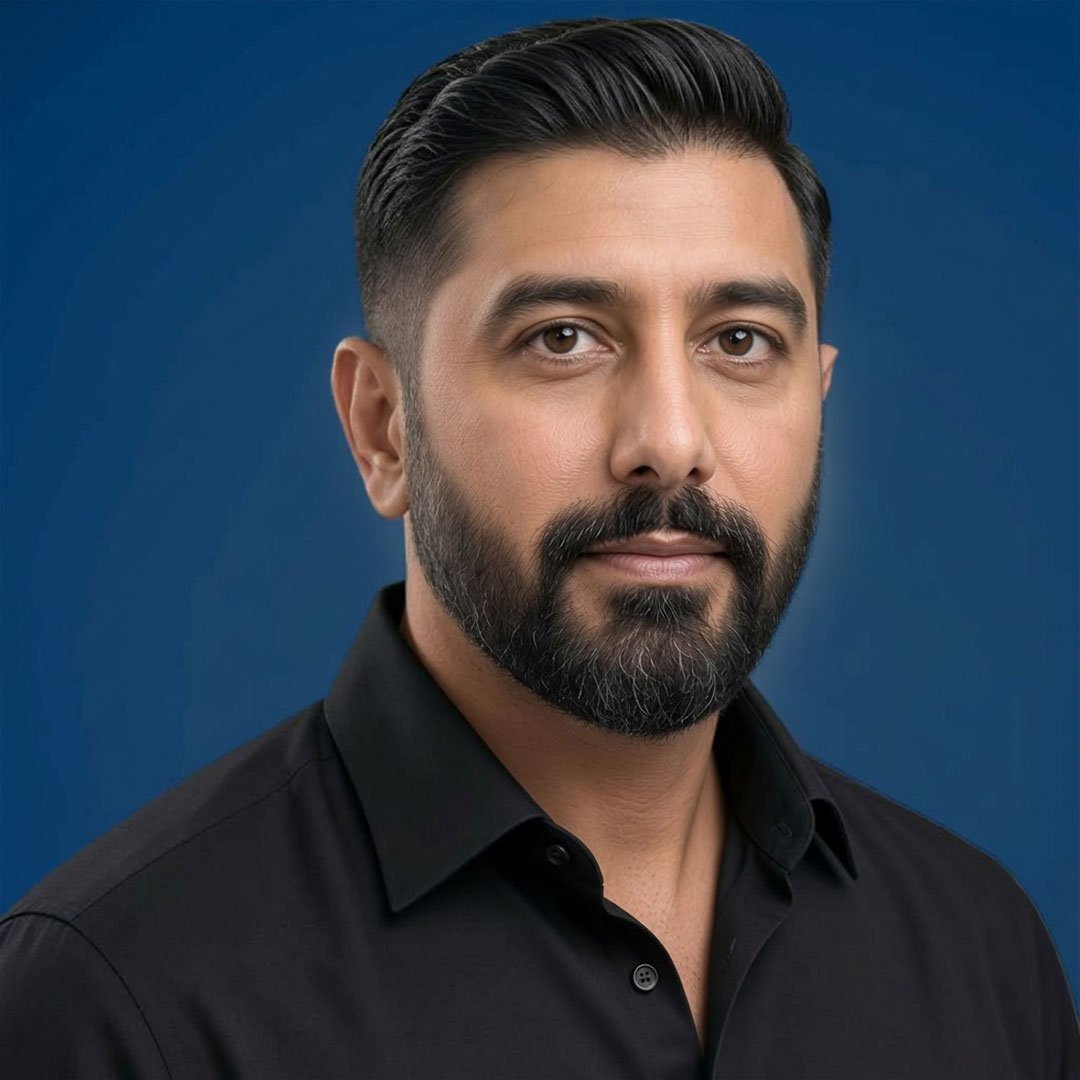
Personal ProfileDr. Jamil Akhtar is a Pakistani
Islamic studies scholar, peacebuilding leader, and public intellectual whose
work bridges rigorous academic research, interfaith diplomacy, and grassroots
social reform. He currently serves as Assistant Professor at the University of
the Punjab, Lahore, while simultaneously leading two civil-society
institutions: as Chief Executive Officer of the Interfaith Centre of Pakistan
and as Executive Director of The Islamabad Centre for Education and Peace
(ICEP). A postdoctoral alumnus of the University of Oxford, he has emerged as
one of Pakistan's most prolific young scholars of religion, publishing
extensively in leading international journals and speaking across Asia, Europe,
and North America.His scholarship is distinguished
by a rare combination of scholarly depth and moral courage. He is a consistent
and principled voice for women's rights in Pakistan, using Qur'anic
hermeneutics, Islamic jurisprudence, and public writing to challenge rigid
patriarchal interpretations that have long been used to justify gender
injustice. His research on women as Islamic jurists, marital harm, domestic
violence, and qiwāma has opened new intellectual space for egalitarian readings
of Islamic tradition in the Pakistani context. Equally, he is a recognized
leader in peacebuilding and interfaith harmony, working directly with
government bodies, universities, and international organizations to build
bridges across religious, sectarian, and ethnic divides.Nationality: Pakistani | Based
in: Lahore/Islamabad, Pakistan Leadership and Institutional
Roles Chief Executive Officer,
Interfaith Centre of PakistanDr. Akhtar leads the Interfaith
Centre of Pakistan, an organization dedicated to promoting interfaith and
intra-faith harmony, dialogue, and coexistence across Pakistan's religiously
diverse landscape. Under his leadership, the Centre has worked to foster
relationships between Muslim, Christian, Hindu, Sikh, and other communities,
organizing dialogues, capacity-building initiatives, and public advocacy for
religious freedom and social cohesion. Executive Director, The
Islamabad Centre for Education and Peace (ICEP)As Executive Director of ICEP,
Dr. Akhtar directs an institution committed to education, peacebuilding, and
interfaith scholarship. He has authored and edited multiple books under the
ICEP banner, including Prophet Muhammad & Religious Pluralism: A Cross-Cultural
Perspective, From Torah to Quran: The Jewish Converts in the Era of Prophet
Muhammad (PBUH), and From Injil to Quran: The Christian Converts in the Era of
Prophet Muhammad (PBUH). These works reflect his conviction that rigorous
scholarship on religious pluralism is essential to peace in plural societies. Assistant Professor,
University of the Punjab, LahoreSince June 2022, Dr. Akhtar has
taught at the University of the Punjab, where he supervises doctoral and
M.Phil. research, develops curricula, and mentors the next generation of
Pakistani scholars in Islamic studies, comparative religion, and gender justice. Academic CareerDr. Akhtar's academic formation
is exceptional for a scholar of his generation. He completed his Postdoctoral
Studies in Religious Studies at the Oxford Centre for Religion and Culture,
Regent's Park College, University of Oxford, UK (2021–2022), funded by the
Punjab Higher Education Commission's International Postdoctoral Scholarship.
Before Oxford, he earned his Ph.D. in Islamic Studies from Sheikh Zayed Islamic
Centre, University of the Punjab, Lahore (2018, with 85% first-class
distinction); his M.Phil. in Islamic Studies from the International Islamic
University, Islamabad (2012, 80% first class); his M.A. in Arabic from the
University of the Punjab (2009, 84% first class); and a B.A. (Hons) in Islamic
Studies (Comparative Religion) from the International Islamic University,
Islamabad (2008, 83% first class).He complemented this academic
training with professional education degrees — an M.Ed. with English Literature
(Sarhad University, 2015) and a B.Ed. with English Literature (Sargodha
University, 2013) — as well as advanced language certifications from KING's
College London and the Oxford University Language Centre in academic English
writing, spoken communication, and corpus-based writing.His research specialization spans
Qur'anic studies, comparative religion, interfaith theology, Islamic law and
ethics, gender justice, and peacebuilding. His Ph.D. thesis examined
"Trends of Modernity in Quranic Exegesis in Egypt," and his M.Phil.
thesis addressed "Catholic and Muslim Perception on Mary (A.S)." Scholarship and Publication
RecordDr. Akhtar is among the most
productive Pakistani scholars of Islamic studies of his generation. He has
published more than fifty research articles, including over seventeen
publications in Web of Science (WoS) and Scopus Q1/Q2 journals such as Middle
Eastern Studies (Taylor & Francis), Women's Studies International Forum
(Elsevier), Contemporary Islam (Springer), Paediatrics and International Child
Health (Taylor & Francis), Sophia (Sophia University Institute, Italy),
Conatus – Journal of Philosophy (University of Athens), Contemporary Review of
the Middle East (Sage), Journal of Religious Minorities under Muslim Rule
(Brill), Edinost in dialog (Slovenia), Theology (Sage), Social Identities
(Taylor & Francis), Women's Studies (Taylor & Francis), and Journal of
Religion, Spirituality & Aging (Taylor & Francis). His work has appeared
in leading journals across the United Kingdom, the Netherlands, Germany, Italy,
Greece, Slovenia, South Africa, and Pakistan. Selected recent publications
include:-
"Reinterpreting religious
authority: Women as Islamic jurists for addressing gender justice in
Pakistan," Women's Studies International Forum, Vol. 116 (WoS Q1,
Elsevier), 2026.-
"The mothers' milk bank
dilemma: addressing the conservative stance and traditional views of Pakistani
religious scholars," Paediatrics and International Child Health (WoS Q2,
Taylor & Francis), 2025.-
"Reinterpreting Dhimmitude: A
Reconsideration of Its Social and Political Functions in the Modern
Context," Journal of Religious Minorities under Muslim Rule (Brill), 2025.-
"Recent debates on wife's
right to judicial separation: an analysis of the traditional and modern
interpretations of Muslim family laws in Pakistan," Contemporary Islam
(WoS Q1, Springer), 2025.-
"Social Justice and Equality
in the Qur'an: Implications for Global Peace," Edinost in dialog (Scopus
Q1), 2024.-
"Methodological Approaches in
Qur'anic Studies: A Critique of Michael Cook's Approach," Pharos Journal
of Theology (Scopus Q1), 2023.-
"Social liberation within the
Islamic-political movements: the reform project of the Kingdom of Saudi Arabia
and its impact on...," Middle Eastern Studies (WoS Q1, Taylor &
Francis), 2022. His forthcoming and under-review
work continues to push boundaries: articles on Qur'anic anthropology and
Aristotle's biological essentialism, Spinoza and Mulla Sadra on divine
necessity and human freedom, the bureaucratization of Islam in Saudi Arabia, gendered
violence and the misuse of Islamic texts in Pakistani literary narratives, and
a comparative analysis of Islamic nationalism in Pakistan and Hindu nationalism
in India. He has also submitted work to Journal of Law and Religion
(Cambridge), Al-Bayan (Brill), Violence Against Women (Sage), and Feminist
Media Studies (Taylor & Francis), among others.Books and edited volumes include
Digital Hate Speech, Disinformation, and Peace in Religiously Diverse Regions
(IGI Global, USA, 2026, editor); Prophet Muhammad & Religious Pluralism: A
Cross-Cultural Perspective (ICEP, 2024); From Torah to Quran: The Jewish
Converts in the Era of Prophet Muhammad (PBUH) (ICEP, 2025); and From Injil to
Quran: The Christian Converts in the Era of Prophet Muhammad (PBUH) (ICEP,
2024). He has also contributed chapters to international volumes published by
Brill, Routledge (Taylor & Francis), and IGI Global, including a chapter on
queer activism and faith-based resistance in contemporary South Asia and a
chapter on ethical frameworks for religious text translation.Beyond academic journals, Dr.
Akhtar is a prolific public intellectual. He has written more than twenty-five
contributing columns for Pakistan's leading national newspapers, including
Nawa-i-Waqt, Kashmir Express, and Daily Asas, addressing social reform, women's
rights, corruption, education, inter-sect harmony, and the takfiri mindset. His
public writing brings rigorous scholarship to urgent social questions and demonstrates
his commitment to shaping public discourse in Pakistan. A Voice for Women's Rights and
Gender JusticeDr. Akhtar's scholarship and
public advocacy are marked by a sustained, courageous commitment to women's
rights in Pakistan. In a religiously conservative society where patriarchal
interpretations of Islamic law often constrain women's autonomy, he has
consistently used his scholarly authority to argue for egalitarian readings of
the Qur'an and Sunnah.His research directly addresses
the most contested issues facing Pakistani women. He has published on women as
Islamic jurists, arguing for the reinterpretation of religious authority to
include women's voices in the formulation of Islamic law. He has examined
judicial separation and khula in Pakistani family law, analyzing how
traditional and modern interpretations shape women's access to justice. He has
written on domestic violence and the misuse of qiwāma, reinterpreting Qur'anic
authority structures for family justice. His work on women's financial rights
in Judaism, Christianity, and Islam offers comparative perspectives on gender
equity in religious law. And his forthcoming and under-review work continues to
interrogate the intersections of gender, law, and religion in Pakistan —
including a study of gendered violence and the misuse of Islamic texts in
Pakistani literary narratives, and an examination of the judicial construction
of marital harm in Pakistan.Dr. Akhtar's gender-justice
scholarship is not confined to academic journals. He has presented on women as
Islamic jurists at the American Academy of Religion-Western Region
International Conference at Arizona State University (2025); on religious texts
and gender equality at the International Conference on Gender Studies at the
University of the Punjab (2023); and on transgender rights in Pakistan from an
Islamic perspective at the UCR Conference on Queer and Transgender Studies in
Religion at the University of California, Riverside (2023). His public columns
have addressed Pakistani women and sports, Pakistani women and fatwa-issuance
authority, and the need for inter-sect marriages as a solution to sectarianism
— each a direct challenge to the rigid patriarchal consensus that dominates
public discourse.In doing so, Dr. Akhtar embodies
a rare combination: a scholar with the linguistic, jurisprudential, and
theological training to engage classical Islamic sources with authority, and
the moral clarity to deploy that training in defense of women's dignity and
equality. He is, in this sense, a proper and credible voice of women's rights
in Pakistan against rigid religious patriarchy — one who speaks from within the
tradition rather than against it, and who commands respect across academic,
religious, and policy circles. Peacebuilding and Interfaith
LeadershipDr. Akhtar's peacebuilding work
is both scholarly and practical. As CEO of the Interfaith Centre of Pakistan
and Executive Director of ICEP, he has led initiatives to promote interfaith
and intra-faith harmony, religious freedom, and social cohesion across
Pakistan's diverse religious landscape.His research on peacebuilding
includes a comparative study of peace and justice in Islamic, Christian, and
Jewish scriptures, a Qur'anic ethics of peacebuilding as a counter-narrative to
religious extremism in Pakistan, and an examination of forgiveness under threat
in contexts of religious violence. He has written on interfaith coexistence in
Islam, religious freedom as a pathway to inter- and intra-faith harmony, and
the root causes of Islamophobia.Dr. Akhtar has been awarded
eleven certificates in peacebuilding from the United States Institute of Peace,
covering conflict analysis, negotiation, mediation of violent conflict,
dialogue design, nonviolent action, gender inclusivity in peacebuilding, good
governance after conflict, and religion and peacebuilding. He has also
completed an eight-day Oxford Muslim-Christian Summer School at the Centre for
Muslim-Christian Studies, Oxford, and a Harvard Summer School program on
Religious Literacy for Educators at Harvard Divinity School.He has presented his
peacebuilding research at international conferences around the world, including
the Abrahamic Religions and Religious Others Conference in Berlin (2025), the
Pius XII and Decolonization Conference in Cairo (2025), the Study of Religions
Conference at University College Cork, Ireland (2025), the Asian Sound Cultures
Conference at the University of Sheffield, UK (2024), the Religion, Conflict
and Reconciliation Conference at Liverpool Hope University, UK (2024), the
International Symposium on Inter-religious Coexistence at UIN Sunan Kalijaga,
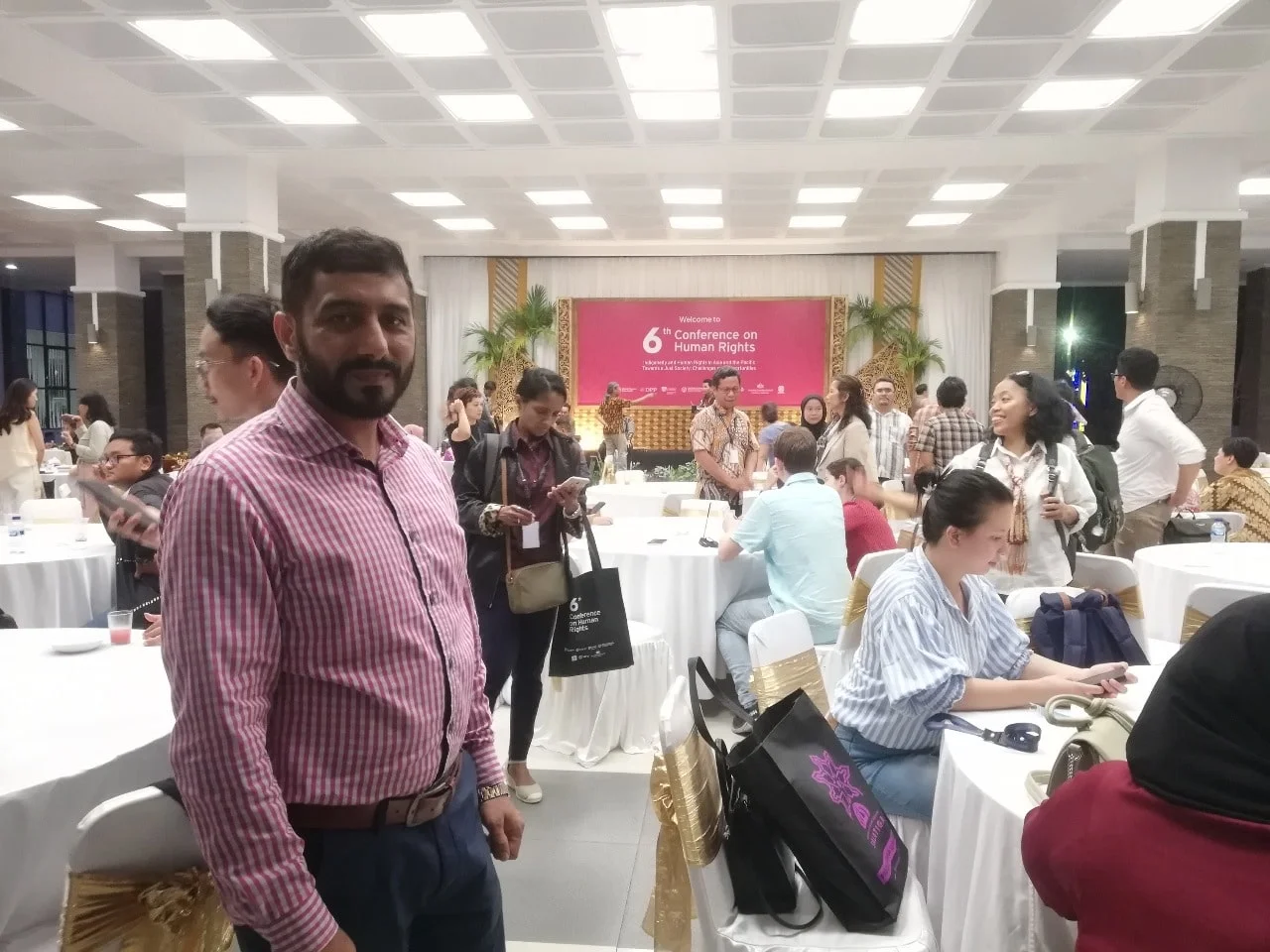
Indonesia (2024), the International Conference on Human Rights Asia and the
Pacific at Gadjah Mada University, Indonesia (2023), the 2nd International
Symposium on the Practice of Coexistence in Islamic Culture at Kirikkale
University, Turkey (2023), and the Religious Roots of Environmental Justice
Conference at the University of Denver, USA (2023), among many others.His funded research projects
reflect his commitment to translating scholarship into social impact. He has
served as Principal Investigator on projects funded by the Ministry of
Religious Affairs, Government of Pakistan (on the role of mosques, madrassas,
khanqahs, and imam-bargahs in ummah harmony; and on national economic stability
in the light of the Prophet's life), the Punjab Higher Education Commission (on
interfaith dialogue among South Asian religions in the Pakistani context), the
Interfaith Centre of Pakistan (on promoting interfaith harmony in the light of
Qur'anic teachings), and the Higher Education Commission of Pakistan (as
Co-Principal Investigator on religious extremism in higher education
institutions). He has also been a Principal Investigator for the Brill project
on Christian-Muslim Relations, contributing a biography of Qāzī Muḥammad
Sulaimān Manṣūrpūrī to Brill's encyclopaedic Christian-Muslim Relations: A
Bibliographical History. Awards and RecognitionDr. Akhtar's contributions have
been recognized with numerous national and international awards:-
Presidential Award (2nd position),
National Seerah Writing Award, 2024 — awarded by the Ministry of Religious
Affairs, Government of Pakistan, for his English book Prophet Muhammad &
Religious Pluralism: A Cross-Cultural Perspective.-
Ghazi Seerah Award, 2024 — awarded
by Ghazi University, Dera Ghazi Khan, for the same book.-
National Seerah Writing Award (2nd
position), 2023 — awarded by the Ministry of Religious Affairs, Government of
Pakistan, on the theme "Strategy for National Economic Stability in the
light of Sirat al-Nabi (PBUH)."-
National Seerah Writing Award (1st
position), 2021 — awarded by the Ministry of Religious Affairs, Government of
Pakistan, on the theme "Role of Mosques, Madrassas, Khanqah and
Imam-Bargah for the Harmony and Unity of Ummah in the light of Sirat al-Nabi
(PBUH)."-
International Postdoctoral
Scholarship, 2021 — awarded by the Punjab Higher Education Commission for
postdoctoral research at the University of Oxford, UK.-
HEC Approved Ph.D. Supervisor —
recognized by the Higher Education Commission of Pakistan for two consecutive
terms (2020–2023 and 2023–2026).-
NRPU Grant, Higher Education
Commission of Pakistan — won on competitive merit for the research project
"Religious Extremism in Higher Education Institutions: Causes, Challenges
and Solutions."-
Harvard Summer School Funding,
2022 — awarded to attend the Religious Literacy for Educators Summer Institute
at Harvard Divinity School, USA.-
Oxford Muslim-Christian Summer
School Funding, 2022 — awarded by the Oxford Centre for Muslim-Christian
Studies, Oxford. Research Supervision and
Academic ServiceDr. Akhtar is an active research
supervisor and academic citizen. He has supervised ten doctoral and M.Phil.
theses at the University of Gujrat on topics ranging from women's rights in
Islamic teachings and Pakistani family law to Qur'anic methodology, Seerah
studies, and inter-Muslim unity. He currently supervises doctoral research on
the principles of ijtihad among Ahl-e-Hadith scholars in the subcontinent.He has served as an external
evaluator for numerous M.S. and M.Phil. theses at the University of Sialkot,
the University of Gujrat, and Jinnah University for Women, Karachi, and as a
foreign evaluator for Ph.D. theses at Islamia University Bahawalpur and the
University of Lahore. He has reviewed articles for Al-Milal: Journal of
Religion and Thought, Al-Tabyeen: Research Journal of Islamic Studies,
Fikr-o-Nazar (IRI, IIU), Open Journal of Modern Linguistics, International
Bulletin of Theology and Civilization, AFKAR, and Millah: Journal of Religious
Studies (Indonesia).He is a member of the Board of
Faculty of Islamic Studies at the University of the Punjab, the Faculty Board
of Studies at the University of Sialkot, and the Faculty Board of Studies at
the University of Gujrat, and has served on departmental research, editorial,
admission, convocation, and visiting-faculty selection committees. He has also
contributed to curriculum development for BS, M.Phil., and Ph.D. programs in
Islamic Studies at the University of Gujrat and the University of Sialkot. Languages and International
ExperienceDr. Akhtar is fluent in English,
Urdu, Punjabi, and Arabic, with reading and writing proficiency in Persian. He
has studied Arabic and English translation formally, completing advanced
courses at the International Islamic University, Islamabad, and has translated
more than six Arabic books into Urdu, as well as thousands of pages
professionally.His international experience
spans the United Kingdom (postdoctoral fellowship at Oxford; visiting the
Belfast Islamic Centre), Turkey (Istanbul University), Indonesia (Gadjah Mada
University and UIN Sunan Kalijaga), Malaysia (International Islamic University
Malaysia), Germany (INIRE, Berlin), Saudi Arabia (Umrah), Egypt (international
conference), and Thailand (IASACT conference, 2026). He has been interviewed by
international media, including Union of Catholic Asian News (Hong Kong) and Dr.
Hisako Omari of Akita International University, Japan, on his research on
Muslim and Catholic pilgrimage practices in Pakistan. Vision and CommitmentDr. Jamil Akhtar's career is
defined by a conviction that rigorous scholarship and moral courage must serve
the common good. Whether he is interpreting Qur'anic texts for gender justice,
building interfaith coalitions in Pakistan, supervising the next generation of
scholars, or writing for national newspapers, he works from a single integrated
vision: that Islamic tradition, properly understood, is a resource for peace,
equality, and human dignity — not a barrier to them.As a young leader in
peacebuilding and a principled voice for women's rights in Pakistan, he
represents a new generation of Pakistani scholars who are as comfortable in
international academic journals as they are in public squares, and who refuse
the false choice between religious authenticity and social justice. His work at
the University of the Punjab, the Interfaith Centre of Pakistan, and The
Islamabad Centre for Education and Peace is dedicated to building a Pakistan
where religious diversity is celebrated, women's rights are upheld, and
scholarship serves the cause of peace.
For further information,
please contact Dr. Jamil Akhtar at (jamillahori@gmail.com).