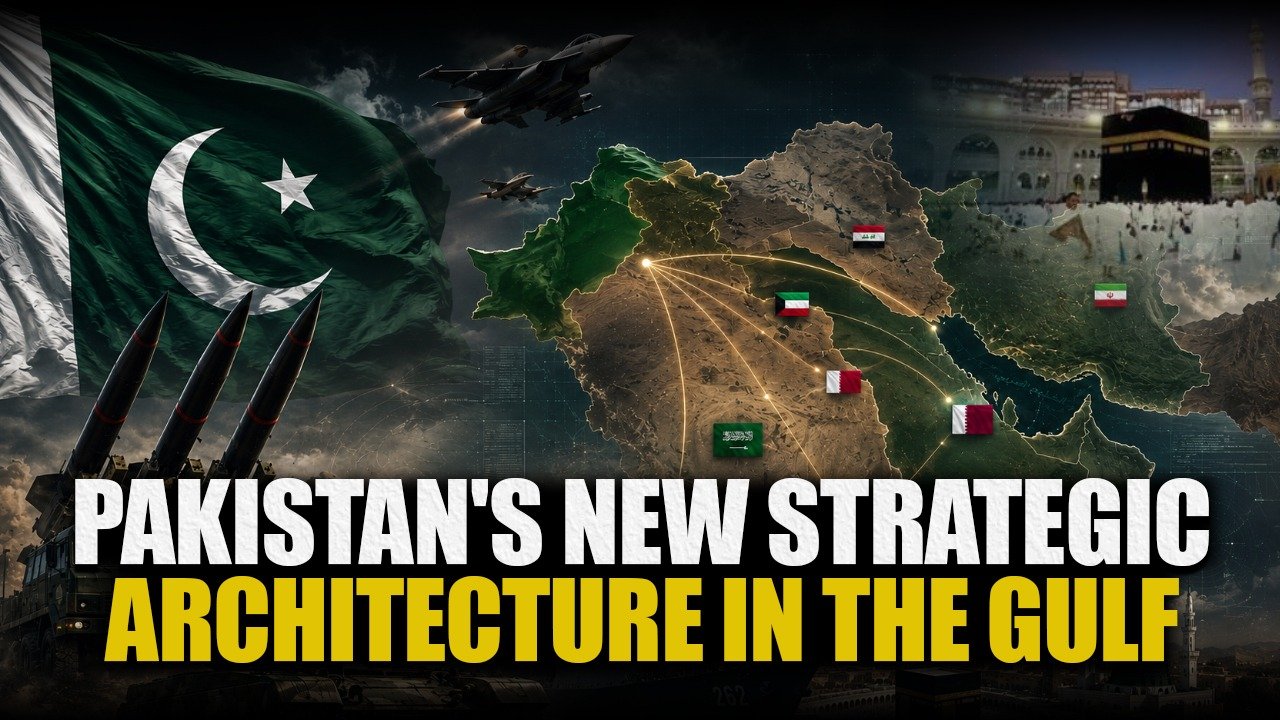
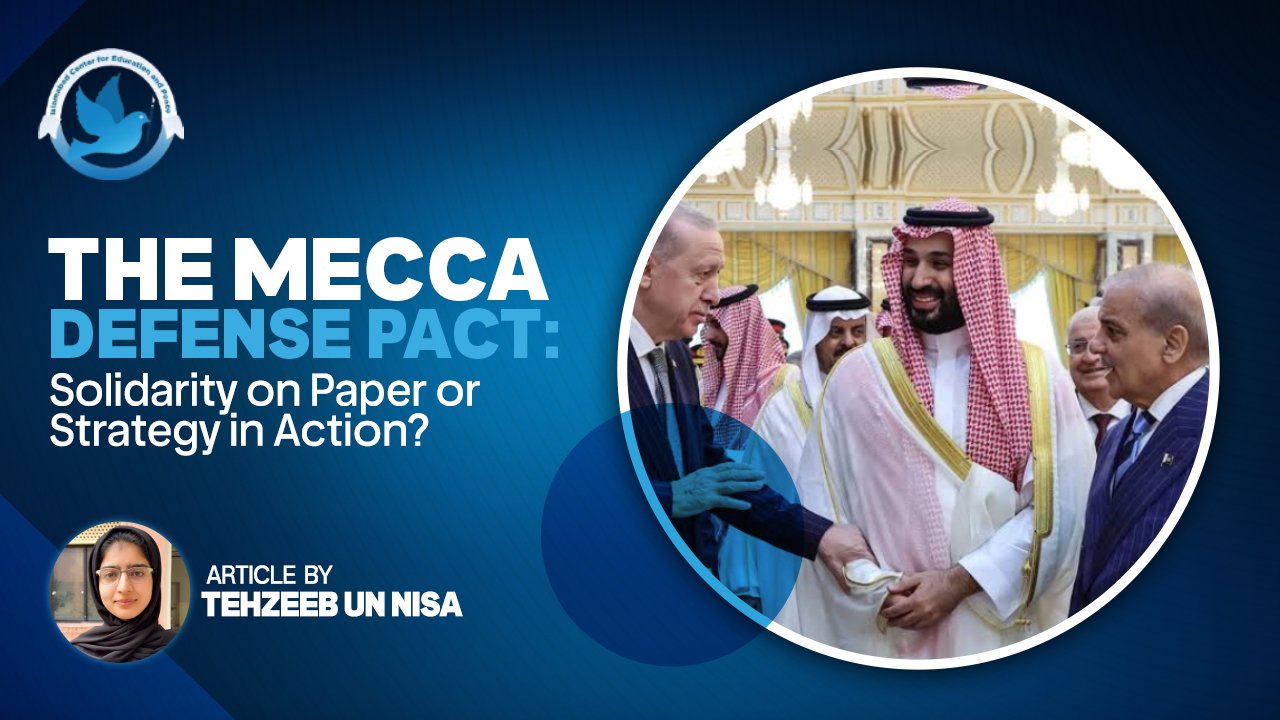

On a Friday in August 2026, Saudi Crown Prince Mohammed bin Salman Turkish President Recep Tayyip Erdoğan and Pakistani Prime Minister Shehbaz Sharif signed the Mecca Joint Defense Agreement near the Grand Mosque. Building on the Saudi-Pakistan mutual defense pact of 2025, its central clause declares that an armed attack on any one signatory shall be considered an attack on all three languages some commentators have already nicknamed a "Muslim NATO." The agreement invokes Article 51 of the UN Charter and calls for joint defense industry cooperation and counter-terrorism coordination, while remaining open to future member states.
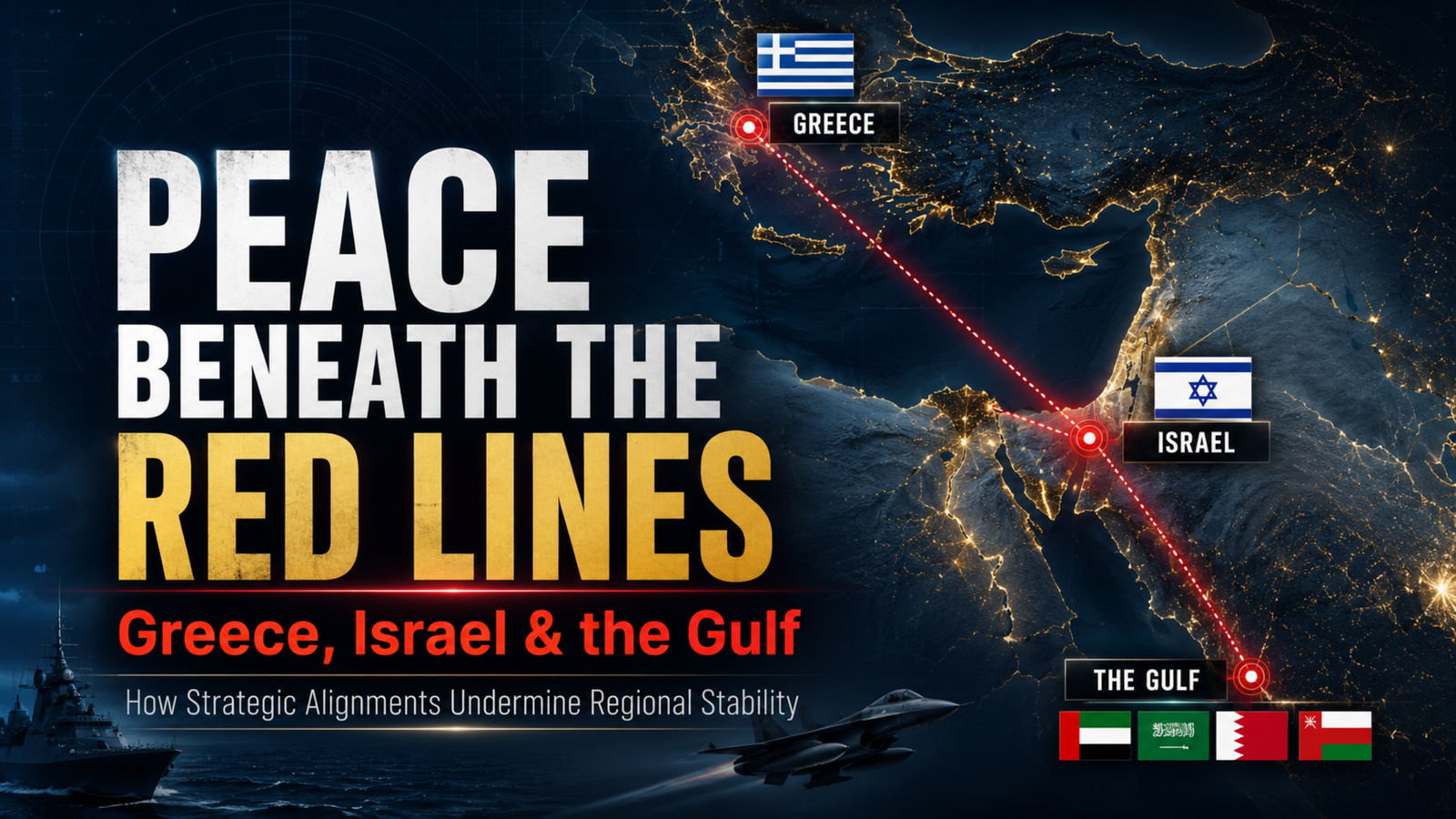
The historical backdrop to this alignment is striking. Turkish-Saudi relations carry centuries of rivalry Wahhabi forces sacked Karbala in 1802 and Ottoman-Egyptian campaigns reconquered the Hijaz between 1811 and 1818, keeping it under Ottoman control for nearly a century. Set against that legacy of competition for Sunni world leadership, today's alignment feels less like a natural evolution and more like a deliberate choice forced by present circumstances. Those circumstances are recent and urgent. Israeli strikes on Doha in 2025, despite a permanent American air base stationed there, sent a clear message across the Gulf: hosting U.S. forces does not guarantee protection from Israeli action. Iranian drone strikes and Houthi missile attacks on Saudi facilities through 2026 deepened that sense of exposure. Saudi Arabia had already been normalizing ties with Turkey since 2021, with Riyadh's 2023 order of Turkish combat drones serving as an early concrete step, a process that accelerated once Saudi-Israeli normalization stalled following the war in Gaza.
The question now being asked in foreign policy circles is whether this agreement resembles Western NATO in any meaningful way or whether it belongs to a longer, less impressive tradition of Muslim-world agreements that generated great symbolism but little operational consequence. Turkish Foreign Minister Hakan Fidan described the pact as "technically the same" as NATO's Article 5. The structural facts, however, tell a more cautious story. The agreement provides for regular meetings a ministerial committee, and a permanent secretariat in Saudi Arabia but its public terms still do not specify command arrangements, force commitments, consultation procedures, or how members would respond to attacks by non-state actors. NATO, by contrast, took decades to build integrated command structures, standardized doctrine, and a shared nuclear umbrella. This pact is best understood as strategic insurance whose deterrent value currently rests on uncertainty.
History offers reason for measured expectations. The Muslim world has produced collective security frameworks before the Arab League's Joint Defense Treaty of 1950, the Organization of Islamic Cooperation's repeated declarations of solidarity and most collapsed under the weight of competing national interests before they were ever tested militarily. The pact brings together three countries with substantially different strategic priorities: Saudi Arabia, still deeply dependent on American defense systems and intelligence Turkey a NATO member pursuing increasingly autonomous regional policies and nuclear-armed Pakistan whose primary strategic competition remains with India. These are not minor differences of emphasis. They are structural tensions that no founding ceremony can resolve. Reactions to the pact have divided sharply along regional lines. Former Israeli Prime Minister Naftali Bennett warned that Turkey is positioning itself as a regional power building a hostile Sunni axis, with Pakistan's nuclear capability cited as a particular concern. Iran's response, by contrast, was dismissive; an official from the National Security Council described it as a paper agreement, arguing that if American guarantees could not fully protect Saudi Arabia, this pact would not either.
Turkey's interests in the agreement are relatively straightforward. Ankara stands to gain significantly from the defense-industrial partnerships, drone exports, and fighter jet deals this pact unlocks areas where Turkey has invested heavily and now seeks regional markets. Whether Turkey would commit actual military forces in a real crisis, rather than supplying equipment from a distance remains a separate and more difficult question. Pakistan's position deserves particular scrutiny. The country is currently navigating a financially constrained period under an IMF program, which gives any government a structural incentive to deepen ties with wealthier Gulf partners regardless of the deeper strategic rationale. History also weighs here Pakistani soldiers have repeatedly borne disproportionate human costs in regional arrangements whose benefits were distributed far more broadly.
The picture among potential future members is uneven. The UAE having signed the Abraham Accords with Israel faces an obvious contradiction in joining a pact framed around Muslim solidarity and is likely to continue hedging. Qatar with close defense ties to Turkey and direct experience of the 2025 Israeli strikes appears the most natural next member. Egypt dependent on U.S. aid and bound by its own peace treaty with Israel, is unlikely to join. Yemen, meanwhile matters less as a prospective signatory than as the arena where the pact's mutual-defense clause may face its first real test through continued Houthi strikes on Saudi territory.
The agreement's most significant limitation, however is structural. It currently lacks an integrated command a standing joint force and any operationally defined trigger for when "attack on one" actually becomes collective military action. As the seventeenth-century philosopher Thomas Hobbes observed covenants without the sword are but words. The word "shall" in this pact's core clause is designed to sound binding the way NATO's Article 5 does but such language only earns genuine weight once it survives contact with an actual crisis. The broader question the pact raises goes beyond any single signatory's calculation. Muslim-majority nations have a long record of internal division, political fragmentation in Palestine years of Saudi-Iranian rivalry Pakistan's own unresolved domestic tensions that outside powers have consistently exploited to their advantage. A pact built on solidarity means little if the structural divisions underneath it remain unaddressed.
Whether this agreement grows beyond its three founding
members, and whether it holds together when a real confrontation arrives, will
be the clearest test of whether Mecca 2026 represents genuine collective
security or another entry in a long list of Muslim-world declarations that
promised solidarity and delivered symbolism. The question history will
eventually answer is this when the sword is finally needed will the covenant
hold or will it dissolve as so many before
it have into words?