Top Stories
Building Bridges Through Words Understanding Militant Ideologies in Modern Contexts Security: Beyond Walls and Weapons Upcoming Events: Connecting Ideas and People Previous Milestones: Reflecting on Our Journey Fatwas: Reclaiming the Spirit of Ethical Guidance Role of NATO in Conflict Resolution Washington Peace Deal Between Congo and Rwanda Social Justice and Equality in the Qur’ān: Implications for Global Peace The Qurʾānic Concept of Human Equality: An Analysis against Racism and Ethnic Discrimination in Contemporary Societies Reinterpreting Dhimmitude: A Reconsideration of Its Social and Political Functions in the Modern Context How China Is Playing the Long Economic War Ukraine Peace Efforts Advance Cautiously Despite Partial Alignment Among Parties How Pakistan-Libya Military Relations Strategic Outreach, Economic Stakes and Geopolitical Implications Aleppo Clashes as Syria and Kurdish-Led SDF Agree to Ceasefire Across the Border, Pakistani Ulema Stand Against Afghan Girls\' Education Ban Pakistan announce 500 fully-funded scholarships for Bangladeshi students in 8 programs How theTaliban regime threat for reginal peace Women Left Behind in Khyber Pakhtunkhwa’s Education System Sudan’s Civil War: Anatomy of the World’s Largest Humanitarian Crisis Changing Security Architecture in Central Asia Pakistan Leads India on Economic and Peace Indicators in 2026 : Gallup Survey Submerged Classrooms, Long-Term Learning Loss Pakistan Security Report 2025: Terrorism Trends and the Peace Deficit HEC’s MAKTAB Initiative Signals a New Era for Higher Education Southern Yemen Faces Tensions and Urgent Need for Peace IUT Strengthens Education Integrity in Bangladesh Pakistan’s Arms Sales Contracts (2024–25) and the Peace Dimension Pakistan\'s Contribution to UN Peacekeeping Operations for Global Peace Pakistan Enhances Educational Cooperation with Sri Lanka through Scholarship The Growing Defense and Economic Nexus of the Muslim World Charter of Trump’s Board of Peace Pakistan & Myanmar Prioritize Education Strategic Saudi defense agreements are redefining the Middle East\'s security architecture What would be the consequences of the U.S.–Iran Conflict on Pakistan? How Indian Cricket Politics Affect Regional Peace The Kashmir issue remains a central peace and stability in South Asia American Weapons in Afghanistan Are Destabilizing Pakistan Global Education Coalition sixth annual meeting A New Chapter for Pakistan’s Universities: Leadership, Stability, and Vision under the New HEC Chairman The Evolution of the IMCTC into a Global Security Pillar Reintegration Initiative: Analyzing the 2026 IMCTC Engagement in Pakistan Psychosocial Warfare and the IMCTC Peace Journalists Initiative (2026) The Concept of ‘Ummah’ in the Qurʾān: Transcending Race, Tribe, and Ethnicity HEC Reforms Regulation, Defends Academic Freedom Pakistan’s Evolving Role in Fostering Peace and Security on the African Continent Recontextualizing Pakistan’s Role in the Board of Peace War in the Middle East: Measuring the Cost The Silent Bridge: Pakistan’s Strategic Neutrality and the Quest for Middle Eastern Stability The Geography of Escalation: Living in an Age of Permanent Crisis Mapping the Educational Crisis in the Middle East Conflict The Blind Alley of “Epic Fury”; A War with no End game A Pakistani Voice Against Digital Islamophobia: A Landmark Academic Contribution World Eye on Pakistan for Middle East Peace Leading with Truth, ICEP’s Analysis Outlasted the Skeptics on Middle East Crisis World Powers Push for Deal U.S. Presents 15-Point Plan and Iran Responds with 5 Conditions Pakistan and Türkiye Open New Chapter in Academic Cooperation with Strategic Initiatives Pakistan at the Crossroads of Global Trade as a Logistics Revolution Unfolds Why Ethical Dialogue necessary in a Diverse Pakistan for a Peacebuilding Initiative Pakistan\\\'s Game-Changer Role for World Peace Entrepreneurship Education Is Shaping Pakistan\\\'s Economic Future Dr. Jamil Akhtar Featured in Prestigious Brill Encyclopaedia (2026) A Milestone in Global Interfaith Scholarship Peace Light in a Dark Night WAR RESHAPES PAKISTAN’S ECONOMY AND OPEN DOORS FOR INTERPRENEURS From Gaza to Lebanon: ICC, UN, and the Unanswered Duty to Prosecute Can Pakistan turn a temporary ceasefire into lasting middle east peace? Bridging the Gap: Confronting Education Inequality in Pakistan Hierarchical Culture In Pakistani Organizations \"How It Kills Innovation — and What Leaders Can Do About It\" Can Diplomacy Survive the Iran Crisis? Peace Efforts in an Age of Permanent Escalation Why are Peace Talks a US strategic priority? Features of Intellectual Property in the Age of Artificial Intelligence (In the Context of World Intellectual Property Day) A Global Forum for Peace, Governance, and a Better World (France\'s Landmark Contribution to International Dialogue) IS UAE WANT A \\\'CURRENCY SWAP\\\' WITH THE USA Energy War by Sea: The Hormuz Blockade Proves Oil is Still a Weapon The End of Strategic Dependence In Europe? Pakistan\'s Strategic and Structural Evolution from Crisis to Consolidated World Peace Silent Deterrence: Hangor-Class SSP-2800 and Undersea Strategy of Pakistan Inside the $9 Billion Prediction Market Revolution Pakistan at the Crossroads: Between Fragile Stability and the Weight of Structural Crisis WHY DIALOGUE FAILS IN CONFLICT ZONES; A LESSON FOR POLICY MAKERS The Crisis of American Legitimacy in the Post-Unipolar Era THE OIL CLUB UAE JUST QUIT Inside OPEC’s Biggest Defection in Decades — and What It Means for the World The Kashmir Dispute: International Institutional Failure and Humanitarian Consequences The $100 Billion Event the World Refuses to Understand How is Eid-ul-Adha A School of Peace? 250 Million Children Classrooms Zero Learning Ethical Dialogue: The Art of Speaking with Intention Ethical Dialogue: The Moral Weight of an Honest Word Skills in Their Hands, Books in Their Bags Ethical Dialogue : Honoring the Voice of the Other HEC Honors Top Pakistani Scientists and NRPU Grant Recipients at Punjab University What\'s the 14 Point of Peace deal that will be signed in Geneva When Words Carry Power: The Unequal Conversation Why Humanitarian Crises Gain Attention Only When Politicized : An International Law Perspective The Ethics of Saying Nothing The Strait of Hormuz Crisis: Energy Security in an Era of Regional War Ethical Dialogue: The Forgotten Half of Every Conversation Why is Homework Still a Thing In Modern Education Peace Beneath the Red Lines Ethical Dialogue: The Wisdom of Not Being Certain HEC\'s 47th Commission Meeting Charts Reform Path for Higher Education Sector PERIDOT: Franco-Pakistani Research Collaboration Program WINDS OF CHANGE Ethical Dialogue: Persuading Without Deceiving HEC Conducts Scholarship Test Across Bangladesh The significance of the \"same DNA\" statement Phone-free campuses could become the next step in education reform Ethical Dialogue: When Dialogue Becomes a Weapon HEC hosted a Quality Leadership Session in Faisalabad Women\'s Role in Peace-building in Somalia Modernizing the Indus Waters Treaty for the Climate Change Era How Will Pakistan Prevent Another \"Ever Given\" at Bab al-Mandab? HEC Chairman Leads Strategic Higher Education Engagements in Lahore and Karachi A Nation Cannot Prosper While Its Children Suffer NIPIS\'26 Welcomes Largest-Ever International Cohort of 50 Interns from 15 Countries The Bermuda Triangle of Promises: U.S. and Iran in Negotiations Pakistan\'s New Strategic Architecture in the Gulf Pakistan Unveils First International Defense Technology Incubation and Investment Platform Selective Justice Under the UN: India\'s Record in a Disputed Territory Married Off Instead of Educated: How Child Marriage Quietly Empties Pakistan\'s Classrooms Between Unemployment and Extremism: Can Vocational Training Break the Cycle for Pakistan\'s Youth? Winning Battles, Losing Peace: Why Military Force Has Failed in Sudan Kashmir Seven Years After Article 370: Development, Rights, and Regional Challenges HEC-NAHE Launches Strategic Planning & Leadership Excellence Workshop for University Leaders Could the Iran-US Conflict Escalate Into a NATO Crisis? Quality Education - Dawn of Tomorrow Beyond the Indus Water Treaty : Re thinking Pakistan’s water security after India’s suspension Can Justice truly exist without Morality? Climate Change as a Non-Traditional Security Threat in Pakistan HOW DOES SOCIAL MEDIA INFLUENCE STUDENTS’ ACADEMIC PERFORMANCE? How Article 370 Pushed the Kashmir Dispute Out of Delhi\'s Courts and Into International Arbitration Digital Literacy as Pakistan’s Best Armour Against Online Extremism Beyond direct talks: why backchannel mediators are crucial for modern crisis de-escalation? How Medical Education Can Promote Peace and Reduce Conflict in Pakistan? The Age of Narrative Warfare The Role of Youth in Community-Level Peacebuilding Digital Islamophobia in India after 2024 Election Article 140-A: The Constitutional Solution Pakistan Keeps Ignoring HEC Pushes AI Revolution in Pakistan’s Higher Education Sector If Iran Joins the Makkah Pact, Pakistan\'s Balancing Act Gets Harder Why Trump Refused Saudi Arabia’s Call for Direct Action Against the Houthis Is India’s BRICS Achievement Really a Diplomatic Victory? Makkah Defence Alliance Is Defensive, Says DG ISPR Ethics of Dialogue: The Courage to Speak When It Costs Something Can Kashmir’s Ecological Crisis Become a Regional Climate Security Threat? Pakistan-Türkiye Higher Education Ties Strengthened Through NUST Engagement Kohat Attack and the Fragile Path to Pakistan-Afghanistan Talks From Insurgents to Stakeholders: The Transformation of the Houthis in Yemen Stitches of Struggle: Why Kashmir’s Home-Based Women Artisans Are Left Behind in the Global Luxury Economy Soft Power without Hollywood: How China Is Making Culture a Strategic Asset The Rise of Ittehad-ul-Mujahideen Pakistan: A new challenge to Pakistan’s militant landscape The New U.S- Iran Maritime Standoff - Who Controls Hormuz The Classroom Before the Courtroom: Rethinking Violence Against Women A New Map or an Old Problem Water as a Weapon: How Climate Stress and Legal Collapse Are Turning the Indus into a New Front Between Pakistan and India A New Cybersecurity Shield for Pakistan’s Universities Iraq After the U.S. Withdrawal National Dialogue: Pakistan and Global Peace NOTICE OF SECOND ANNUAL GENERAL MEETING What Role Can Pakistan Play in Building a Peaceful Gulf? Peace Through Progress : Why Maqpondass Can Become a Model for Development in Gilgit-Baltistan Terrorism and Pakistan is not doing enough to control it Scrolling Towards Peace: How Digital Media Can Unite Pakistani Youth Pakistan’s Youth: Building Bridges for Dialogue France’s Education Protests: Lessons for Pakistan’s Public Schools HEC’s International Research Fellowships: A Strategic Investment in Pakistan’s Future Beyond SAARC: The Case for Modular Regionalism in South Asia Can Washington Become Central Asia\\\'s Alternative Partner? Peace in Afghanistan: Beyond Isolation, Towards Engagement Medical Education Reforms in Punjab Badr and Makkah: Rethinking Regional Security Muslim Women as Peacebuilders in Pakistan Beyond the Budget: Why Education Remains a Strategic Blind Spot for Pakistan The Mecca Defense Pact: Solidarity on Paper or Strategy in Action? Education Under Strain: What Europe\'s Protests Teach Pakistan Another Strike on Iran: Strategic Victory or Regional Disaster? Oman-China Relations: A Strategic Partnership Amid Rising US-Iran Tensions The US Midterms 2026: A Wake-Up Call for War and Peace? Why America Is Turning Away from Israel? Russia–Ukraine Peace Deal: Can Abu Dhabi Deliver a Peace That Lasts? GCC Establishes Advanced Military Command Headquarters in Kuwait: Implications for Gulf Security Architecture New Provinces or a New System? What Pakistan Needs First Punjab’s Education Crisis: From Monitoring to Meaningful Reform Pakistan’s Diplomatic Moment: The 30th ECO Council of Ministers and the Future of Regional Cooperation ECO Conference 2026: Can Pakistan Turn Regional Promises into Real Progress? The Architecture of Détente: Can Three Leaders Redefine the Path to Global Peace and Stability? Pakistan\'s new strategic step towards Russia? Pakistan Touches the Stars: Zeeshan Ali Makes History on Shenzhou-24
Dialogue

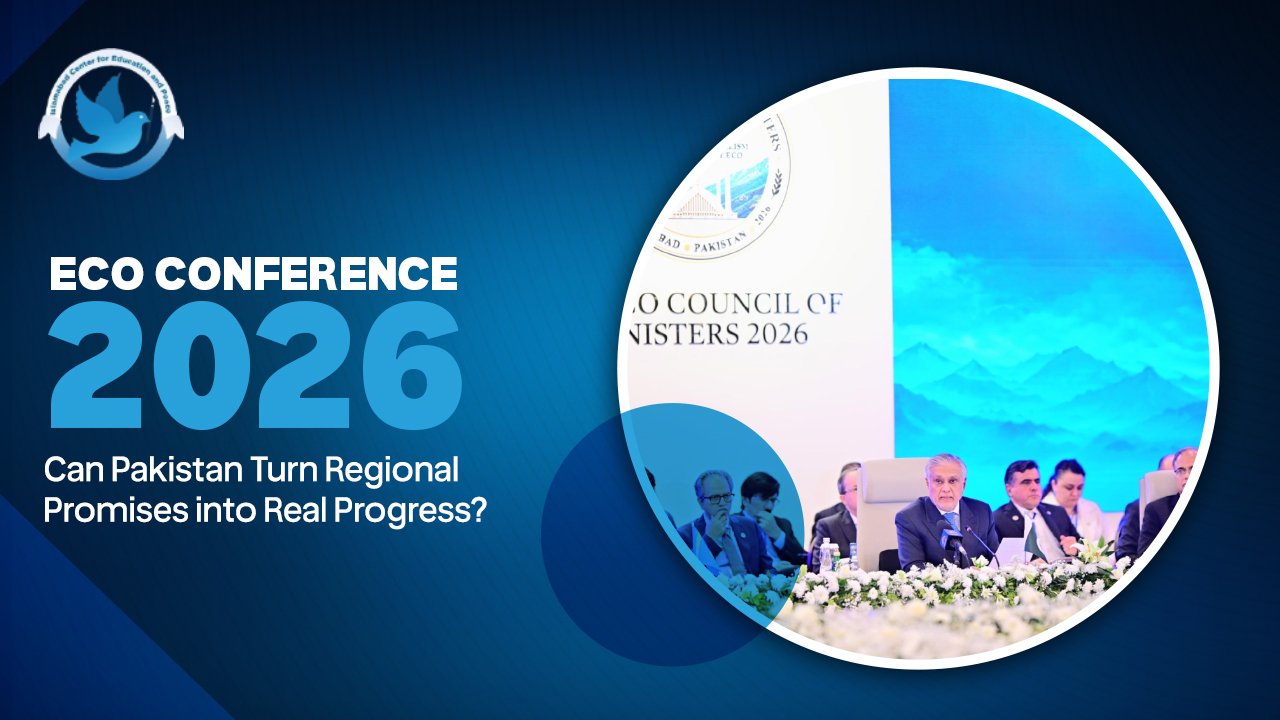
ECO Conference 2026: Can Pakistan Turn Regional Promises into Real Progress?

 The world is increasingly interdependent and countries can no longer rely on their own resources to achieve economic development. Cooperation, good relationships and opportunities for working together are more important than ever. With this in mind, Pakistan will be hosting the 30th Meeting of the Economic Cooperation Organization (ECO) Council of Ministers in Islamabad on the 15th to 16th of November, 2026. The meeting was attended by foreign ministers and senior officials of the ECO member countries, during which the issues of regional trade, investment, energy, connectivity and others were discussed. The conference was chaired by the Deputy Prime Minister and Foreign Minister Senator Mohammad Ishaq Dar and was a chance for Pakistan to further its ties with regional countries.

Economic Cooperation Organization (Eco) began its operations in 1985 with Pakistan, Iran and Türkiye. It has 10 member countries now: Afghanistan, Azerbaijan, Kazakhstan, Kyrgyzstan, Tajikistan, Turkmenistan and Uzbekistan. The primary function is to enhance economic relations and provide better opportunities for its members. Yet, though these countries are geographically and historically linked, they have not maximized the economic potential of the countries. Political issues, along with poor road infrastructure and security concerns persist as a challenge. This is why it is important to have meetings such as ECO to discuss common issues and solutions.

One of the important aspects of this conference was Pakistan's role as the organization’s chair for 2026–27. Pakistan emphasized on the importance of deepening economic ties and enhanced cooperation among the member countries under the theme “Reviving Regionalism for a Resilient ECO”. Ishaq Dar emphasized that the regional countries should make better use of their resources and geographical advantages. The message was loud and clear: countries in the region can do much more together.”

One of the key results of the conference was the adoption of the Islamabad Communiqué, which is a joint declaration of the conference, and the Strategic Goals of Economic Cooperation 2035. The communiqué is important as it documents the common views and actions of member countries. It focuses on increased regional cooperation, development that is sustainable, inclusive economic growth and greater cooperation and coordination between governments. It is also aware that regular meetings are essential to monitor progress and that agreed decisions are implemented.

The declaration also addressed important political and international issues. Regional tensions were a concern to member countries, which emphasized dialogue, diplomacy and peaceful solutions. They backed the mediation process by Pakistan and Qatar and Iran's bid to put an end to the conflict for good. The communiqué also appreciated Pakistan's diplomatic efforts during the recent Iran–United States crisis. An additional one was that it rejected unilateral sanctions and economic pressure, which impact countries' development and international trade.

The declaration addressed several economic and social issues, other than political ones. It requested to revise the ECO Trade Agreement, provide more investment, and establish joint trade zones, and also encouraged supporting small businesses. It also pointed out the importance of improved transport, computerization, energy cooperation, artificial intelligence, education and technical training. This encompassed protection of environment, water management, climate change and sustainable farming as well. The communiqué voiced worry about the situation of human rights in Gaza and requested prompt delivery of food, medicines, fuel, shelter and winter supplies. These pledges demonstrate the organisation's willingness to not just focus on trade but on broader regional issues as well.

Point of trade and connectivity was one of the primary issues discussed at the meeting. Despite the fact that ECO countries have numerous opportunities to trade with each other, the complicated procedures, transportation issues and trade barriers make business difficult. More roads, railway systems and transportation services could be more easily accessible and cost effective for trade. Geographical location and access to the Arabian Sea is a great advantage for Pakistan. Its ports, such as Karachi, Port Qasim and Gwadar, can facilitate the land-locked Central Asian countries for connecting with international markets. The development of these links could make Pakistan a significant trade and transit corridor in the region.

Ishaq Dar, in his closing remarks, expressed his appreciation to all participants for their cooperation and active participation. He called the signing of the Strategic Goals of Economic Cooperation 2035 an important accomplishment. His most poignant message, however, was that countries need to now look at making good on their promises. He emphasized the importance of setting priorities, realistic timeframe and appropriate follow-up process. This is likely the most critical component of this conference. Meetings and signing of agreements are helpful, but if they are not accompanied by action, they do not lead to change.

The ECO conference was a good and positive step in my view for Pakistan and for the region as a whole but, it is the post-conference action that will determine its success. While it is important to sign such agreements and make such promises, the real progress begins in the implementation. ECO countries have significant economic potential, but political clensions, security issues and limited trade links still remain as barriers to economic development. Pakistan needs to prioritize action-oriented measures, like enhanced transport connectivity, expanded trade and investment, during its chairmanship. Young people, students and businesses should have more opportunities to also benefit from regional cooperation, as I believe this is the case. For ECO to move beyond the level of mere forum for meetings and declarations, a spirit of honesty and consistency is needed among member countries.

Summing up, the 30th ECO Council of Ministers Meeting was a significant occasion for Pakistan to enhance its regional standing and draw member nations together. The Islamabad Communiqué and the Strategic Goals of Economic Cooperation 2035 have laid a groundwork for cooperation going forward. But that's not the end of it, though. Pakistan and the other countries of ECO should demonstrate their sincerity in their pledge. Regional development cannot be realized by promises, but with efforts, trust and cooperation. If these countries can realize their discussions, then ECO can be a platform that can provide real opportunities for economic growth and a better life for millions of people.