Top Stories
Building Bridges Through Words Understanding Militant Ideologies in Modern Contexts Security: Beyond Walls and Weapons Upcoming Events: Connecting Ideas and People Previous Milestones: Reflecting on Our Journey Fatwas: Reclaiming the Spirit of Ethical Guidance Role of NATO in Conflict Resolution Washington Peace Deal Between Congo and Rwanda Social Justice and Equality in the Qur’ān: Implications for Global Peace The Qurʾānic Concept of Human Equality: An Analysis against Racism and Ethnic Discrimination in Contemporary Societies Reinterpreting Dhimmitude: A Reconsideration of Its Social and Political Functions in the Modern Context How China Is Playing the Long Economic War Ukraine Peace Efforts Advance Cautiously Despite Partial Alignment Among Parties How Pakistan-Libya Military Relations Strategic Outreach, Economic Stakes and Geopolitical Implications Aleppo Clashes as Syria and Kurdish-Led SDF Agree to Ceasefire Across the Border, Pakistani Ulema Stand Against Afghan Girls\' Education Ban Pakistan announce 500 fully-funded scholarships for Bangladeshi students in 8 programs How theTaliban regime threat for reginal peace Women Left Behind in Khyber Pakhtunkhwa’s Education System Sudan’s Civil War: Anatomy of the World’s Largest Humanitarian Crisis Changing Security Architecture in Central Asia Pakistan Leads India on Economic and Peace Indicators in 2026 : Gallup Survey Submerged Classrooms, Long-Term Learning Loss Pakistan Security Report 2025: Terrorism Trends and the Peace Deficit HEC’s MAKTAB Initiative Signals a New Era for Higher Education Southern Yemen Faces Tensions and Urgent Need for Peace IUT Strengthens Education Integrity in Bangladesh Pakistan’s Arms Sales Contracts (2024–25) and the Peace Dimension Pakistan\'s Contribution to UN Peacekeeping Operations for Global Peace Pakistan Enhances Educational Cooperation with Sri Lanka through Scholarship The Growing Defense and Economic Nexus of the Muslim World Charter of Trump’s Board of Peace Pakistan & Myanmar Prioritize Education Strategic Saudi defense agreements are redefining the Middle East\'s security architecture What would be the consequences of the U.S.–Iran Conflict on Pakistan? How Indian Cricket Politics Affect Regional Peace The Kashmir issue remains a central peace and stability in South Asia American Weapons in Afghanistan Are Destabilizing Pakistan Global Education Coalition sixth annual meeting A New Chapter for Pakistan’s Universities: Leadership, Stability, and Vision under the New HEC Chairman The Evolution of the IMCTC into a Global Security Pillar Reintegration Initiative: Analyzing the 2026 IMCTC Engagement in Pakistan Psychosocial Warfare and the IMCTC Peace Journalists Initiative (2026) The Concept of ‘Ummah’ in the Qurʾān: Transcending Race, Tribe, and Ethnicity HEC Reforms Regulation, Defends Academic Freedom Pakistan’s Evolving Role in Fostering Peace and Security on the African Continent Recontextualizing Pakistan’s Role in the Board of Peace War in the Middle East: Measuring the Cost The Silent Bridge: Pakistan’s Strategic Neutrality and the Quest for Middle Eastern Stability The Geography of Escalation: Living in an Age of Permanent Crisis Mapping the Educational Crisis in the Middle East Conflict The Blind Alley of “Epic Fury”; A War with no End game A Pakistani Voice Against Digital Islamophobia: A Landmark Academic Contribution World Eye on Pakistan for Middle East Peace Leading with Truth, ICEP’s Analysis Outlasted the Skeptics on Middle East Crisis World Powers Push for Deal U.S. Presents 15-Point Plan and Iran Responds with 5 Conditions Pakistan and Türkiye Open New Chapter in Academic Cooperation with Strategic Initiatives Pakistan at the Crossroads of Global Trade as a Logistics Revolution Unfolds Why Ethical Dialogue necessary in a Diverse Pakistan for a Peacebuilding Initiative Pakistan\\\'s Game-Changer Role for World Peace Entrepreneurship Education Is Shaping Pakistan\\\'s Economic Future Dr. Jamil Akhtar Featured in Prestigious Brill Encyclopaedia (2026) A Milestone in Global Interfaith Scholarship Peace Light in a Dark Night WAR RESHAPES PAKISTAN’S ECONOMY AND OPEN DOORS FOR INTERPRENEURS From Gaza to Lebanon: ICC, UN, and the Unanswered Duty to Prosecute Can Pakistan turn a temporary ceasefire into lasting middle east peace? Bridging the Gap: Confronting Education Inequality in Pakistan Hierarchical Culture In Pakistani Organizations \"How It Kills Innovation — and What Leaders Can Do About It\" Can Diplomacy Survive the Iran Crisis? Peace Efforts in an Age of Permanent Escalation Why are Peace Talks a US strategic priority? Features of Intellectual Property in the Age of Artificial Intelligence (In the Context of World Intellectual Property Day) A Global Forum for Peace, Governance, and a Better World (France\'s Landmark Contribution to International Dialogue) IS UAE WANT A \\\'CURRENCY SWAP\\\' WITH THE USA Energy War by Sea: The Hormuz Blockade Proves Oil is Still a Weapon The End of Strategic Dependence In Europe? Pakistan\'s Strategic and Structural Evolution from Crisis to Consolidated World Peace Silent Deterrence: Hangor-Class SSP-2800 and Undersea Strategy of Pakistan Inside the $9 Billion Prediction Market Revolution Pakistan at the Crossroads: Between Fragile Stability and the Weight of Structural Crisis WHY DIALOGUE FAILS IN CONFLICT ZONES; A LESSON FOR POLICY MAKERS The Crisis of American Legitimacy in the Post-Unipolar Era THE OIL CLUB UAE JUST QUIT Inside OPEC’s Biggest Defection in Decades — and What It Means for the World The Kashmir Dispute: International Institutional Failure and Humanitarian Consequences The $100 Billion Event the World Refuses to Understand How is Eid-ul-Adha A School of Peace? 250 Million Children Classrooms Zero Learning Ethical Dialogue: The Art of Speaking with Intention Ethical Dialogue: The Moral Weight of an Honest Word Skills in Their Hands, Books in Their Bags Ethical Dialogue : Honoring the Voice of the Other HEC Honors Top Pakistani Scientists and NRPU Grant Recipients at Punjab University What\'s the 14 Point of Peace deal that will be signed in Geneva When Words Carry Power: The Unequal Conversation Why Humanitarian Crises Gain Attention Only When Politicized : An International Law Perspective The Ethics of Saying Nothing The Strait of Hormuz Crisis: Energy Security in an Era of Regional War Ethical Dialogue: The Forgotten Half of Every Conversation Why is Homework Still a Thing In Modern Education Peace Beneath the Red Lines Ethical Dialogue: The Wisdom of Not Being Certain HEC\'s 47th Commission Meeting Charts Reform Path for Higher Education Sector PERIDOT: Franco-Pakistani Research Collaboration Program WINDS OF CHANGE Ethical Dialogue: Persuading Without Deceiving HEC Conducts Scholarship Test Across Bangladesh The significance of the \"same DNA\" statement Phone-free campuses could become the next step in education reform Ethical Dialogue: When Dialogue Becomes a Weapon HEC hosted a Quality Leadership Session in Faisalabad Women\'s Role in Peace-building in Somalia Modernizing the Indus Waters Treaty for the Climate Change Era How Will Pakistan Prevent Another \"Ever Given\" at Bab al-Mandab? HEC Chairman Leads Strategic Higher Education Engagements in Lahore and Karachi A Nation Cannot Prosper While Its Children Suffer NIPIS\'26 Welcomes Largest-Ever International Cohort of 50 Interns from 15 Countries The Bermuda Triangle of Promises: U.S. and Iran in Negotiations Pakistan\'s New Strategic Architecture in the Gulf Pakistan Unveils First International Defense Technology Incubation and Investment Platform Selective Justice Under the UN: India\'s Record in a Disputed Territory Married Off Instead of Educated: How Child Marriage Quietly Empties Pakistan\'s Classrooms Between Unemployment and Extremism: Can Vocational Training Break the Cycle for Pakistan\'s Youth? Winning Battles, Losing Peace: Why Military Force Has Failed in Sudan Kashmir Seven Years After Article 370: Development, Rights, and Regional Challenges HEC-NAHE Launches Strategic Planning & Leadership Excellence Workshop for University Leaders Could the Iran-US Conflict Escalate Into a NATO Crisis? Quality Education - Dawn of Tomorrow Beyond the Indus Water Treaty : Re thinking Pakistan’s water security after India’s suspension Can Justice truly exist without Morality? Climate Change as a Non-Traditional Security Threat in Pakistan HOW DOES SOCIAL MEDIA INFLUENCE STUDENTS’ ACADEMIC PERFORMANCE? How Article 370 Pushed the Kashmir Dispute Out of Delhi\'s Courts and Into International Arbitration Digital Literacy as Pakistan’s Best Armour Against Online Extremism Beyond direct talks: why backchannel mediators are crucial for modern crisis de-escalation? How Medical Education Can Promote Peace and Reduce Conflict in Pakistan? The Age of Narrative Warfare The Role of Youth in Community-Level Peacebuilding Digital Islamophobia in India after 2024 Election Article 140-A: The Constitutional Solution Pakistan Keeps Ignoring HEC Pushes AI Revolution in Pakistan’s Higher Education Sector If Iran Joins the Makkah Pact, Pakistan\'s Balancing Act Gets Harder Why Trump Refused Saudi Arabia’s Call for Direct Action Against the Houthis Is India’s BRICS Achievement Really a Diplomatic Victory? Makkah Defence Alliance Is Defensive, Says DG ISPR Ethics of Dialogue: The Courage to Speak When It Costs Something Can Kashmir’s Ecological Crisis Become a Regional Climate Security Threat? Pakistan-Türkiye Higher Education Ties Strengthened Through NUST Engagement Kohat Attack and the Fragile Path to Pakistan-Afghanistan Talks From Insurgents to Stakeholders: The Transformation of the Houthis in Yemen Stitches of Struggle: Why Kashmir’s Home-Based Women Artisans Are Left Behind in the Global Luxury Economy Soft Power without Hollywood: How China Is Making Culture a Strategic Asset The Rise of Ittehad-ul-Mujahideen Pakistan: A new challenge to Pakistan’s militant landscape The New U.S- Iran Maritime Standoff - Who Controls Hormuz The Classroom Before the Courtroom: Rethinking Violence Against Women A New Map or an Old Problem Water as a Weapon: How Climate Stress and Legal Collapse Are Turning the Indus into a New Front Between Pakistan and India A New Cybersecurity Shield for Pakistan’s Universities Iraq After the U.S. Withdrawal National Dialogue: Pakistan and Global Peace NOTICE OF SECOND ANNUAL GENERAL MEETING What Role Can Pakistan Play in Building a Peaceful Gulf? Peace Through Progress : Why Maqpondass Can Become a Model for Development in Gilgit-Baltistan Terrorism and Pakistan is not doing enough to control it Scrolling Towards Peace: How Digital Media Can Unite Pakistani Youth Pakistan’s Youth: Building Bridges for Dialogue France’s Education Protests: Lessons for Pakistan’s Public Schools HEC’s International Research Fellowships: A Strategic Investment in Pakistan’s Future Beyond SAARC: The Case for Modular Regionalism in South Asia Can Washington Become Central Asia\\\'s Alternative Partner? Peace in Afghanistan: Beyond Isolation, Towards Engagement Medical Education Reforms in Punjab Badr and Makkah: Rethinking Regional Security Muslim Women as Peacebuilders in Pakistan Beyond the Budget: Why Education Remains a Strategic Blind Spot for Pakistan The Mecca Defense Pact: Solidarity on Paper or Strategy in Action? Education Under Strain: What Europe\'s Protests Teach Pakistan Another Strike on Iran: Strategic Victory or Regional Disaster? Oman-China Relations: A Strategic Partnership Amid Rising US-Iran Tensions The US Midterms 2026: A Wake-Up Call for War and Peace? Why America Is Turning Away from Israel? Russia–Ukraine Peace Deal: Can Abu Dhabi Deliver a Peace That Lasts? GCC Establishes Advanced Military Command Headquarters in Kuwait: Implications for Gulf Security Architecture New Provinces or a New System? What Pakistan Needs First Punjab’s Education Crisis: From Monitoring to Meaningful Reform Pakistan’s Diplomatic Moment: The 30th ECO Council of Ministers and the Future of Regional Cooperation ECO Conference 2026: Can Pakistan Turn Regional Promises into Real Progress? The Architecture of Détente: Can Three Leaders Redefine the Path to Global Peace and Stability? Pakistan\'s new strategic step towards Russia? Pakistan Touches the Stars: Zeeshan Ali Makes History on Shenzhou-24 Reforming Health Education: HEC\'s Vision for a Stronger Healthcare System
Dialogue

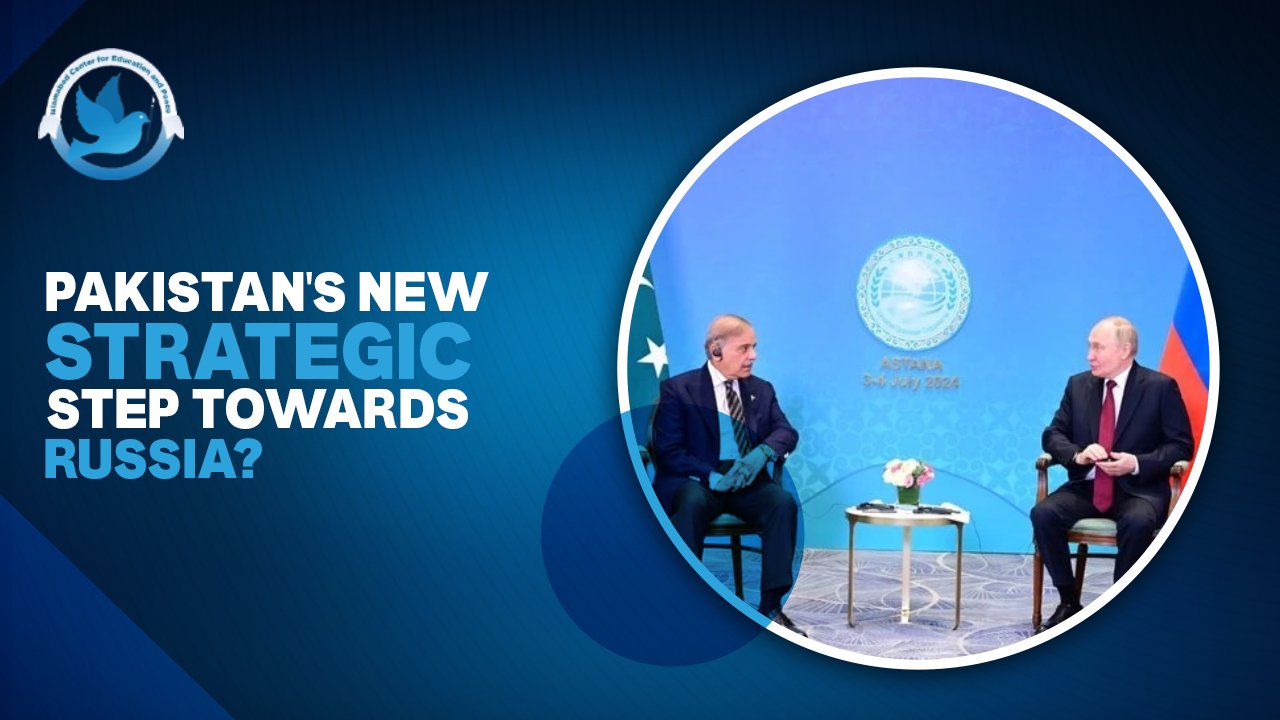
Pakistan\'s new strategic step towards Russia?

On his visit to Moscow, Prime Minister Shehbaz Sharif will bring a diplomatic agenda. But he'll be tasked with answering the question every analyst in Islamabad, Washington, Beijing and New Delhi is asking, Is Pakistan making a new strategic shift toward Russia?

Sharif will start his first official three-day trip to Russia on November 30 and will be accompanied by a dozen Russian parties to sign 15 to 16 bilateral accords in the areas of trade, energy, infrastructure, culture and education. The base for several weeks. The two sides are preparing a long list of agreements ahead of the 11th session of the Russia-Pakistan Intergovernmental Commission, which is scheduled to take place in Moscow on November 25. Reports of the commissioning date and the date of the prime minister's visit are slightly divergent, so check the final date. This isn't a sudden change. Pakistan-Russia relations have been warming up and now the agenda for November indicates some positive steps towards translating goodwill into tangible projects.

The most promising area is energy. Russia shares expertise in oil and gas production, refining and generation of power which is chronically in short supply and the cost of imports is very high. Industry will also be on the table. Talks have already taken place on the revival of projects like the Karachi Steel Mills, a Soviet construction project which has long been a reminder of the potential and the neglect of this relationship. Another key area is transport; both sides saw the potential of maritime shipping and of deepening cooperation in INSTC. Healthcare has also been mentioned, although the possibility is that the Russian insulin could be manufactured in Pakistan. This level of cooperation could directly impact to the common man, for a country with high import dependency in medicine.

As well as heavy industry, the partnership is expanding to the digital domain. Islamabad is interested in AI, cybersecurity and other emerging technologies as Pakistan looks to commercialize the technology and draw investments to boost its digital exports under its vision to create a $1 trillion economy by 2035, the country is in talks with Russia. Pakistani companies, including Ebryx and TMC, are looking to explore development opportunities with their Russian partners, the Russian Quantum Center and Positive Technologies.

This is a shift from talk to business, according to government officials. Pakistan and Russia agreed to shift technology cooperation from dialogue to practical engagement based on the company-to-company partnership, joint ventures and investment. The launch is just right for Pakistan that is thirsty for new markets for its IT and telecom industry. Relationships with institutions are strengthening as well. An MoU was signed between NAB and Russia's Prosecutor General's Office, facilitating the exchange of expertise, legal assistance, and coordinated actions for tracing and seizing assets that have been generated from corruption and money laundering. The people-to-people component is also expanding, with 1,400 Pakistani students studying at Russian educational institutions in 2025-26 as compared to 725 in 2023.

Both countries have much to look at in each other. Under Western sanctions, Russia is trying to increase the scale of its economic cooperation with Asia and Pakistan's energy requirements and huge population  a natural market. Islamabad, Moscow provides a diversification. A nation that has been largely reliant on a few for financial assistance, trade and defense has all the reason to establish other linkages, particularly in the context of changing global order.

It's a larger picture. The leaders of Russia, China and the United States met in Shenzhen this month and signed a joint peace declaration for the first time in history where the three heads of state met together. If the big boys play in their team, the middle boys have scope to play around and no need to play against one another in a bloc of power.  Enthusiasms need to be balanced with reason. One regional analysis says that Pakistan is moving ahead with its plans for doing business with Russia, but without actually meeting the needs of the economy, and proposes that more agreements with more robust implementation would benefit both sides. Pakistan has signed numerous MOUs with various countries in the past and the gap between commitment and delivery is no secret. Karachi Steel Mills has undergone this "resuscitation" before.

There are also other obligations that limit any radical change of course that Pakistan has to make. In September 2025, Islamabad signed a Strategic Mutual Defense Agreement (SMDA) with Saudi Arabia, and the Pakistani government has declared itself neutral in the 2026 war between Iran and Saudi Arabia, and agrees to host mediation talks. A nation at a crossroads between Riyadh, Tehran, Beijing and Washington can't decisively back Moscow.

Pakistan's approach towards Russia can only be interpreted as diversification, not a defection. Islamabad is working on expanding the network of partners to minimize dependency, make more investment and boost the economy of Islamabad. Russia gains a South Asian market and a partner. Both parties aren't cutting any ties with current relationships. The real test of whether this is a real strategic partnership will be in the months to come, rather than in the signing of the two documents in Moscow. When the agreements result in working steel mills, a steady and stable energy supply, and strong partnerships in technology, it will be considered a watershed moment in the visit. If they continue to be headlines, they'll be added to a long list of good news announcements. The only thing that matters for Pakistan is whether common people feel the benefit or not.