Top Stories
Building Bridges Through Words Understanding Militant Ideologies in Modern Contexts Security: Beyond Walls and Weapons Upcoming Events: Connecting Ideas and People Previous Milestones: Reflecting on Our Journey Fatwas: Reclaiming the Spirit of Ethical Guidance Role of NATO in Conflict Resolution Washington Peace Deal Between Congo and Rwanda Social Justice and Equality in the Qur’ān: Implications for Global Peace The Qurʾānic Concept of Human Equality: An Analysis against Racism and Ethnic Discrimination in Contemporary Societies Reinterpreting Dhimmitude: A Reconsideration of Its Social and Political Functions in the Modern Context How China Is Playing the Long Economic War Ukraine Peace Efforts Advance Cautiously Despite Partial Alignment Among Parties How Pakistan-Libya Military Relations Strategic Outreach, Economic Stakes and Geopolitical Implications Aleppo Clashes as Syria and Kurdish-Led SDF Agree to Ceasefire Across the Border, Pakistani Ulema Stand Against Afghan Girls\' Education Ban Pakistan announce 500 fully-funded scholarships for Bangladeshi students in 8 programs How theTaliban regime threat for reginal peace Women Left Behind in Khyber Pakhtunkhwa’s Education System Sudan’s Civil War: Anatomy of the World’s Largest Humanitarian Crisis Changing Security Architecture in Central Asia Pakistan Leads India on Economic and Peace Indicators in 2026 : Gallup Survey Submerged Classrooms, Long-Term Learning Loss Pakistan Security Report 2025: Terrorism Trends and the Peace Deficit HEC’s MAKTAB Initiative Signals a New Era for Higher Education Southern Yemen Faces Tensions and Urgent Need for Peace IUT Strengthens Education Integrity in Bangladesh Pakistan’s Arms Sales Contracts (2024–25) and the Peace Dimension Pakistan\'s Contribution to UN Peacekeeping Operations for Global Peace Pakistan Enhances Educational Cooperation with Sri Lanka through Scholarship The Growing Defense and Economic Nexus of the Muslim World Charter of Trump’s Board of Peace Pakistan & Myanmar Prioritize Education Strategic Saudi defense agreements are redefining the Middle East\'s security architecture What would be the consequences of the U.S.–Iran Conflict on Pakistan? How Indian Cricket Politics Affect Regional Peace The Kashmir issue remains a central peace and stability in South Asia American Weapons in Afghanistan Are Destabilizing Pakistan Global Education Coalition sixth annual meeting A New Chapter for Pakistan’s Universities: Leadership, Stability, and Vision under the New HEC Chairman The Evolution of the IMCTC into a Global Security Pillar Reintegration Initiative: Analyzing the 2026 IMCTC Engagement in Pakistan Psychosocial Warfare and the IMCTC Peace Journalists Initiative (2026) The Concept of ‘Ummah’ in the Qurʾān: Transcending Race, Tribe, and Ethnicity HEC Reforms Regulation, Defends Academic Freedom Pakistan’s Evolving Role in Fostering Peace and Security on the African Continent Recontextualizing Pakistan’s Role in the Board of Peace War in the Middle East: Measuring the Cost The Silent Bridge: Pakistan’s Strategic Neutrality and the Quest for Middle Eastern Stability The Geography of Escalation: Living in an Age of Permanent Crisis Mapping the Educational Crisis in the Middle East Conflict The Blind Alley of “Epic Fury”; A War with no End game A Pakistani Voice Against Digital Islamophobia: A Landmark Academic Contribution World Eye on Pakistan for Middle East Peace Leading with Truth, ICEP’s Analysis Outlasted the Skeptics on Middle East Crisis World Powers Push for Deal U.S. Presents 15-Point Plan and Iran Responds with 5 Conditions Pakistan and Türkiye Open New Chapter in Academic Cooperation with Strategic Initiatives Pakistan at the Crossroads of Global Trade as a Logistics Revolution Unfolds Why Ethical Dialogue necessary in a Diverse Pakistan for a Peacebuilding Initiative Pakistan\\\'s Game-Changer Role for World Peace Entrepreneurship Education Is Shaping Pakistan\\\'s Economic Future Dr. Jamil Akhtar Featured in Prestigious Brill Encyclopaedia (2026) A Milestone in Global Interfaith Scholarship Peace Light in a Dark Night WAR RESHAPES PAKISTAN’S ECONOMY AND OPEN DOORS FOR INTERPRENEURS From Gaza to Lebanon: ICC, UN, and the Unanswered Duty to Prosecute Can Pakistan turn a temporary ceasefire into lasting middle east peace? Bridging the Gap: Confronting Education Inequality in Pakistan Hierarchical Culture In Pakistani Organizations \"How It Kills Innovation — and What Leaders Can Do About It\" Can Diplomacy Survive the Iran Crisis? Peace Efforts in an Age of Permanent Escalation Why are Peace Talks a US strategic priority? Features of Intellectual Property in the Age of Artificial Intelligence (In the Context of World Intellectual Property Day) A Global Forum for Peace, Governance, and a Better World (France\'s Landmark Contribution to International Dialogue) IS UAE WANT A \\\'CURRENCY SWAP\\\' WITH THE USA Energy War by Sea: The Hormuz Blockade Proves Oil is Still a Weapon The End of Strategic Dependence In Europe? Pakistan\'s Strategic and Structural Evolution from Crisis to Consolidated World Peace Silent Deterrence: Hangor-Class SSP-2800 and Undersea Strategy of Pakistan Inside the $9 Billion Prediction Market Revolution Pakistan at the Crossroads: Between Fragile Stability and the Weight of Structural Crisis WHY DIALOGUE FAILS IN CONFLICT ZONES; A LESSON FOR POLICY MAKERS The Crisis of American Legitimacy in the Post-Unipolar Era THE OIL CLUB UAE JUST QUIT Inside OPEC’s Biggest Defection in Decades — and What It Means for the World The Kashmir Dispute: International Institutional Failure and Humanitarian Consequences The $100 Billion Event the World Refuses to Understand How is Eid-ul-Adha A School of Peace? 250 Million Children Classrooms Zero Learning Ethical Dialogue: The Art of Speaking with Intention Ethical Dialogue: The Moral Weight of an Honest Word Skills in Their Hands, Books in Their Bags Ethical Dialogue : Honoring the Voice of the Other HEC Honors Top Pakistani Scientists and NRPU Grant Recipients at Punjab University What\'s the 14 Point of Peace deal that will be signed in Geneva When Words Carry Power: The Unequal Conversation Why Humanitarian Crises Gain Attention Only When Politicized : An International Law Perspective The Ethics of Saying Nothing The Strait of Hormuz Crisis: Energy Security in an Era of Regional War Ethical Dialogue: The Forgotten Half of Every Conversation Why is Homework Still a Thing In Modern Education Peace Beneath the Red Lines Ethical Dialogue: The Wisdom of Not Being Certain HEC\'s 47th Commission Meeting Charts Reform Path for Higher Education Sector PERIDOT: Franco-Pakistani Research Collaboration Program WINDS OF CHANGE Ethical Dialogue: Persuading Without Deceiving HEC Conducts Scholarship Test Across Bangladesh The significance of the \"same DNA\" statement Phone-free campuses could become the next step in education reform Ethical Dialogue: When Dialogue Becomes a Weapon HEC hosted a Quality Leadership Session in Faisalabad Women\'s Role in Peace-building in Somalia Modernizing the Indus Waters Treaty for the Climate Change Era How Will Pakistan Prevent Another \"Ever Given\" at Bab al-Mandab? HEC Chairman Leads Strategic Higher Education Engagements in Lahore and Karachi A Nation Cannot Prosper While Its Children Suffer NIPIS\'26 Welcomes Largest-Ever International Cohort of 50 Interns from 15 Countries The Bermuda Triangle of Promises: U.S. and Iran in Negotiations Pakistan\'s New Strategic Architecture in the Gulf Pakistan Unveils First International Defense Technology Incubation and Investment Platform Selective Justice Under the UN: India\'s Record in a Disputed Territory Married Off Instead of Educated: How Child Marriage Quietly Empties Pakistan\'s Classrooms Between Unemployment and Extremism: Can Vocational Training Break the Cycle for Pakistan\'s Youth? Winning Battles, Losing Peace: Why Military Force Has Failed in Sudan Kashmir Seven Years After Article 370: Development, Rights, and Regional Challenges HEC-NAHE Launches Strategic Planning & Leadership Excellence Workshop for University Leaders Could the Iran-US Conflict Escalate Into a NATO Crisis? Quality Education - Dawn of Tomorrow Beyond the Indus Water Treaty : Re thinking Pakistan’s water security after India’s suspension Can Justice truly exist without Morality? Climate Change as a Non-Traditional Security Threat in Pakistan HOW DOES SOCIAL MEDIA INFLUENCE STUDENTS’ ACADEMIC PERFORMANCE? How Article 370 Pushed the Kashmir Dispute Out of Delhi\'s Courts and Into International Arbitration Digital Literacy as Pakistan’s Best Armour Against Online Extremism Beyond direct talks: why backchannel mediators are crucial for modern crisis de-escalation? How Medical Education Can Promote Peace and Reduce Conflict in Pakistan? The Age of Narrative Warfare The Role of Youth in Community-Level Peacebuilding Digital Islamophobia in India after 2024 Election Article 140-A: The Constitutional Solution Pakistan Keeps Ignoring HEC Pushes AI Revolution in Pakistan’s Higher Education Sector If Iran Joins the Makkah Pact, Pakistan\'s Balancing Act Gets Harder Why Trump Refused Saudi Arabia’s Call for Direct Action Against the Houthis Is India’s BRICS Achievement Really a Diplomatic Victory? Makkah Defence Alliance Is Defensive, Says DG ISPR Ethics of Dialogue: The Courage to Speak When It Costs Something Can Kashmir’s Ecological Crisis Become a Regional Climate Security Threat? Pakistan-Türkiye Higher Education Ties Strengthened Through NUST Engagement Kohat Attack and the Fragile Path to Pakistan-Afghanistan Talks From Insurgents to Stakeholders: The Transformation of the Houthis in Yemen Stitches of Struggle: Why Kashmir’s Home-Based Women Artisans Are Left Behind in the Global Luxury Economy Soft Power without Hollywood: How China Is Making Culture a Strategic Asset The Rise of Ittehad-ul-Mujahideen Pakistan: A new challenge to Pakistan’s militant landscape The New U.S- Iran Maritime Standoff - Who Controls Hormuz The Classroom Before the Courtroom: Rethinking Violence Against Women A New Map or an Old Problem Water as a Weapon: How Climate Stress and Legal Collapse Are Turning the Indus into a New Front Between Pakistan and India A New Cybersecurity Shield for Pakistan’s Universities Iraq After the U.S. Withdrawal National Dialogue: Pakistan and Global Peace NOTICE OF SECOND ANNUAL GENERAL MEETING What Role Can Pakistan Play in Building a Peaceful Gulf? Peace Through Progress : Why Maqpondass Can Become a Model for Development in Gilgit-Baltistan Terrorism and Pakistan is not doing enough to control it Scrolling Towards Peace: How Digital Media Can Unite Pakistani Youth Pakistan’s Youth: Building Bridges for Dialogue France’s Education Protests: Lessons for Pakistan’s Public Schools HEC’s International Research Fellowships: A Strategic Investment in Pakistan’s Future Beyond SAARC: The Case for Modular Regionalism in South Asia Can Washington Become Central Asia\\\'s Alternative Partner? Peace in Afghanistan: Beyond Isolation, Towards Engagement Medical Education Reforms in Punjab Badr and Makkah: Rethinking Regional Security Muslim Women as Peacebuilders in Pakistan Beyond the Budget: Why Education Remains a Strategic Blind Spot for Pakistan The Mecca Defense Pact: Solidarity on Paper or Strategy in Action? Education Under Strain: What Europe\'s Protests Teach Pakistan Another Strike on Iran: Strategic Victory or Regional Disaster? Oman-China Relations: A Strategic Partnership Amid Rising US-Iran Tensions The US Midterms 2026: A Wake-Up Call for War and Peace? Why America Is Turning Away from Israel? Russia–Ukraine Peace Deal: Can Abu Dhabi Deliver a Peace That Lasts? GCC Establishes Advanced Military Command Headquarters in Kuwait: Implications for Gulf Security Architecture New Provinces or a New System? What Pakistan Needs First Punjab’s Education Crisis: From Monitoring to Meaningful Reform Pakistan’s Diplomatic Moment: The 30th ECO Council of Ministers and the Future of Regional Cooperation ECO Conference 2026: Can Pakistan Turn Regional Promises into Real Progress? The Architecture of Détente: Can Three Leaders Redefine the Path to Global Peace and Stability? Pakistan\'s new strategic step towards Russia? Pakistan Touches the Stars: Zeeshan Ali Makes History on Shenzhou-24 Reforming Health Education: HEC\'s Vision for a Stronger Healthcare System
Security

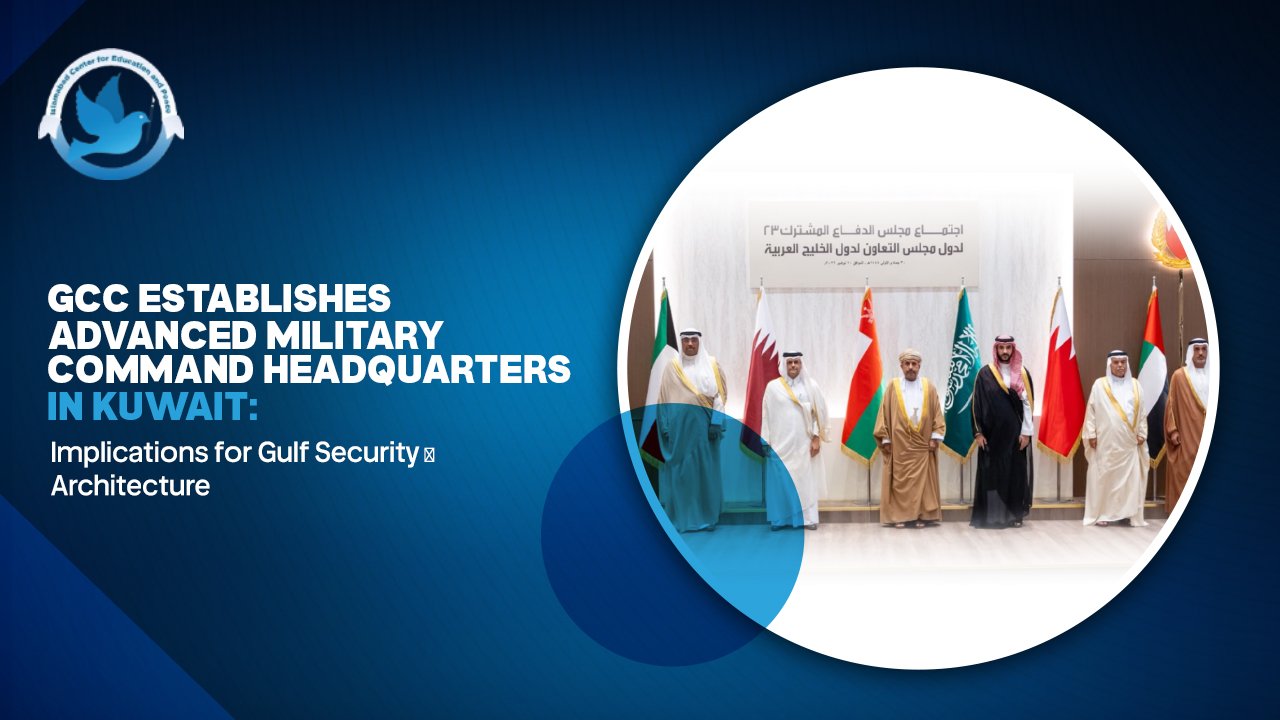
GCC Establishes Advanced Military Command Headquarters in Kuwait: Implications for Gulf Security Architecture

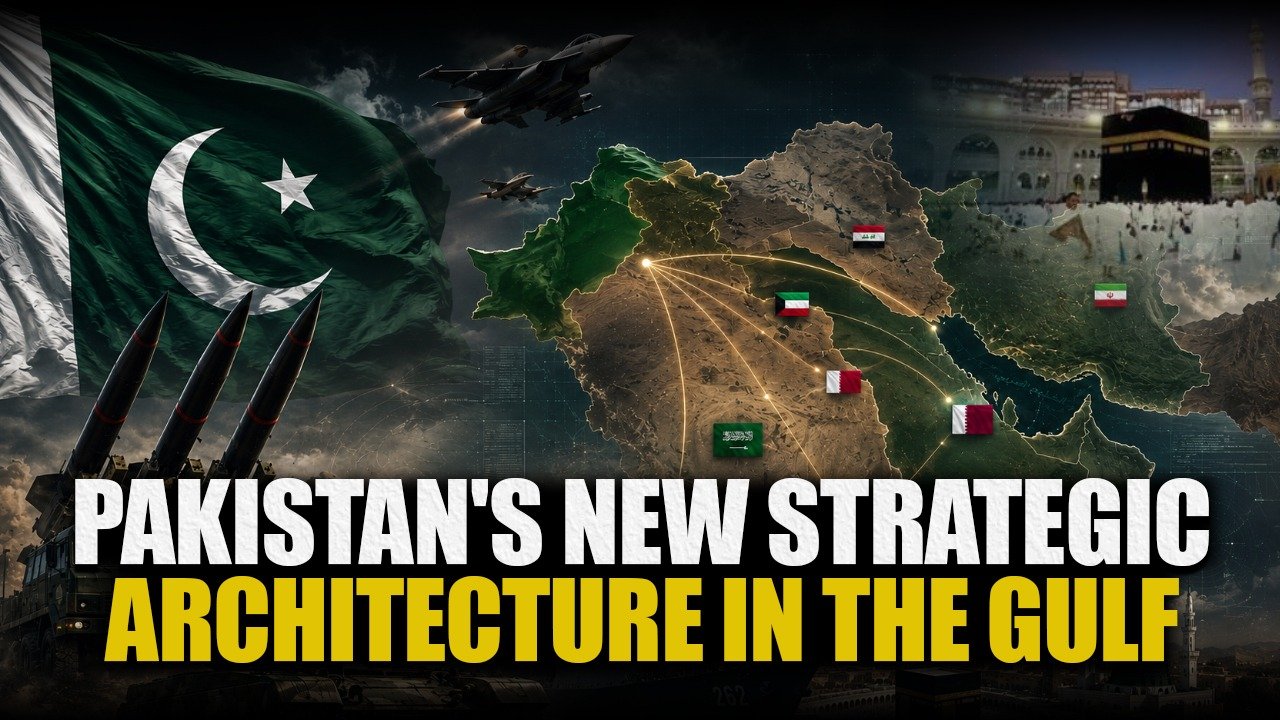
The establishment of the advanced military command headquarters in Kuwait by the Gulf Cooperation Council (GCC) is one of the major developments in the progression of regional security cooperation. The decision, made by the six member states on 10 November 2026, comes as an increasing awareness that the security challenges facing the Gulf require greater coordination, quicker response and greater collective capacity. It also raises the larger question of whether the Gulf is gradually creating a collective defense system of its own or it's bolstering existing mechanisms while maintaining dependence on outside actors.

 The announcement came after the 23rd session of the GCC Joint Defense Council in Bahrain's capital, Manama. An advanced headquarters would be set up in Kuwait, part of the GCC Unified Military Command, with the appropriate number of forces deployed there, it said. It did not however reveal the number of soldiers in the force or what it would consist of, exactly what it would be tasked with doing or when the headquarters would be operational. The information will be crucial for the evaluation of the practical meaning of this initiative. The decision comes after a series of military ties and cooperation between the six member states of the Gulf Cooperation Council Namely Saudi Arabia, the United Arab Emirates, Qatar, Kuwait, Bahrain and Oman. Established in 1981 the GCC was formed and in 2013, it agreed the Unified Military Command to enhance coordination between the national armed forces. It has its primary hub in Riyadh, Saudi Arabia, in 2021. The Kuwait facility should thus be seen as a forward deployment of an ongoing command structure, rather than the establishment of a new GCC army.

The decision carries significant strategic implications, given Kuwait's geopolitical position. It is located at the northern part of the gulf adjacent to Iraq and Saudi Arabia and near some of the most critical security regions in the country. A forward command presence would enhance the coordination at sea throughout the northern part of the gulf provide quicker responses to emerging threats and provide a connection between planning and operational coordination within member states. The security environment in this region is becoming more complex. The impact of a localized conflict could be felt across the entire region with the potential of missile and drone attacks on energy infrastructure, maritime insecurity and shipping routes being susceptible. A major portion of the world's oil and gas supply passes through the Strait of Hormuz making it a special region and any disruptions there would have effects on international trade, energy prices and the global economy. These worries have been heightened by the recent escalation between Iran and the United States and Israel. Recent incidents and threats have highlighted the importance of greater air/land/sea force early warning, information sharing and coordination. Forward headquarters may play a role in these goals, but what they can actually do remains to be determined depending on decisions that are still under discussion.

Gulf security architecture has always been dependent on relationship with the outside powers, including the U.S. The Gulf security architecture has always depended on a relationship with outside powers, particularly the U.S. The military facilities of the United States, naval deployments in the region intelligence cooperation and defense agreements continue to play vital roles in regional security. The latest decision is not too much to say that it doesn't show a desire to replace these relationships.

A more realistic interpretation is that the governments of the Gulf Cooperation Council (GCC) want to increase their ability to coordinate and respond in the face of escalating crises while continuing to have existing international relationships. Increased regional capacity may provide member states with more choices in a crisis and shorten decision-making time due to disjointed decision-making. It might also help improve cooperation with external partners through providing greater clarity in the regional command. The project could also help to further progress towards common defense priorities such as missile warning air-defense coordination, maritime surveillance and joint training. These should not be considered as established functions at the new headquarters but as areas in which cooperation can emerge. The public announcement is not giving an operational blueprint.

It is fair to compare with NATO but should be done with caution. Even though the GCC states have been in existence since 2000 and have established a Joint Defense Agreement, they are not NATO. A much higher degree of institutional integration is evident, as NATO states have committed themselves to the collective defense obligation in Article 5 of the NATO Charter and implement command arrangements and planning procedures that are integrated. The key challenge for the GCC is not only to set up another headquarters, but also to transform it into a successful one. It is to ensure the member states are able to agree on common threat assessments, to share intelligence in a timely and appropriate way, to coordinate command decisions and to deploy command forces that can operate in a coordinated manner. Differences in national priorities military capabilities and procurement systems may complicate this process. A HQ can promote cooperation but it can't replace political agreement and long-term investment.

The success of the initiative will be determined by implementation. Clarity will be required about the authority of the command, who are assigned to it how it ties in with the Riyadh command and the ways of conducting joint operations. There would also be a need for ongoing exercises and communication systems that are interoperable so that the political decision becomes an effective military one. Transparency will be important too. A new military facility could be interpreted as part of a rival regional military buildup for neighboring countries. GCC leaders can lower the chances of misunderstanding by making the defensive nature of the initiative clear and simultaneously having open diplomatic relations. Collective defense should enhance deterrence but not escalate it.

There are legitimate reasons for the Gulf states to improve their security co-operation. They rely on energy export stability the safety of sea lanes, investor confidence and infrastructure. A more streamlined defense mechanism could help to defend these interests and to ward off attacks. But the military is not sufficient for lasting security. Collective security measures should be complemented by measures to alleviate tensions, avoid miscalculation and facilitate peaceful dispute settlement while diplomacy confidence-building and regional dialogue continue to be vital. A stable Gulf is in the interest not only of the six member states but also of the Middle East and the world economic system.

The deployment of an advanced military command headquarters in Kuwait from the Gulf Cooperation Council is a positive step toward the shaping of an emerging security architecture in the Gulf. It reflects a wish for more regional cooperation and involvement in collective defense. It is too early however to call the move an alliance of NATO's type or to suggest that it would supplant the security alliances the Gulf has long enjoyed with the United States and other outside powers. The real test will be whether the new headquarters becomes an effective mechanism for joint planning early warning and coordinated action. If underpinned by political unity practical capabilities and a commitment to diplomacy it could strengthen regional resilience. Ultimately the purpose of collective defense should be not only to prepare for conflict but to protect stability and create the conditions for lasting peace.