
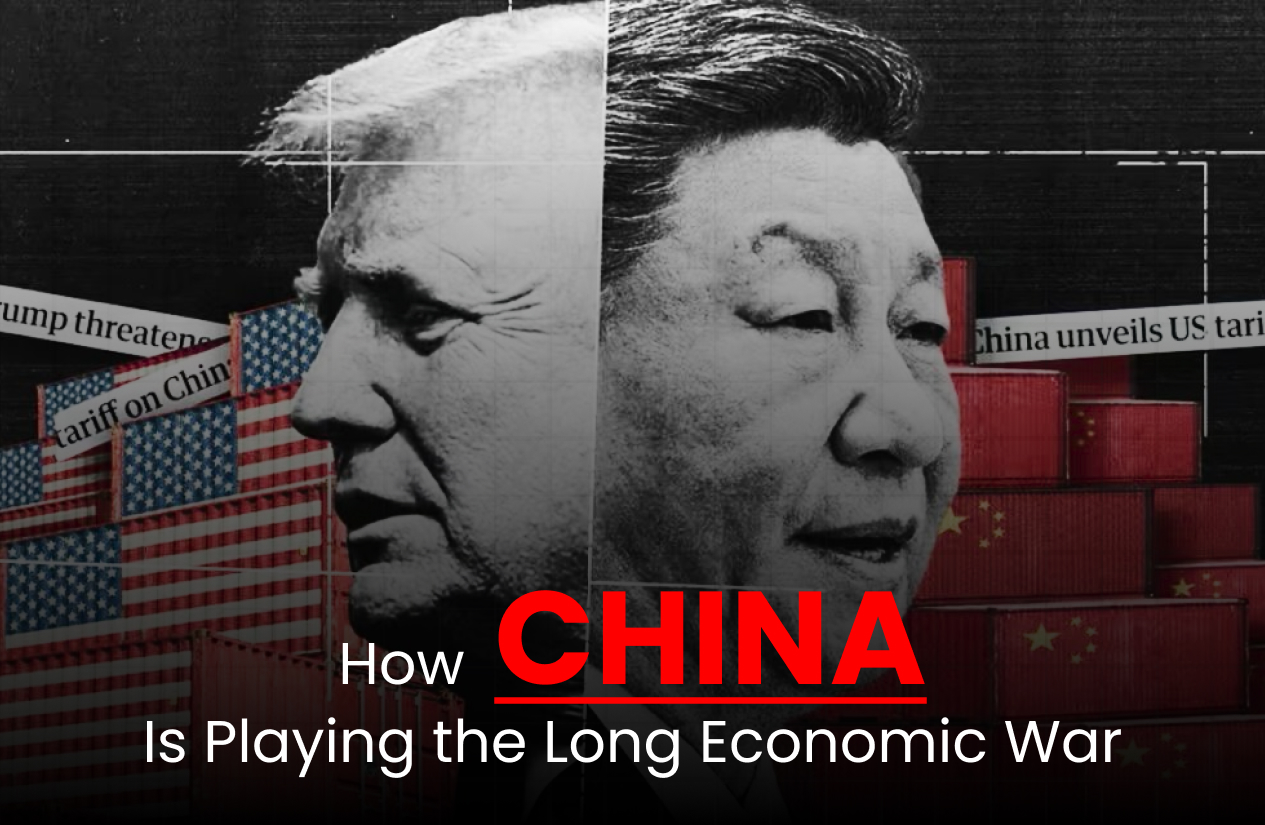

In the past
year, the Chinese government’s approach to the increasing tensions of trade and
technology with the United States has clearly turned a corner in the country’s
international strategy. Rather than merely acting in a reactive or
compromise-oriented way, Beijing has shown a deliberate intention of absorbing
the economic costs in the confrontation with the USA in order to push back
against the American pressure. By means of export controls, trade measures, and
other instruments, China has demonstrated it is able to weaponize its supremacy
in the global supply chains while still pursuing the diplomatic off-ramps. This
approach is indicative of mere retaliation tactics, in addition to a global
strategy of China's ascendance as an international power. Let us discuss this
matter step by step briefly.
1.
Calibrated but Firm Retaliation
China’s
posture against U.S. actions has been brazen yet judicious. Export prohibitions
pertaining to rare earths, restrictive conditions pertaining to high-level
processing technology, as well as agricultural imports such as U.S. soybeans
were set with the intentions of imposing costs without locking the doors for
further dialogue. This approach has permitted Beijing to momentarily withhold
actions that came after high-level diplomatic channels were employed.
2. Supply
Chain Weaponization
Beijing has
begun leveraging non-tariff barriers and export controls designed for sectors
where the Chinese government possesses structural advantages. Rare earths
materials, green energy materials, and high-end manufacturing materials also
highlight Beijing's readiness to use supply chains as geopolitical weapons.
3. Domestic
Political Imperatives
The Chinese
government, especially President Xi Jinping, also has its own set of
limitations in terms of domestic public opinion. If an outcome were deemed
friendly to the United States, it would invite the same backlash criticism that
the government faced after signing the Phase One trade agreement in 2020.
Resisting the United States has become part and parcel of President Xi’s
campaign in his vision for bringing an end to China’s “century of humiliation.”
4. A
Multi-Stage Strategic Vision
For China,
the bilateral trade war is simply another episode within an unfolding
competition that has been ongoing for several decades. The short-term objective
is to gain greater freedom from U.S. controls on technology to speed up
development of the semiconductor. The medium-term strategy is to enhance
self-reliance in technology and expand export sales to other countries. The
long-term plan is to create an alternate global system of trade and finance
that weakens the U.S. ability to impose sanctions.
5.
Capacity and Capital:
Strengths
with Limits capacity, China’s scale of population, industrial capacity, and
finances is the foundation for its global influence. China is the globe’s leading
exporting nation and a pioneer in manufacturing, clean energy technologies, and
infrastructure. Nevertheless, potential challenges to future growth for China
include its overcapacity, low domestic consumption, aging demographic
structure, and dependence on overseas markets.
6. Credibility and Soft Power Deficits
Deficits in
Credibility and Soft Power China has strong material power but lacks
credibility and soft power. Its opaque decision-making process, debt diplomacy
policies, overcapacity issues, and dual-use investments have all created doubts
abroad. China is respected, but it is not necessarily relied upon or trusted.
7. A Shifting U.S. Position
A Shift in
the U.S. Amid the withdrawal from multilateralism and the polarization faced by
Washington, its historic strengths in terms of integrity and leadership in
international relations have eroded. This has been taken advantage of by a
China that still cannot fill the void left by the United States within the
international order.
In conclusion, China's challenge embodies a historical anomaly in terms of geopolitics. Unlike other revisionist states, China's aim to become a superpower is through economic accumulation rather than by force of arms, expecting to reach parity, if not superiority, without necessarily going to war. However, power and capital are not enough. Inconsistencies in credibility, demographics, and economic structure continue to pose a threat to the ascent of China. A blunt force attack may not work well in the case of the United States. A demonstration of global leadership means regaining the trust of the international community and maintaining good relations with other countries. Rather than resorting to pressure tactics, the challenge posed by the competition between Washington and Beijing is better conceptualized as one of endurance, in which a victory may not be easily demonstrable by either party.



_6784.jpg)