
Since
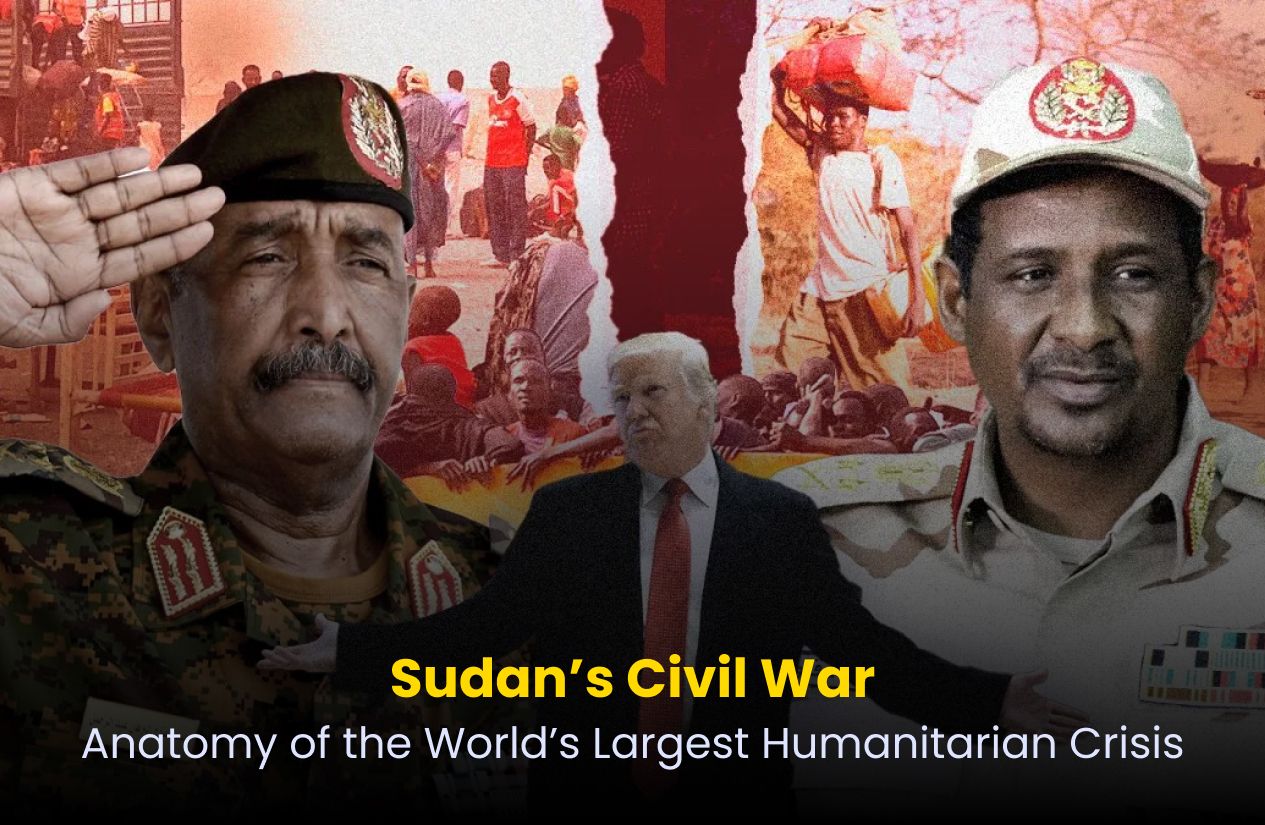
April 2023, Sudan has been engulfed in a brutal civil war that has devastated
the country and triggered the largest humanitarian crisis in the world today.
What began as a violent power struggle between rival military factions has spiraled
into a full-scale conflict that has shattered state institutions, displaced
millions, and created unprecedented levels of human suffering.
The current war erupted on 15 April 2023, when the paramilitary Rapid Support Forces (RSF) attempted to overthrow the government led by the Sudanese Armed Forces (SAF) under General Abdel Fattah al-Burhan. Fighting quickly spread from Khartoum, the capital, to key regions such as Darfur and Kordofan, engulfing the country in violence. Over the course of more than two years of fighting, the war has morphed from a military confrontation into a humanitarian catastrophe, with civilians bearing the overwhelming brunt.
Recent
reports indicate:
·
More than 1,600
people have been killed in attacks on healthcare facilities alone in 2025, according
to the World Health Organization (WHO).
·
Drone strikes and
aerial attacks have killed dozens of civilians in regions like Kordofan,
including infrastructure such as hospitals and U.N. bases.
These
figures are conservative estimates; independent monitoring groups suggest
actual death tolls are significantly higher.
The
United Nations estimates that over 14 million people have been forced from
their homes — including both internally displaced persons (IDPs) and refugees
in neighboring countries such as Egypt, Chad, Ethiopia, and South Sudan. The
scale of displacement makes Sudan’s civil war not just a national tragedy, but
a regional destabilizer, with strains on public services and social networks in
host countries.
Humanitarian
Collapse: Hunger, Disease and Health System Destruction
Hospitals and clinics have been destroyed, damaged, or forced to close, leaving most Sudanese without basic care. The WHO describes the crisis as a regional health emergency, with outbreaks of cholera, malaria, and measles exacerbated by conflict conditions and mass displacement. Attacks on health facilities including hospitals not only kill civilians directly but also undermine efforts to control disease and treat the wounded. The war has precipitated one of the most severe hunger crises in modern history. More than 30 million people well over half the population now need urgent humanitarian assistance for food, water, shelter, and health services. Famine conditions have been confirmed in parts of North Darfur and South Kordofan, with acute food insecurity affecting millions. Even where fighting has eased, economic collapse and shattered production systems make recovery slow and fragile.
Global
and Regional Implications
1. Sudan’s
crisis is not isolated. It has strained regional systems by overburdening neighboring
countries’ resources.
2. Elevated
fears of broader instability across the Sahel and East Africa.
3. Sparked
debate about the international community’s commitment to civilian protection
and humanitarian law.
4. Humanitarian
organizations have repeatedly warned that global inaction and insufficient
funding have worsened the crisis’s impact.
Pathways
to Peace
1. Immediate Ceasefire and Humanitarian Access
2. Accountability and Protection
3. Regional and International Diplomacy
4. Sustained Humanitarian Support
Analytical
Reflection:
Sudan’s civil war is
more than a national tragedy it is one of the most severe humanitarian crises
of our time. Tens of millions are affected by violence, hunger, disease, and
displacement. Without immediate, coordinated international action, the
suffering will only deepen. Through rigorous research and sustained advocacy, organizations
like Islamabad Centre of Education and Peace (ICEP) can help amplify these
urgent humanitarian needs and contribute to informed dialogues on conflict
resolution and peacebuilding.
By : Abdullah sayaf

_6784.jpg)