Top Stories
Building Bridges Through Words Understanding Militant Ideologies in Modern Contexts Security: Beyond Walls and Weapons Upcoming Events: Connecting Ideas and People Previous Milestones: Reflecting on Our Journey Fatwas: Reclaiming the Spirit of Ethical Guidance Role of NATO in Conflict Resolution Washington Peace Deal Between Congo and Rwanda Social Justice and Equality in the Qur’ān: Implications for Global Peace The Qurʾānic Concept of Human Equality: An Analysis against Racism and Ethnic Discrimination in Contemporary Societies Reinterpreting Dhimmitude: A Reconsideration of Its Social and Political Functions in the Modern Context How China Is Playing the Long Economic War Ukraine Peace Efforts Advance Cautiously Despite Partial Alignment Among Parties How Pakistan-Libya Military Relations Strategic Outreach, Economic Stakes and Geopolitical Implications Aleppo Clashes as Syria and Kurdish-Led SDF Agree to Ceasefire Across the Border, Pakistani Ulema Stand Against Afghan Girls\' Education Ban Pakistan announce 500 fully-funded scholarships for Bangladeshi students in 8 programs How theTaliban regime threat for reginal peace Women Left Behind in Khyber Pakhtunkhwa’s Education System Sudan’s Civil War: Anatomy of the World’s Largest Humanitarian Crisis Changing Security Architecture in Central Asia Pakistan Leads India on Economic and Peace Indicators in 2026 : Gallup Survey Submerged Classrooms, Long-Term Learning Loss Pakistan Security Report 2025: Terrorism Trends and the Peace Deficit HEC’s MAKTAB Initiative Signals a New Era for Higher Education Southern Yemen Faces Tensions and Urgent Need for Peace IUT Strengthens Education Integrity in Bangladesh Pakistan’s Arms Sales Contracts (2024–25) and the Peace Dimension Pakistan\'s Contribution to UN Peacekeeping Operations for Global Peace Pakistan Enhances Educational Cooperation with Sri Lanka through Scholarship The Growing Defense and Economic Nexus of the Muslim World Charter of Trump’s Board of Peace Pakistan & Myanmar Prioritize Education Strategic Saudi defense agreements are redefining the Middle East\'s security architecture What would be the consequences of the U.S.–Iran Conflict on Pakistan? How Indian Cricket Politics Affect Regional Peace The Kashmir issue remains a central peace and stability in South Asia American Weapons in Afghanistan Are Destabilizing Pakistan Global Education Coalition sixth annual meeting A New Chapter for Pakistan’s Universities: Leadership, Stability, and Vision under the New HEC Chairman The Evolution of the IMCTC into a Global Security Pillar Reintegration Initiative: Analyzing the 2026 IMCTC Engagement in Pakistan Psychosocial Warfare and the IMCTC Peace Journalists Initiative (2026) The Concept of ‘Ummah’ in the Qurʾān: Transcending Race, Tribe, and Ethnicity HEC Reforms Regulation, Defends Academic Freedom Pakistan’s Evolving Role in Fostering Peace and Security on the African Continent Recontextualizing Pakistan’s Role in the Board of Peace War in the Middle East: Measuring the Cost The Silent Bridge: Pakistan’s Strategic Neutrality and the Quest for Middle Eastern Stability The Geography of Escalation: Living in an Age of Permanent Crisis Mapping the Educational Crisis in the Middle East Conflict The Blind Alley of “Epic Fury”; A War with no End game A Pakistani Voice Against Digital Islamophobia: A Landmark Academic Contribution World Eye on Pakistan for Middle East Peace Leading with Truth, ICEP’s Analysis Outlasted the Skeptics on Middle East Crisis World Powers Push for Deal U.S. Presents 15-Point Plan and Iran Responds with 5 Conditions

Leading with Truth, ICEP’s Analysis Outlasted the Skeptics on Middle East Crisis

It is a rare and refreshing thing in journalism to see a gut feeling  backed by deep research actually come true in real-time. While many senior analysts and loud voices in the media were busy claiming that Pakistan was running out of options and losing its grip on Middle Eastern diplomacy, the Islamabad Center for Education and Peace (ICEP) put forward a bold narrative: that Pakistan was actually the best-positioned country to bring everyone back to the table. At the time, some might have dismissed this as wishful thinking, but the events of the last 48 hours have proven that this analysis was spot on.

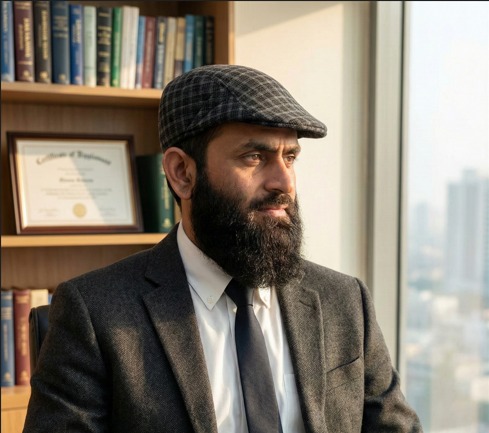
A huge part of this accuracy comes down to the work of Senior Analyst Abdullah Sayyaf. His ability to see the Peace Actor role of Pakistan, even when the drums of war were at their loudest shows a level of foresight that is hard to find. By focusing on facts and historical patterns rather than just chasing the latest headline, Abdullah and the team at ICEP have given readers a true, grounded understanding of how diplomacy actually works behind the scenes. It’s a great reminder that in a world full of noise, the quietest and  well-researched voices are often the ones worth listening to.
The depth of this report is a direct reflection of the expertise behind it. As an alumnus of the National Defense University, Islamabad (NDU), with a specialization in Peace and Conflict Studies, Abdullah Sayyaf brings a rigorous academic foundation to his field-based insights. Over the last four years, he has established himself as a sharp voice in conflict analysis, maintaining a keen focus on the shifting dynamics of the Middle East and a watchful eye on South Asian security, particularly the Kashmir conflict. This unique combination of academic grounding and consistent writing has allowed him to cut through the noise, offering the kind of on-the-spot predictions that only come from a deep, long-term commitment to understanding the machinery of peace.

https://icep.org.pk/read?Id=123