_7443.jpeg)

“Who
controls the past controls the future. Who controls the present controls the
past.” George Orwell.
Power
in the twenty-first century is no longer measured solely by military strength,
economic capability, or technological superiority. Increasingly, it is
determined by a state's ability to shape information, influence perceptions,
and construct persuasive narratives. Wars are no longer fought exclusively on
battlefields; they unfold simultaneously across television networks, digital
platforms, and social media feeds. In this evolving strategic environment,
controlling the narrative has become almost as important as controlling
territory. The struggle over ideas, perceptions, and public opinion has
transformed narrative warfare into one of the defining features of contemporary
international politics.
A
narrative is more than a sequence of facts. It is a carefully constructed
interpretation of events that gives meaning to political actions and shapes how
societies understand reality. Facts may remain unchanged, but the way they are
framed can influence emotions, justify policies, and determine who is perceived
as a victim or a villain. As The Geostrata (2024) argues, the ability to
shape narratives has become a strategic instrument of national power. In the
information age, perception often influences political outcomes as much as
military capability.
The
evolution of warfare reflects this transformation. From stones and swords to
tanks, nuclear weapons, drones, cyber capabilities, and artificial
intelligence, every technological revolution has altered the nature of
conflict. Today, another battlefield has emerged alongside land, sea, air,
space, and cyberspace: the information domain. States increasingly compete
through strategic communication, public diplomacy, media campaigns, and
information operations designed to influence both domestic and international
audiences. Winning public opinion has become an indispensable element of
achieving political and military objectives.
Dr.
Ajit Maan, in Counter-Terrorism: Narrative Strategies (2014), argues
that narratives are never politically neutral. They are deliberately crafted to
persuade audiences, legitimize policy choices, strengthen national identity,
mobilize public support, and weaken adversaries. Modern conflicts are therefore
fought not only for territorial advantage but also for interpretive
dominance—the power to define events before others do. This explains why
governments invest heavily in strategic communication, media engagement, and
public diplomacy alongside conventional military capabilities.
The
digital revolution has accelerated this transformation at an unprecedented
pace. Platforms such as X, Facebook, YouTube, TikTok, and Instagram enable
information to reach global audiences within seconds. While these technologies
have democratised communication, they have also created fertile ground for
misinformation, disinformation, propaganda, and coordinated influence
operations. Artificial intelligence has further complicated the information
landscape through deepfake videos, synthetic images, and AI-generated content
capable of blurring the distinction between truth and fabrication. In this
increasingly contested information environment, public trust has become both
fragile and strategically valuable.
Recent
geopolitical conflicts vividly illustrate the strategic value of state
narratives in modern warfare. The recent U.S.–Iran confrontation, including the
U.S. military operation referred to as Operation Epic Fury, demonstrated
that military campaigns are now accompanied by equally sophisticated
information campaigns. Military action and strategic communication operate
simultaneously, with governments seeking not only tactical success but also
dominance over the interpretation of events. Washington portrayed its actions
as necessary to deter regional threats, protect international security, and
prevent nuclear proliferation. Tehran, in contrast, framed the strikes as an
unlawful violation of sovereignty and an act of foreign aggression, employing
anti-imperialist rhetoric and strategic messaging to strengthen domestic
resilience and mobilise regional support. Long before independent assessments
emerged, competing narratives had already begun shaping international opinion.
The contest therefore extended well beyond missiles and military capabilities
into a struggle for credibility, legitimacy, and global perception (Nye, 2004;
Pfaltzgraff & Shultz, 2018).
This
pattern reflects a broader transformation in the character of warfare.
Contemporary conflicts are increasingly fought across both physical and
cognitive domains, where influence over public perception can be as
strategically significant as success on the battlefield. Military victories
alone are no longer sufficient; states must also secure diplomatic legitimacy,
maintain domestic cohesion, and influence international discourse. Information
has become a force multiplier, while narrative dominance has emerged as an
essential component of national power.
The
consequences extend far beyond the battlefield and pose profound challenges for
democratic societies. Democracy depends upon informed citizens capable of
evaluating political claims through evidence and critical reasoning. Yet when
misinformation spreads faster than verified facts, public discourse becomes
increasingly polarised, weakening democratic deliberation and institutional
trust (Bennett & Livingston, 2018). Political actors often rely on
emotionally charged narratives rather than empirical evidence, while foreign
disinformation campaigns exploit existing social divisions to undermine
confidence in democratic institutions (Walker, 2018). Elections, policy
debates, and even national security decisions can therefore be shaped by
carefully engineered narratives instead of objective analysis. Information
manipulation has become not merely a communication problem but a direct
challenge to democratic resilience.
Pakistan
is not immune to these global trends. Political polarisation, the rapid
circulation of unverified content on social media, and coordinated online
influence campaigns have repeatedly demonstrated how narratives can shape
public opinion and intensify societal divisions. External actors also attempt
to influence perceptions regarding Pakistan's security, economy, and foreign
policy through sustained information operations. These developments underline
the importance of strengthening institutional credibility, promoting
responsible public communication, and building national resilience against
information manipulation. In an era where perception increasingly shapes policy
outcomes, strategic communication should complement—not replace—transparency
and accountability.
Recognising the dangers of narrative warfare, however,
should never become a justification for restricting legitimate freedom of
expression. Every sovereign state has the right to communicate its policies and
protect its national interests. The challenge lies in distinguishing strategic
communication from propaganda, and verified information from deliberate
deception (Jowett & O'Donnell, 2018). Democratic societies cannot defend
themselves by sacrificing the very freedoms they seek to protect. Instead, they
must strike a careful balance between safeguarding national security and
preserving the public's right to accurate, independent, and reliable
information.
Addressing
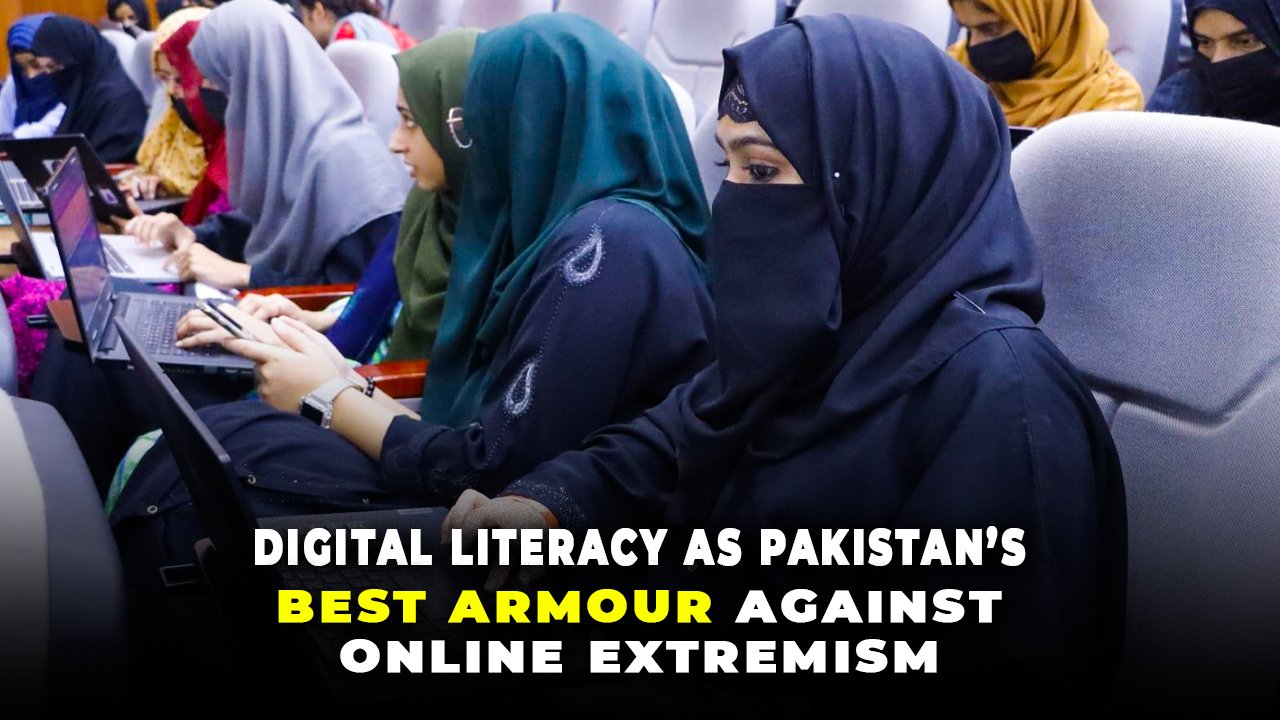
this challenge requires a comprehensive national strategy. Media literacy
should become an integral part of educational curricula so that citizens
develop the critical skills necessary to evaluate digital content and resist
manipulation (Hobbs, 2010). Independent journalism, academic research, and
professional fact-checking institutions must be strengthened as pillars of
informed public debate. Technology companies should increase transparency
regarding algorithmic content distribution and intensify efforts to reduce
coordinated disinformation while respecting freedom of expression. Above all,
governments must recognise that public trust cannot be manufactured through
information control; it is earned through transparency, accountability, and timely,
credible communication.
George
Orwell's warning remains profoundly relevant in the digital age. Those who
shape public understanding increasingly shape political reality itself.
Information has become both a strategic resource and a strategic weapon.
Military power may determine the outcome of battles, but narratives
increasingly determine how those battles are understood, remembered, and judged
by history. The defining challenge before democratic societies is therefore not
merely to win the information war, but to preserve truth, critical thinking,
and evidence-based public discourse. Ultimately, the strongest defense against
narrative warfare is neither censorship nor propaganda, but an informed,
educated, and critically minded citizenry capable of questioning, verifying,
and responsibly sharing information.
_6784.jpg)