
Kashmir
Solidarity Day is celebrated on 5 February each year and is a national holiday
in Pakistan to show everyone that the Pakistani nation stands with the Kashmiri
people. The day is observed to send a message to the world about India’s
illegal move after the withdrawal of its special autonomy in August 2019 and
reiterates an international demand for implementing UN resolutions according to
which Indian occupied Kashmiri people have the right to determine their own
future through a free and fair plebiscite.
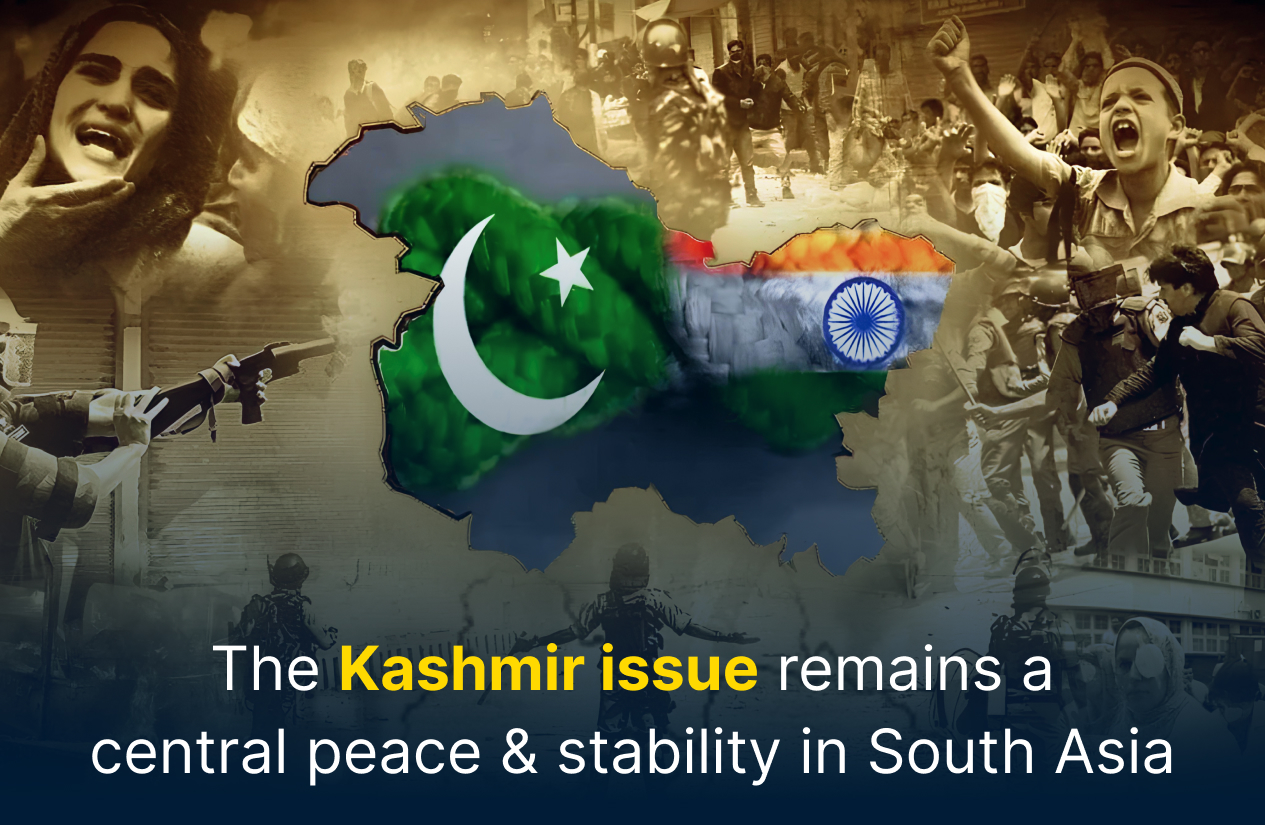
The Kashmir conflict started in 1947 with the partition of British India, when several Muslim-majority regions formed the independent Dominion of Pakistan, and Indian nationalist leaders refused to recognize it as legitimate. The first war between the two nascent states ended with a splitting of the territory along the Line of Control. Soon, the United Nations stepped in and adopted several resolutions urging a plebiscite to let the Kashmiris decide their political destiny. But 10 years later, the promised referendum has still not been held, and it remains an issue that keeps getting kicked into the long grass.
The short but brutal war fought between India and Pakistan in 2025 proved once again that Kashmir is the single most dangerous place on the planet, the nuclear flashpoint upon which rests not only regional South Asian stability, but global peace as well. The crisis erupted when a deadly attack in Indian-administered Kashmir resulted in accusations, diplomatic retaliation, and finally missile and drone attacks between the two nuclear-armed neighbors. While the standoff lasted only a few days before a cease-fire was reached, it became one of the most serious escalations in recent years and served as a reminder of how quickly tensions over Kashmir can spill into interstate warfare. For Pakistan, the unfinished business of partition and unmet UN resolutions on self-determination have translated into a mission to decolonize Kashmir. Pakistan continues to urge dialogue and international involvement in the peaceful settlement of the dispute. India, however, insists Kashmir is a domestic matter and has denied third-party mediation, also turning down any role for the United Nations in the dispute. This basic disagreement remains an obstacle to any political solution.
The 2025 war also emphasized the evolving face of warfare between India and
Pakistan. Between missile strikes and drones, cyber-attacks and the closure of
airspace, local trade, diplomacy, and even aviation were all upended — a reminder
of how short conflicts can have far-reaching effects. The crisis sent shivers
around the world, as any extended face-off between two nuclear-armed foes is
fraught with risk for disaster. Kashmir’s instability spills over to the entire South Asian neighborhood. Long-standing tensions have undermined foreign investment, arrested regional
connectivity, and only end up siphoning off scarce resources towards military
rather than development ends. The lack of active conversation breeds distrust
and raises the chances of a future crisis, as public opinion both in Israel and
among the Palestinians hardens.
The year 2025 only reaffirmed an age-old truth: nuclear deterrence can keep
full-scale war at bay, but it cannot stop crises from recurring. In the absence
of effective diplomacy and adherence to globally agreed obligations, it is
South Asia that will face episodic escalations. On this Kashmir solidarity day,
the problem is still a major obstacle to durable peace in South Asia. The fact
of the 2025 war was an important reminder that ignoring UN resolutions had not
eliminated the controversy, but only perpetuated instability.
Sustainable peace in South Asia, so the Islamabad Center for Peace and
Education (ICEP) argues, can only be achieved through fresh dialogue
accompanied by respect for UN resolutions as well as effective
confidence-building measures that would block a repeat of the negative
scenarios that have threatened regional stability in the long run.

_6784.jpg)