
After months
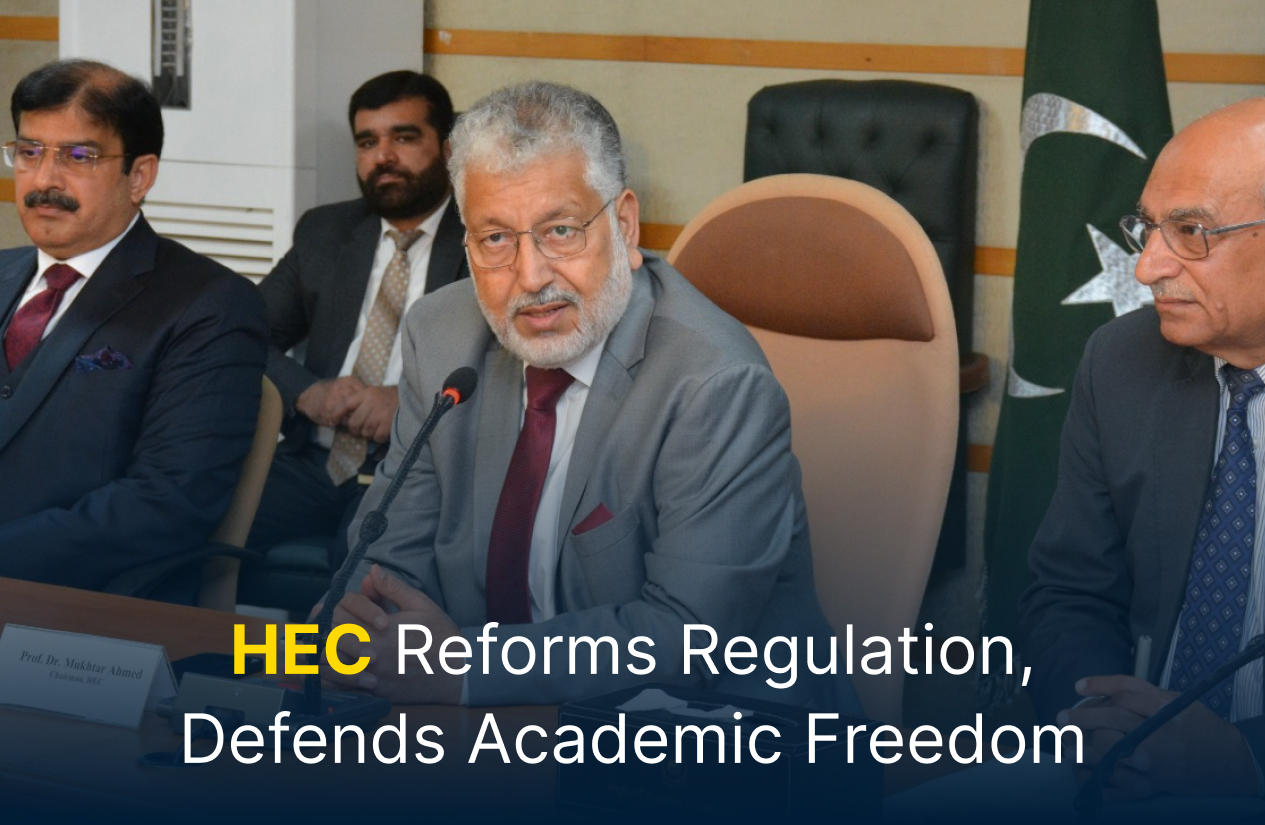
of uncertainty, the Higher Education Commission (HEC) finally has a new
chairperson. Although the HEC is constitutionally recognized as the national
regulator of higher education, its long-term role remains undetermined
post-18th Amendment, when many powers were devolved to provinces. The HEC made
some significant policies that created a substantial difference between the
previous University Grants Commission (UGC) and itself, including tracking of
university programs in an organized manner to expand opportunities for students
and faculty, quality control, etc. It also introduced rigorous monitoring of
research work. Yet it has also grappled with challenges in recent years that
require immediate focus from its new leaders.
Perhaps the
biggest issue is the vagueness surrounding what federal and provincial
authorities are responsible for. This has created a fair bit of administrative
complexity because ever since devolution, overlapping jurisdictions have
complicated administration. For instance, universities looking to offer new
academic programs require accreditation from both federal and provincial higher
education authorities. This duplication not only hampers progress but also
breeds confusion and inefficiency.
Similar
reviews of academic programs are conducted by several authorities. Both HEC and
provincial commissions perform reviews, and often professional accreditation
councils conduct additional assessments. This creates a situation where
universities are evaluated not just twice, but sometimes three times for the
same program. This endless monitoring creates administrative fatigue and
distracts from teaching and research. Redundancies could be reduced and
efficiency enhanced if a joint performance review mechanism involving the HEC,
provincial commissions, and professional bodies was devised.
The new HEC
chair will also have to start a consultative process for amending the laws
under which the Commission operates on an urgent basis. Regulation, not
intrusion, should be the HEC’s main role. It should pay attention to quality
assurance, periodic revision of curriculum, facilitation of international
research grants, faculty development, and global academic linkages. Its core
responsibilities also justify its continuing relevance at the federal level.
Another area
that needs urgent protection is university autonomy. However, recent arbitrary
changes to undergraduate, postgraduate, and doctoral programs have raised
serious concerns. These decisions, often made without consultation, undermine
institutional independence. Universities have academic autonomy embedded in
their identity, which is protected by legal and regulatory mechanisms. Public
sector universities used to work fine with autonomy, and they were seldom
misused. But growing interference by provincial governments, accreditation
authorities, and even the HEC itself has undermined their independence.
The
centralized design of the curriculum and the imposition of compulsory courses
have constrained universities’ creative space. Administrative Interventions
Have Made Vice-Chancellors Functionaries Subject to Bureaucratic Control
Restoration of self-government is vital to safeguarding academic quality and
institutional integrity.
The HEC, too,
needs a critical review of its research funding policies. At the moment,
faculty members frequently chase research projects simply because funding
exists for them—no matter how relevant to national priorities. As such, many of
these funded studies are not applicable to the socio-economic realities of
Pakistan. Meanwhile, important areas remain neglected. There is a lack of
studies, for instance, on improving graduate employability and shaping
university education to fit the expectations of local and international labor
markets.
The general
research priorities should be established through wide consultation with
scholars and other stakeholders. National challenges must take precedence.
Local researchers should be able to identify the root causes of poverty and
criticize and offer context-specific alternatives to donor-driven models of
poverty alleviation instead of passively adopting them. Indigenous research can
give rise to more sustainable pilot projects.
Aside from
the urgent need for administrative and research reforms, the intellectual
environment at our universities is also a question in desperate need of
attention. In recent years, intolerant and dogmatic ideological narratives have
become ascendant on academic campuses. Universities are traditionally hubs of
critical inquiry, where dissent is prized and timeworn ideas subjected to
rigorous scrutiny. Real knowledge production goes by free thinking and open
debate.
But now most
institutions must function within constraints. Academic discussions are tightly
regulated by codes of conduct, with ideological conformity frequently given
precedence over intellectual freedom. Professors may find themselves diminished
to a passive role as transmitters of assigned content instead of engaged
collaborators in extended scholarship. Such an environment deters creativity,
debate, and innovation.
The new HEC
leadership needs to ensure an environment in which intellectual freedom is
respected and safeguarded. Universities need to be places where people feel
they can say anything—as long as it is responsible discourse. The security and
academic freedom of faculty and students are paramount to meaningful learning
and research.
A future for
Pakistan’s higher education system depends on clear regulatory roles,
institutional autonomy, relevant research priorities, and an open intellectual
culture. By addressing these critical issues decisively, the new HEC chair can
redefine the Commission’s objective and regain faith in its leadership.
By : Asif Sandhu



_6784.jpg)