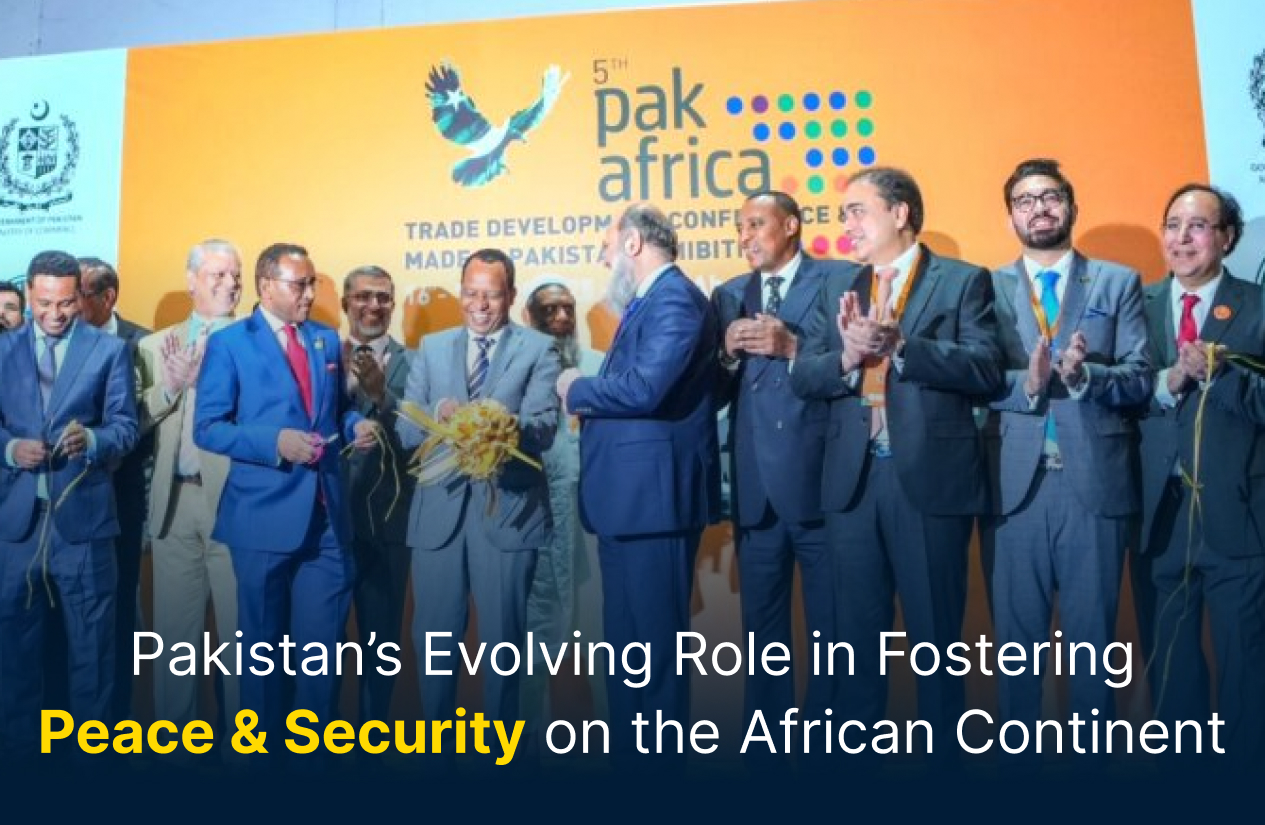

Pakistan’s strengthening defense partnership with African
states also mirrors a wider, but often overlooked, contribution in promoting
peace, stability, and security across the continent. The reported negotiations
for the potential purchase of a maximum of 24 JF-17 Thunder Block III fighter
jets by Somalia from Pakistan reflect not just an ever-deepening bilateral
relationship but also Pakistan’s positive involvement in bolstering African
security institutions. Somalia’s efforts to modernize its air force come at a
pivotal moment. Following decades of fighting and the destruction of state
structures in the early 1990s, Mogadishu is attempting to rebuild its defense
forces.
The nation also faces the ongoing threat of Al-Shabaab
insurgents and escalating regional tensions after Israel recognized Somaliland.
In such a complex geopolitical world, securing stratospheric airspace has
become not only a strategic requirement but also a symbol of sovereignty. In
this respect, the role of Pakistan is substantial. JF-17 Thunder, a joint
project between Pakistan and China, turned out to be an affordable and
effective multi-roll fighter aircraft. It provides a low-cost option for
countries where defense budgets are limited compared to more expensive Western
platforms. Aside from the aircraft, Pakistan offers an integrated package
covering pilot training, servicing support, and maintenance infrastructure as
well as integration of versatile weapons. This integrated approach builds
institutional capacity in the long term rather than dependence.
Notably, Pakistan’s diaspora with African partners has
traditionally been much more robust than just defense exports. Many of these
missions are in Africa, and Pakistan is among the largest troop-contributing
nations in United Nations peacekeeping. Pakistani peacekeepers have deployed to
Somalia, Sudan, the Democratic Republic of Congo, Liberia and other
conflict-hit countries where they are known for their professionalism and
commitment. These missions have contributed to stabilizing fragile states,
protecting civilian populations, and assisting in post-conflict reconstruction.
In the case of Somalia, rebuilding airpower does not
represent the projection of aggression but rather the restoration of state
sovereignty and defense of territorial integrity. The air force is functional
for better surveillance, responding quickly to militant threats and
coordination with ground forces. Helping Somalia build this competency makes
Pakistan a stakeholder in the stability of an important regional showcase in
Southern Africa adjacent to vital global shipping lanes along the Red Sea and
Gulf of Aden. Pakistan’s model of defense cooperation doesn’t have stiff
political conditionality's either. For many developing countries, this model is
appealing because it preserves national sovereignty and facilitates
self-sufficiency.
In the changing context of Somali regional relations and
power dynamics, partnerships based on mutual respect and pragmatic assistance
gain even more importance. Improved security capacity in African states,
therefore, correspondingly meets international interests. Stable and secure
nations are more capable of dealing with terrorism, piracy, and transnational
crime — problems that have global implications. Pakistan is assisting global
peace and security through enhancing wider cooperation in the region merely by
supporting African partners to bolster their defense institutions. The possible
JF-17 deal between Somalia and Pakistan, therefore, is more than just a defense
transaction. It mirrors Pakistan’s influential role as a responsible security
partner for the African nations looking to rebuild and modernize their armed
forces.
In its efforts to promote stability throughout Africa,
Pakistan continues to contribute through peacekeeping missions, defense
cooperation, and capacity-building initiatives. As African states demand
greater self-sufficiency in protecting their respective territories,
partnerships anchored upon affordability, training, and capacity creation will
continue to be pivotal. In this changing environment, Pakistan’s positive
engagement makes it a key player in the quest for peace and security in Africa.
By : Asif Sandhu
_6784.jpg)