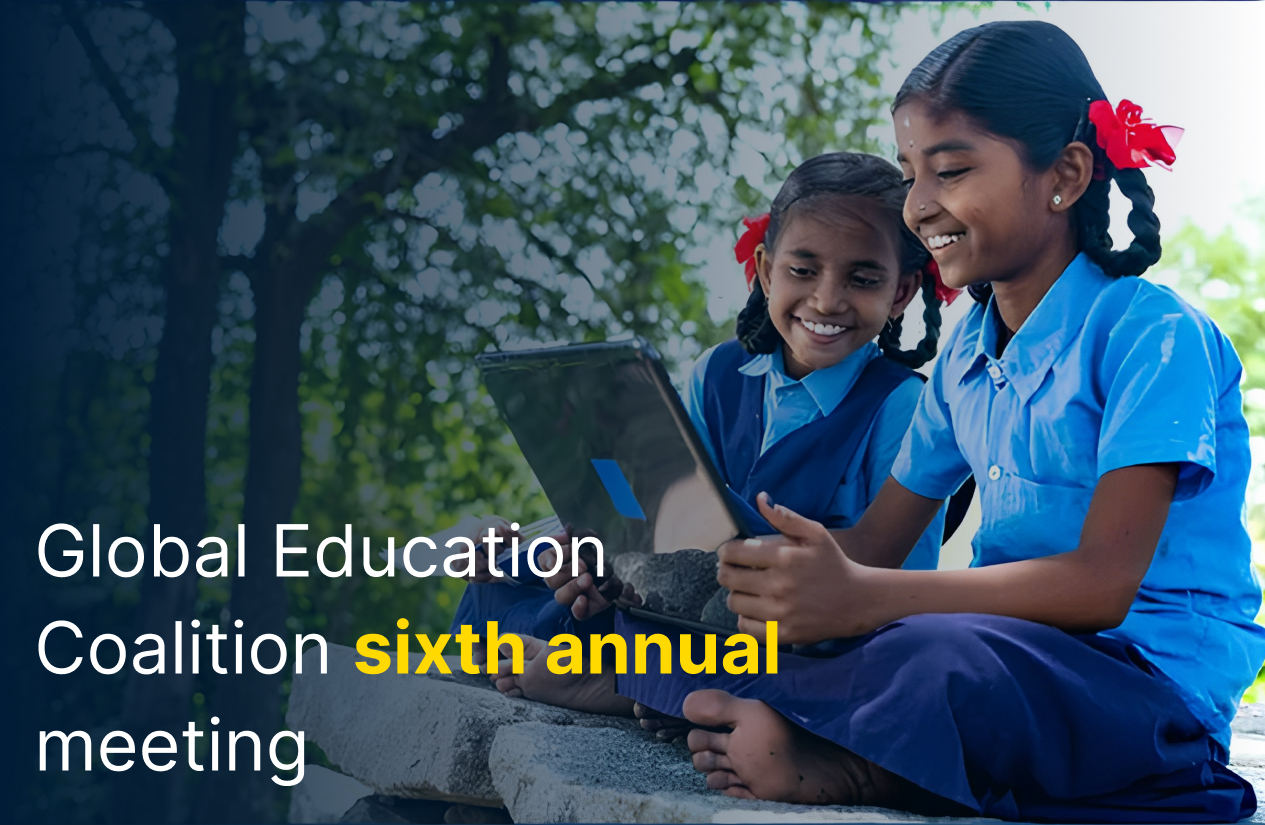

Global education leaders, policymakers, and development partners will come
together on 24 March 2026 at UNESCO headquarters in Paris for the sixth meeting
of the Global Education Coalition. Being held at a key juncture for the global
agenda on education, the meeting zooms in on one of the most critical questions
that we have before us today: How investments in digital transformation and
artificial intelligence (AI) lead to tangible social and economic benefits
for education systems around the world.
The event is not a usual yearly meeting but rather a special occasion under
the theme “Turning vision into value: Transforming education together.” It’s a
reflection of an increasing global acknowledgment that the future of education
will be defined by digital technologies, AI-enabled tools, and international
cooperative ties. Against the backdrop of the race to achieve SDG 4—access to
quality education for all (SDG 4)—the meeting seeks to turn global ambitions
into measurable achievements.
Around the ages of eight and nine, from Addis Ababa to the Central African
Republic, girls attending primary school approach a critical juncture in their
lives and education. The last 10 years have seen some revolutionary changes in
the field of education. The COVID-19 pandemic fast-tracked digital learning
uptake and drew attention to inequity in technology access and the pressing
need for more resilient and adaptable education systems. Today, the challenge
is twofold: recovering lost learning while ensuring that students are prepared
for an increasingly digital economy.
Launched by UNESCO in 2020, the Global Education Coalition has become a
common platform to coordinate information and action made together with
governments, international organizations, civil society, technology sector
partners, and academic institutions. The platform works to assist countries in
creating inclusive, resilient, and future-proof education systems.
The 2026 annual meeting arrives as many countries are transitioning from ad
hoc digital emergency responses toward longer-term strategies for transforming
education. It is a transformation that takes long-term investment, coordinated
policies, and solid partnerships—issues that the Paris meeting is supposed to
tackle head-on.
From Vision to Measurable Impact
Among the meeting’s central aims is to go beyond broad pledges to concrete
results. Conversations will consider how digital transformation and AI can effect quantifiable improvements for students across systems of education,
including
·
Expanding access to quality
learning
·
Improving teaching and
professional development
·
Preparing for the future
workforce
·
Enhancing education
financing and governance
Bringing together ministers, experts, and stakeholders, the meeting offers a
high-level platform to discuss how collective action can take ambitions from
policy to practice. The economic case for digital investment in education.
One of the key issues that will be
discussed in the session is the social and economic aftermaths faced while
enabling investment for digital transformation and utilizing AI. More and more,
education is being seen not just as a social good but also as a major
contributor to economic growth and innovation.
Adapting the workforce for the digital economy
Automation, AI, and new technologies are changing global labor markets.
Old-school roles are evolving or vanishing and being replaced by brand new ones
that demand digital skills.
·
Digital education is one
way in which countries can invest:
·
Equip learners with
future-ready skills.
·
Reduce unemployment and
skills mismatches.
·
Support economic
competitiveness.
·
Foster innovation and
entrepreneurship.
The education of any country, if it is transformed digitally, can uplift its
population to become knowledge workers in today’s economy.
Reducing Educational Inequality
Educational gaps can be filled with new technologies, especially in distant
and marginalized populations. Digital resources, AI-enabled tools, and online
learning platforms could open opportunities for children in areas with limited
traditional infrastructure. But the digital divide is still a significant
struggle. Technology can exacerbate, rather than bridge, divides without equal
access to devices, connectivity, and digital literacy. As a result, the
upcoming meeting of the Coalition will focus on inclusive and country-led
action to guarantee digital transformation contributes to the learning of all
children—not only those in well-resourced settings.
Making Teachers Better At A Time Of AI
The transformation of education continues to be driven by teachers. Instead
of substituting teachers, AI and digital tools can empower educators by:
·
Automating administrative
tasks
·
Providing personalized
learning insights
·
Enhancing professional
development
·
Enabling innovative
teaching methods
The talks during the meeting on teacher empowerment demonstrate the
importance of teachers having abilities, training, and support that will enable
them to flourish in digital classrooms.
AI in Education:
Artificial intelligence is gaining widespread acceptance as part and parcel
of 21st-century education. Artificial intelligence platforms have the ability
to personalize learning and customize content based on each student’s
requirements. However, the fusion of AI with education raises some serious
questions:
·
Ethics and data privacy
·
Algorithmic bias and
fairness
·
Governance and regulation
·
Responsible use of
technology
During the forthcoming annual meeting, policymakers and experts will meet to
exchange views on how AI can be implemented responsibly to optimize
its educational contributions.
Building Digital Learning Ecosystems
The idea of digital learning ecosystems is also likely to be a major theme.
Rather than dealing with isolated technologies, the workshop will address what
system initiatives would involve, as far as:
·
Infrastructure and
connectivity
·
Curriculum and digital
content
·
Teacher training and
support
·
Governance and policy
frameworks
·
Sustainable financing
models
Through whole-system approaches, countries are able to develop their
education systems—responsive, robust, and transformative.
Innovative Approaches to Financing Education
Financing, however, is one of the greatest hurdles to global education. It
makes huge demands for investment just at a time when many states are
financially stretched. It will focus on new financing models, such as:
·
Public-private partnerships
·
Impact investment models
·
Blended finance approaches
International cooperation and resource mobilization
Here, sustainable financing is crucial to guarantee that digital
transformation efforts are not just a flash in the pan but instead enduring
national policies.
Strengthening Global Collaboration
At its heart, the Global Education Coalition is a testimony of international
cooperation. No single nation or entity can do the heavy lifting of education
transformation alone. The annual meeting aims to:
·
Strengthen partnerships
across sectors.
·
Share evidence and best
practices.
·
Align global expertise and
resources.
·
Encourage coordinated
action.
By facilitating collaboration, the Coalition allows countries to share
learning from one another and speed up progress towards common aims.
Building Education Systems in the Age of AI
The increasingly rapid change of technology requires constant adaptation in
education systems. Here’s what schools and universities need to do, besides
imparting knowledge:
·
Critical thinking
·
Creativity
·
Digital literacy
·
Problem-solving
·
Lifelong learning
“You are training people for a future that is digital and AI-driven,” said
the draft of the 2026 meeting document.
Looking Ahead
The 6th Global Meeting of the Global Education Coalition is a key moment in the collective work to reimagine education globally. Highlighting the social and economic dividends of digital transformation and AI, it casts a renewed spotlight on the increasing consensus about the centrality of education to sustainable development and shared global prosperity. As nations strive to meet the targets of SDG 4, the results of this meeting will inform future policies, partnerships, and investments affecting education systems for years to come. And the meeting's message is clear in the end: changing education is a global task. By working together, acting creatively, and committing consistently, the international community can help vision become value—with education systems prepared for a digital and AI-supported future.



_6784.jpg)