By : Asif Sandhu
Pakistan is a country of unbelievable diversity - dozens of
languages, ethnic groups, religious denominations and cultures. This diversity
is among the strongest aspects of this country and at the same time it poses a
great challenge. In a society in which differences can readily become fault
lines, the issue is not whether people will talk to one another, but how they
will talk to one another. This is where the ethics of dialogue is not only
important, but necessary, especially in the quest of peace and education in the
country.
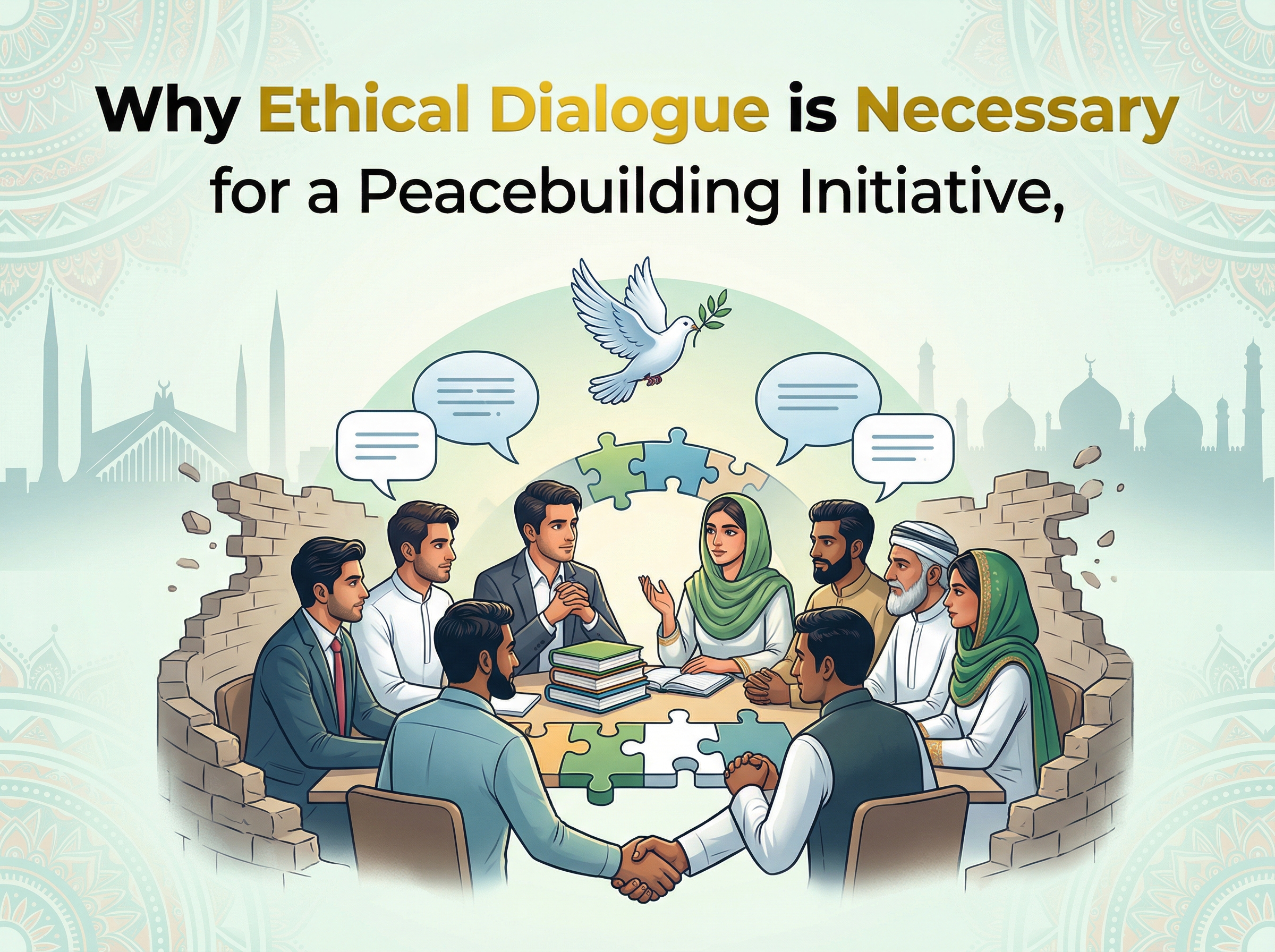
What Are Dialogue Ethics?
The ethics of dialogue are the ones which govern meaningful,
respectful, and productive dialogue among individuals or groups of individuals,
and primarily, those who disagree with each other. These values are active
listening, respect, honesty, empathy, and the real desire to understand the
other party. Dialogue ethics do not concern coercion to agreement. They are concerned
with building a space in which disagreement can be achieved without becoming
conflict.
In Pakistan, where sectarian conflicts, political
polarization, and misunderstanding among communities have always been a thorny
issue, lack of ethical dialogue has continuously resulted in violence, mistrust
and disintegration of society. Never has there been a greater need than now of
a culture of principled conversation.
Connection between Dialogue Ethics and Peace.
The two are closely related and peace and education rely on
the level of communication in a society. Peace does not merely mean the lack of
war or violence. It is the availability of justice, knowledge and
collaboration. All these are impossible without ethical dialogue.
In Pakistan, the disputes between the political parties,
religious groups, or ethnic groups are not always based on the differences that
cannot be resolved; more often, the failure to communicate contributes to the
conflicts. Rumors spread unchecked. Misrepresentations go uncorrected.
Accusations replace conversations. The moment when individuals no longer listen
to each other with respect and care, even minor misunderstandings may turn into
life-threatening conflicts.
Dialogue ethics offers the platform to avoid this. By
engaging with each other without distraction, talking honestly and interacting
without aggression, people are able to provide an environment where peace may
establish itself and thrive. Such interfaith efforts in such cities as Lahore
and Islamabad have shown that with structured, ethical dialogue between the
leaders of the communities, trust is restored, stereotypes are shattered and
cooperation can be established.
Dialogue Ethics at the Classroom.
The educational system perhaps is the most potent arena of
nurturing dialogue ethics. Education influences the minds and values of the
future generation and in case students are taught to argue with courtesy, ask
questions and be good listeners, they bring these habits into all aspects of
their lives.
The educational system in Pakistan has however not been a
priority. Memorization, strict discipline and the spirit of intellectual
obedience have tended to inhibit the free flow of thought. They are often
taught what to think, but seldom taught how to think, and even less often
taught to explain their thoughts in a principled and constructive way.
It would be revolutionary to introduce dialogue ethics in
classrooms starting with primary schools, up to the universities. It would also
educate the children and young adults on how to deal with disagreement without
anger, how to interact with views other than their own and how to be part of
the solution and not add to the division. Community learning centers and civil
society institutions already do this work in Pakistan, and organizations
dedicated to peace and education in the country are already on the forefront,
but it must be nationalized.
Dialogue Ethics of the Media and Public Life.
The media environment in Pakistan (including social media)
tends to reward outrage more than reason. Political talk shows often involve
yelling instead of debate. The most inflammatory voices are boosted on online
platforms. Ethical conversation is silenced in this setting before it can take
effect.
That is why the ethics of dialogue should not be limited to
the relationships between people and the classroom setting and be propagated
into the real life. Ethical communication is something that the journalists,
politicians, religious scholars, and community leaders need to model. As
leaders in society use honesty, complexity, and not demonize those who
disagree, they create a culture that eventually becomes the culture of the
people at large.
A Way to go in Pakistan.
Sectarianism, extremism, political instability and
inequality of education are some of the problems that Pakistan is grappling
with. Still, they are not impossible. History has demonstrated that divided
societies can be rebuilt through a long-term and principled interaction. That
rebuilding is always based on ethical dialogue. Peace and education investments
imply investing in the circumstances that facilitate ethical dialogue: secure
conversation spaces, facilitator training, curricula that are inclusive and
responsible media. It implies educating the future generation of Pakistanis
that it is not about silencing people but it is about listening to them. Dialogue ethics are not a luxury in a country
with this potential and so much at stake. They are a necessity.

_6784.jpg)