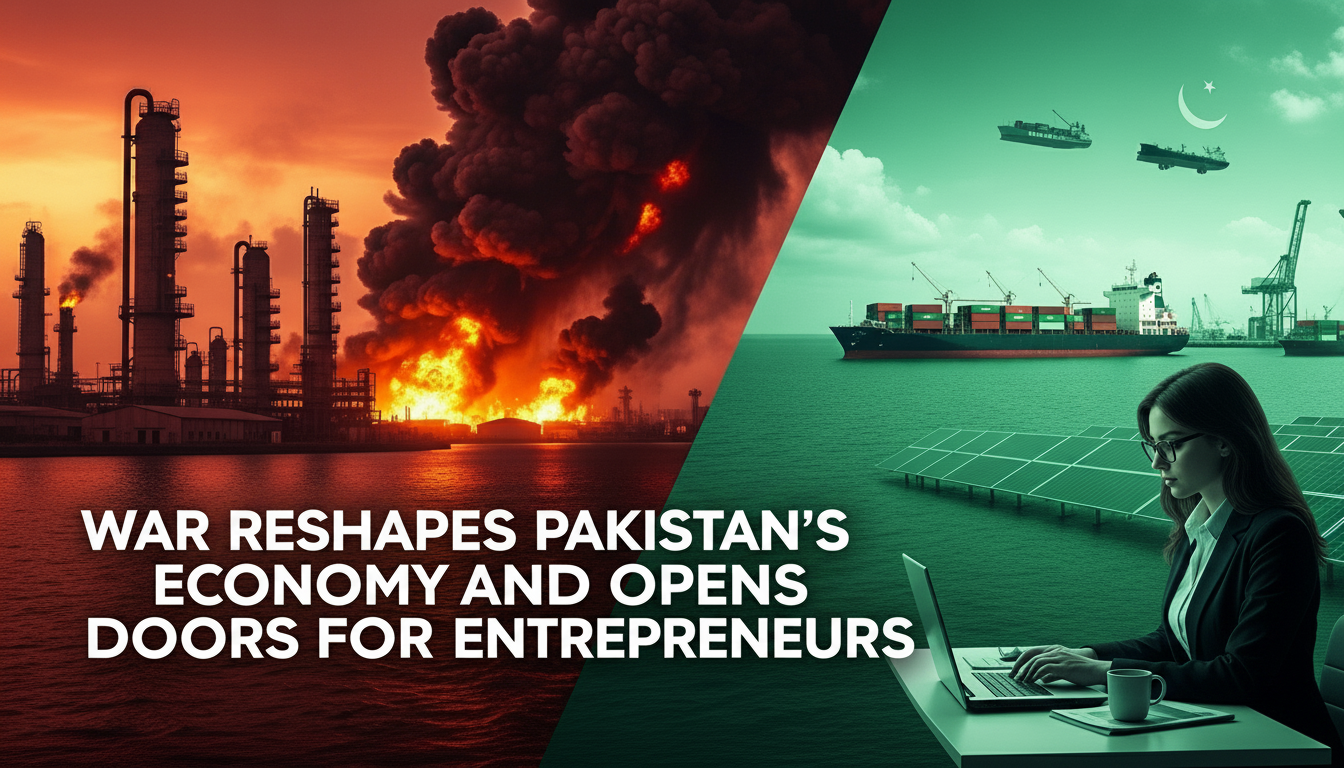
WAR RESHAPES PAKISTAN’S ECONOMY AND OPEN DOORS FOR INTERPRENEURS
By : Smama Mehar
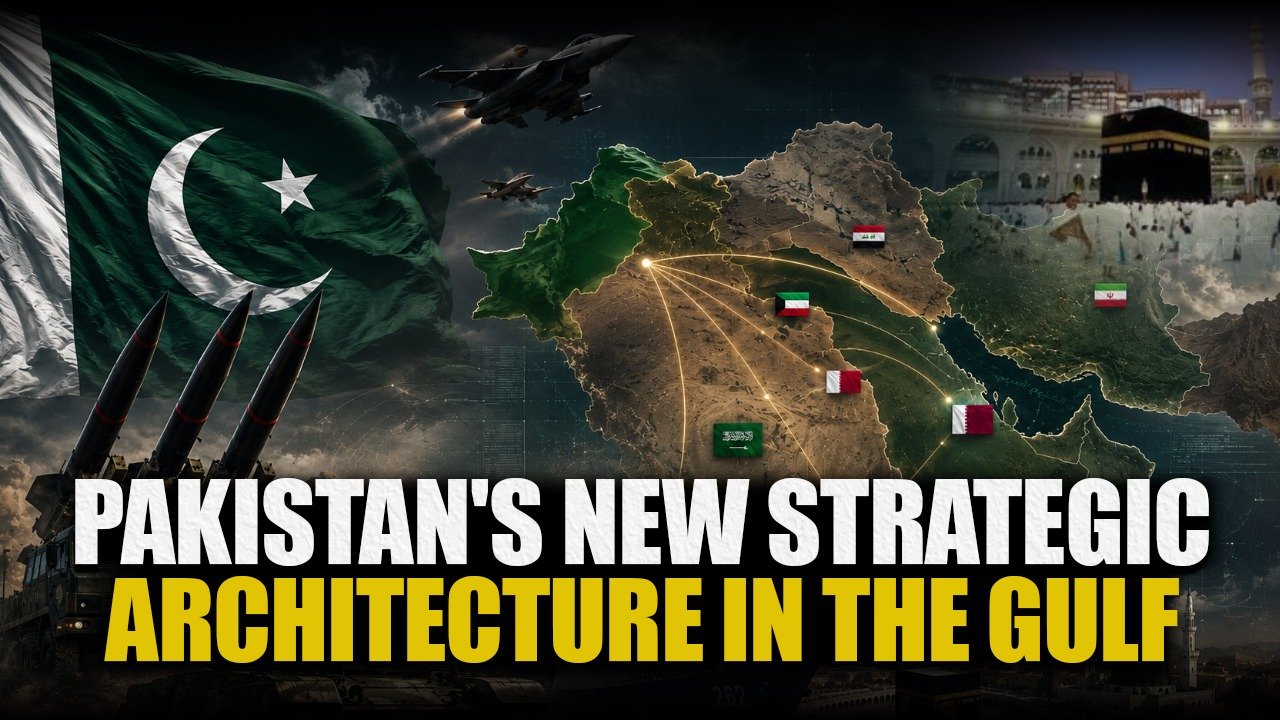
When Israel struck Iran’s nuclear facilities and energy
infrastructure on June 13, 2025, the consequences were felt far beyond the
Middle East. Oil prices surged 22% within 72 hours. The Strait of
Hormuz—through which 21% of the world’s daily oil flows—faced its most serious
threat of closure in decades. For Pakistan, which imports over 70% of its crude
oil from Gulf suppliers, the blow was immediate and severe. The Pakistani rupee
depreciated 8.4% against the dollar within three weeks. Inflation climbed above
24%. Petroleum import costs swelled by USD 2.9 billion in the second half of
2025 alone. The government deployed a PKR 180 billion emergency fuel subsidy
and fast-tracked deferred oil payment deals with Saudi Arabia and the UAE. The
State Bank raised its policy rate by 150 basis points. These were defensive
measures. But inside the disruption, a different story was quietly beginning.
Pakistan’s economy absorbed the war’s shocks across every
major sector. Textile manufacturers — responsible for USD 19.3 billion in
annual exports — saw energy costs rise 14%, crushing already-thin margins.
Transport costs climbed. Consumer spending contracted. Gulf employment, a
critical safety valve for millions of Pakistani workers, turned uncertain as
regional instability spread. Yet embedded within this pain was a
reconfiguration that created new openings.
China, importing 60% of its oil through the Strait of
Hormuz, moved urgently to activate CPEC as an overland alternative. Investment
commitments to CPEC Phase II rose by USD 3.7 billion. Gwadar Port’s cargo
throughput jumped 31%. International companies began relocating operations away
from Gulf instability—and Pakistan, with its large English-speaking workforce
and competitive labor costs, saw a 27% increase in foreign direct investment
inquiries in Q3 2025. The war did not make Pakistan more stable overnight. It
made its competitors considerably less attractive — and that shift is precisely
the kind of opening that entrepreneurial economies learn to seize.The clearest
opportunities lie in five sectors that the war has directly activated. Each
represents not just a trend but a concrete business an entrepreneur can build
today.
* Solar & Renewable Energy. Pakistan’s grid became more
expensive overnight. Demand for off-grid solar solutions exploded—installed
solar capacity crossed 3.2 GW in 2025. Entrepreneurs can start solar panel
distribution businesses, energy-as-a-service models for small factories, or
agri-solar irrigation systems for farmers who can no longer afford diesel
pumps. The Alternative Energy Development Board approved 214 new projects in H2
2025 alone, creating a fast-moving regulatory tailwind.
* Agri-Tech & Food Supply. Gulf fertilizer disruptions
pushed urea prices up 34%, forcing farms to seek smarter alternatives.
Entrepreneurs can build crop monitoring platforms using drone imagery, direct
farm-to-consumer sales networks, or soil health diagnostic services. Pakistan’s
agri-tech startup count grew from 67 to 112 in a single year, with average
investment deals tripling to USD 1.1 million.
* Logistics & Trade Facilitation. As Gulf sea routes
became unreliable, demand surged for alternative corridor management across
CPEC, Afghanistan, and Central Asia. Entrepreneurs can launch digital freight
brokerage platforms, customs clearance software, or warehousing services near
Gwadar. Logistics startups raised USD 87 million in venture capital in 2025 —
nearly three times the prior year.
* IT Services & Digital Exports. Rupee depreciation made
Pakistani developers even more price-competitive globally. Companies exiting
Gulf operations outsourced more aggressively to Pakistani firms. Entrepreneurs
can start software development studios, digital marketing agencies, or
AI-powered SaaS products targeting Gulf and Western markets. Pakistan’s IT
exports hit USD 3.2 billion in FY2025, growing 26% year-on-year.
* Fintech & Remittance Solutions. With 400,000 Pakistani
workers returning from the Gulf in H2 2025 carrying savings and skills, demand
for fast, affordable money transfer and micro-investment platforms surged.
Fintech startups processed 38% more remittance volume in H2 2025 than H1.
Entrepreneurs can build mobile wallet solutions, peer-to-peer lending
platforms, or return-entrepreneur seed funds targeting this newly liquid
population.
Pakistan has 240 million people, nearly two-thirds under 30,
with three million entering the labor market every year. A GDP growth rate of
2.3% cannot absorb them. The state cannot create jobs fast enough. Only a thriving
class of entrepreneurs — trained, funded, and supported — can generate
opportunity at the scale this country requires. SMEs already contribute 40% of
GDP and employ 80% of non-agricultural workers. But most remain informal
survival businesses, held back not by lack of ambition but by lack of
knowledge, capital, and access.
Countries that treated entrepreneurship as a national
strategy have seen the results. South Korea invested USD 2.4 billion in startup
ecosystems and produced world-class companies. Bangladesh generated USD 1.4
billion in IT exports in 2025 through sustained education and startup
investment reform. Finland made enterprise education a school subject and
became one of the world’s most innovative economies. Pakistan has the
demographics, the geography, and now the geopolitical moment. What it requires
is institutional will: a dedicated national startup fund, faster business
registration, entrepreneurship education in schools from Grade 6, and gender
inclusion mandated—not suggested—at every level. Female founders currently
represent just 1% of Pakistan’s startup ecosystem. That is not a cultural fact.
It is a policy failure with a policy solution.
Pakistan did not choose this war. But history rarely asks
nations for consent before presenting them with opportunity. The entrepreneurs
who can reshape this economy are already here—in classrooms, in garages,
returning from Dubai with savings and plans. The war has not created their
ambition. It has removed the excuse for delay. Whether Pakistan’s institutions
respond with the speed this moment demands will determine whether this
generation of founders becomes the country’s greatest economic story—or its
most costly missed opportunity. The door is open. The question is simply
whether Pakistan is ready to walk through it.

_6784.jpg)