
The security environment across South Asia has evolved
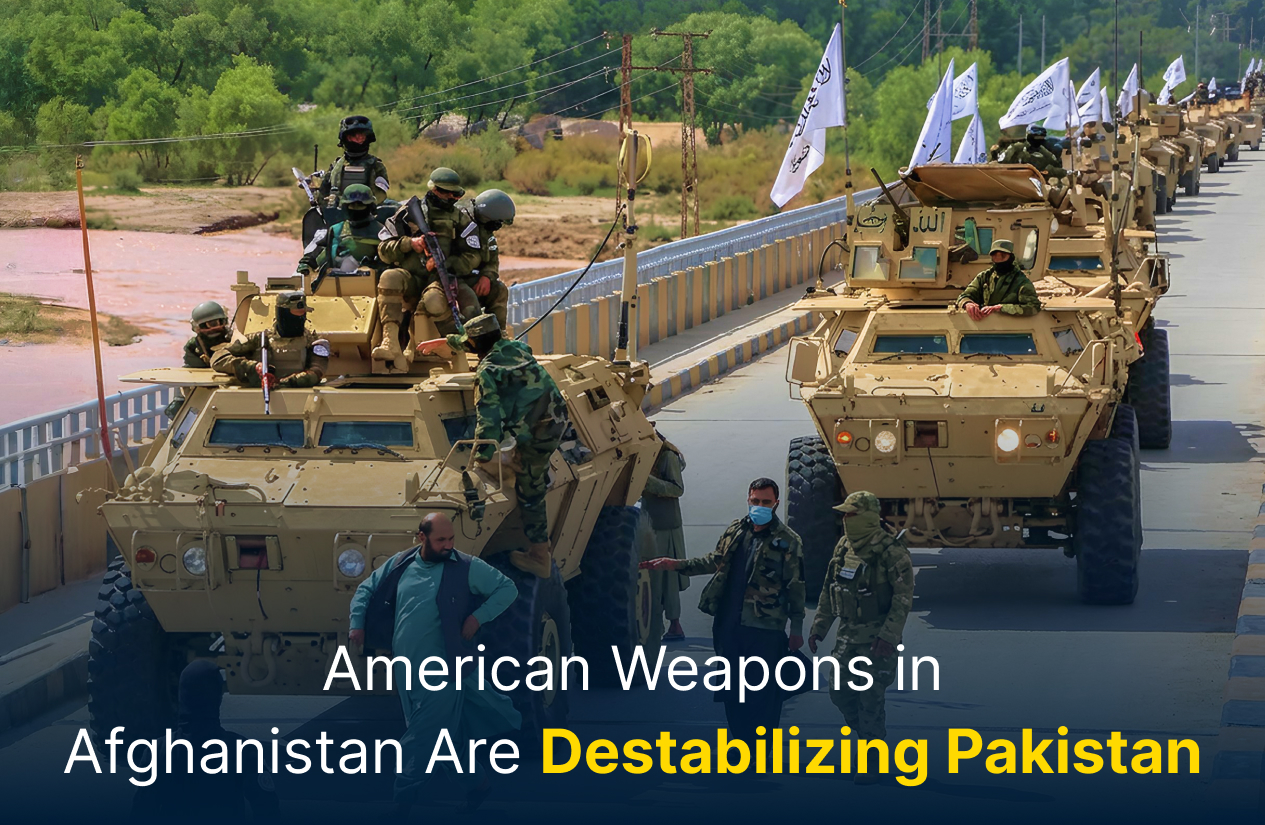
further since the U.S. withdrawal from Afghanistan in 2021, which left large
quantities of advanced military equipment behind. Since then, security experts
and regional governments have repeatedly cautioned that the uncontrolled
circulation of these weapons risks strengthening militant networks with
cross-border reach. Pakistan, which shares a long and porous border with
Afghanistan, has in recent years become increasingly vocal about concerns that
the inflow of modern arms is intensifying terrorism and internal instability.
Pakistan’s political and security leadership has consistently
highlighted the growing use of American-made weapons by militant groups
operating along the Pakistan–Afghanistan border. Officials argue that the
sudden collapse of the former Afghan government and the rapid Taliban takeover
created a security vacuum, allowing weapons to seep into black markets and
militant supply chains. From Islamabad’s perspective, this development has
significantly enhanced the operational effectiveness of terrorist
organizations, particularly those targeting civilians and security forces in
sensitive border regions.
Developments on the ground have reinforced these fears.
Recent counterterrorism operations in Balochistan and Khyber Pakhtunkhwa
revealed that militants involved in attacks were equipped with advanced
night-vision devices, modern assault rifles, and upgraded communication systems,
believed to have originated from abandoned stockpiles in Afghanistan. Pakistani
security officials state that access to such equipment has made attacks more
coordinated, more lethal, and increasingly difficult to counter, forcing the
state to expand counterterrorism operations and strengthen border security.
Islamabad has repeatedly urged the international community to
recognize the broader security implications of the Afghan withdrawal and to
take collective action to prevent the proliferation of these weapons. Pakistan
maintains that the issue is not confined to its borders but represents a wider
regional and global threat, as the spread of advanced arms could empower
transnational extremist networks and destabilize South and Central Asia.
Through diplomatic channels, Pakistan has called for stronger monitoring
mechanisms, intelligence sharing, and coordinated efforts to trace and recover
illicit weapons.
The government emphasizes that Pakistan remains committed to
combating terrorism through intelligence-driven operations, improved border
management, and regional cooperation. However, officials stress that long-term
stability will depend on shared international responsibility and sustained
cooperation to ensure militant groups do not exploit the security vacuum left
in Afghanistan.
The Islamabad Center for Peace and Education (ICEP) views the
post-withdrawal proliferation of sophisticated weaponry as one of the most
serious security challenges confronting the region. The Center argues that
Pakistan’s concerns are grounded in genuine security realities, as the
availability of advanced arms increases the risk of cross-border militancy and
regional destabilization. It underscores that durable peace in South Asia will
require stronger international cooperation, responsible arms control, and
renewed diplomatic engagement to prevent Afghanistan from becoming a hub for
weapons trafficking and extremist resurgence.


_6784.jpg)