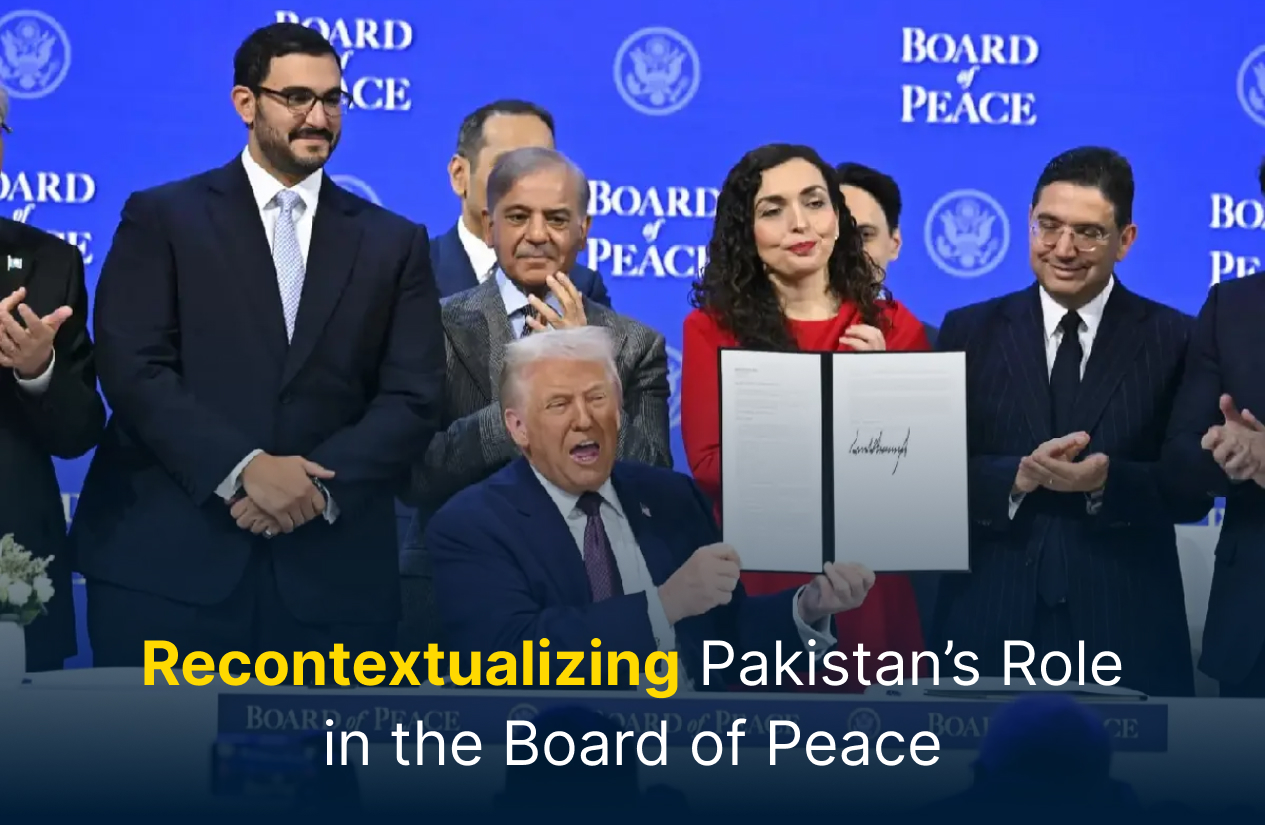
In January 2026, Pakistan’s decision to join the Board of Peace (BoP) for Gaza a 14-nation initiative
focused on the reconstruction and stabilization of the region, sparked a flurry
of domestic and international debate. While critics often focus on potential
geopolitical trade-offs, a deeper look reveals that this decision is a natural
extension of Pakistan's 75-year history as a dedicated global peace actor. Far
from being a sudden shift, participation in the BoP is a reaffirmation of
Pakistan's commitment to multilateralism and its role as a bridge between the
East and the West.
A Legacy of the Blue Helmets
Pakistan’s credibility as a peace actor is built on the
sacrifice and service of its soldiers in the United Nations. Since 1960,
Pakistan has been one of the world's most consistent and top-tier contributors
to UN Peacekeeping Missions. With service in 46 missions
across 29 countries including Congo, Somalia, Rwanda, and Haiti, Pakistan has
proven it is willing to put boots on the ground for the sake of international
stability. In missions like those in Sierra Leone and Liberia, Pakistani troops
were noted not just for security, but for rebuilding hospitals and schools,
establishing a reputation as a Compassionate Force.
By joining the BoP in 2026, Pakistan is leveraging this
Peacekeeping DNA. The coalition needs members who understand the complexities
of post-conflict stabilization, an area where Pakistan holds world-class
expertise.
Pakistan as Bridge-Builder
Pakistan has a unique history of acting as a silent bridge
between global rivals. This Peace Actor identity has allowed it to navigate
some of the most sensitive conflicts in modern history.
·
The 1971 US-China Opening: It was Pakistan that
facilitated the secret trip of Henry Kissinger to Beijing, leading to the
historic normalization of relations between the US and China.
·
The Iran-Saudi/US Mediation: In 2019 and again in
2024, Pakistan acted as a neutral ground for dialogue between regional rivals,
consistently advocating for de-escalation rather than taking sides.
Participation in the BoP reflects this same spirit. By sitting
at the table with the US and other Muslim nations, Pakistan is ensuring that
the Palestinian voice is not lost in a one-sided conversation.
It is acting as a Diplomatic Guardian for Palestinian rights within the
framework of international law.
The Gaza Peace Plan and Pakistan’s stance
Joining the Board of Peace is not about accepting a new status
quo; it is about shaping it. According to the Foreign Office statements,
Pakistan’s red lines remain clear:
1. Support for a
two-state solution based on pre-1967 borders.
2. Ensuring that stabilization
in Gaza does not mean the disarmament of Palestinian political aspirations.
3. Using the BoP to
facilitate the Gaza Reconstruction Fund to alleviate the suffering of millions.
Peace as a Strategic Choice
The
decision to join the BoP reflects a significant shift from passive neutrality
to active peacebuilding. If Pakistan were to stay away, it would have no role
or influence in shaping the transitional administration of Gaza. However, by
participating, Pakistan ensures that the Muslim world speaks with a collective
and strong voice at the decision-making table. It also allows for the
implementation of UN Resolution 2803 to be monitored by states that have
historically shown sympathy and support for the Palestinian cause. In addition,
active engagement helps Pakistan maintain its status as a peace actor, keeping
it relevant and visible in global security and diplomatic circles.
Final Thoughts
While it is easy to view modern diplomacy through the lens of interests and benefits, Pakistan’s track record suggests a deeper motivation. From the 1960s in the Congo to the 2026 Board of Peace in Gaza, Pakistan has consistently chosen to be part of the solution rather than a spectator of the problem. Its participation in the BoP is not a departure from its principles, but a continuation of its long-standing identity as a nation that believes in the power of dialogue, the necessity of peace, and the responsibility of the international community to protect the vulnerable.
_6784.jpg)