By : Asif Sandhu
While the world held its breath with fear of a new conflict
that could have global consequences to a scale not witnessed in decades,
tensions among Iran, the United States and Israel rose to their most dangerous
pass yet. Military action, tit-for-tat missile bombardments and the danger of a
regional calamity hung over the Middle East early in 2026. But in the center of
this geopolitical tempest, an unexpected diplomatic player emerged: Pakistan.
With quiet persistence, shrewd positioning and appropriate neutrality,
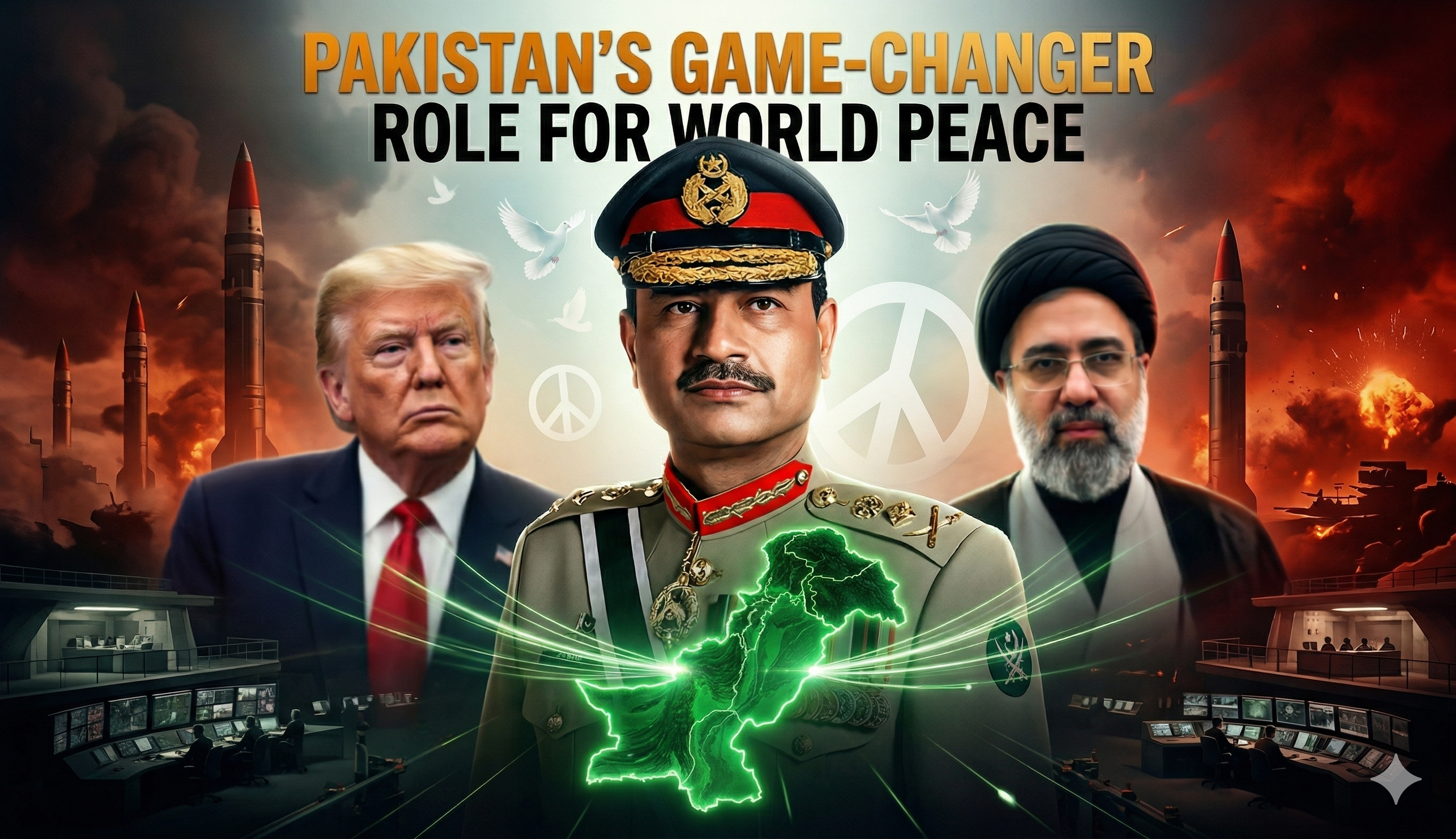
Islamabad proved key to brokering a historic ceasefire — one that has put the
region back from the precipice for now. Pakistan has not just remained a player
standing by the sidelines of global politics but instead emerged as a
substantive diplomatic intermediary between adversarial powers and an
influential force in shaping architecture for international peace.
The current crisis has its origins in a cycle of tit-for-tat
hostilities escalating between the United States-Israel alliance and Iran. In
response to precision airstrikes by Israeli forces on Iranian nuclear and
military facilities—reports indicate American intelligence and logistical
support were crucial for those attacks—Iran launched unprecedented missile and
drone strikes against not only Israel itself but also U.S. military assets in
the region. The Strait of Hormuz, a transit route for almost 20 percent of the
world’s oil supply, became an immediate flashpoint as Iranian naval forces
threatened to clamp down on passage, sending jitters through global energy
markets. The threat to international trade, regional stability and the global
economy was not imaginary: Oil prices soared, financial markets shuddered and
regional allies prepared for better escalation. Within days, the fighting had
inched alarmingly toward a full-blown war that analysts said could embroil
numerous regional and global powers.
Pakistan's unique geopolitics enables it to be a credible
mediator. As a nation that is majority Muslim, and as one with long-established
diplomatic and economic ties to Iran — including its own border with Iran and
bilateral energy deals — Pakistan has a communications channel that Western
powers do not. At the same time, Islamabad has an enduring strategic
partnership with the United States based on decades of security cooperation,
counterterrorism collaboration and heavy financial dependence. This dual
positioning — rather than a liability — turned out to be Pakistan’s biggest
diplomatic weapon.
The strategic importance of Pakistan is then heightened by
its geographic location at the crossroads of South Asia, Central Asia, and the
Middle East. Crucially, Islamabad had not aligned itself with either side in
the conflict, adopting a carefully calibrated neutral stance that made it
trusted by both Tehran and Washington. Building upon these relationships,
Pakistani leadership — including its foreign minister and senior military
officials — opened up behind-the-scenes, though not public, backchannel
communications with Iranian and American counterparts. So it was that Pakistan
came to be invited not as a guest but by imperative design, a trusted
intermediary on one of the most intricate diplomatic puzzles of the decade.
The Pakistani diplomacy was planned in two phases to
maximize the immediate humanitarian necessity as well as political conditions
for peace in long run. The initial stage sought to achieve an unconditional and
time-bound ceasefire that would end the conduct of active military operations
and mitigate the potential for open-ended escalation. The second phase of the
agreement assumed a more comprehensive negotiated settlement that would address
all parties’ core grievances, including Iran’s security concerns and America’s
strategic interests, as well as Israel’s demands for regional security
assurances.
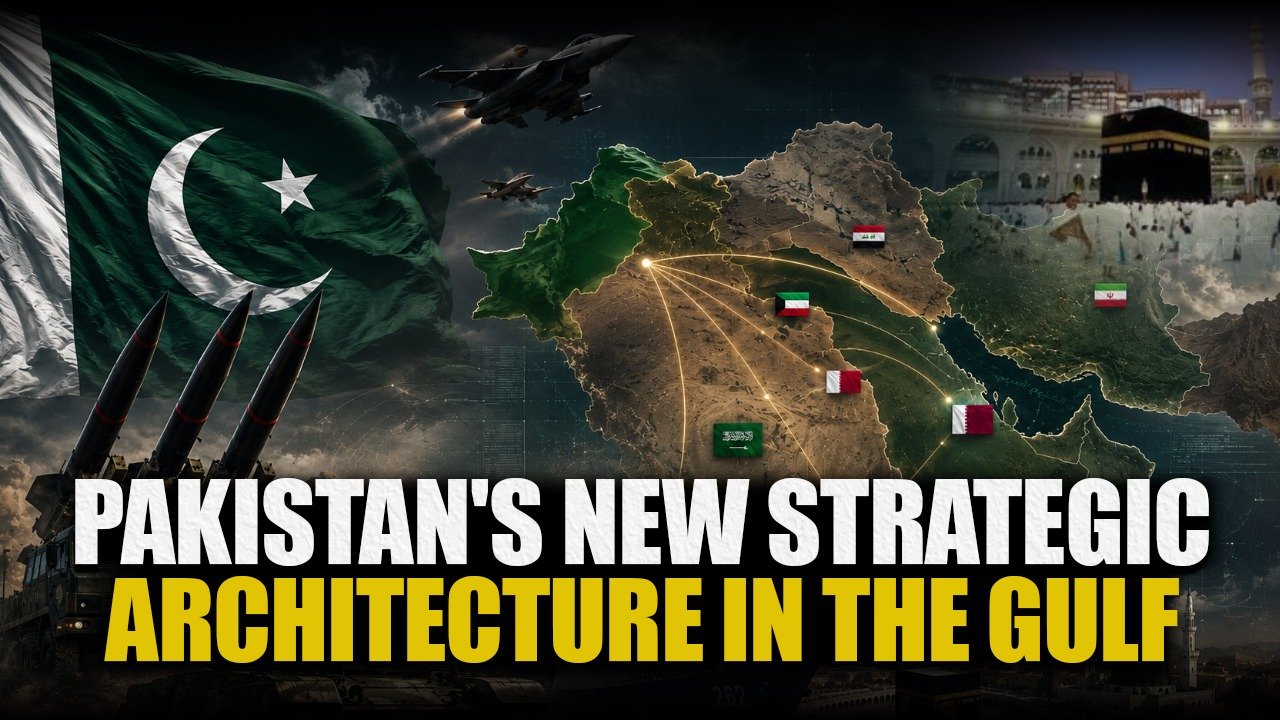
In order to operationalize this strategy, Pakistan pursued a
multilateral diplomacy of considerable scope and ambition. Bilateral
conversations took place with Iran, the United States, Turkey, Saudi Arabia and
Egypt — each of whom played key roles in distinct aspects of the conflict.
Pakistan’s foreign minister made a blitz of regional capitals, and Pakistan’s
military leadership kept parallel lines open with their Iranian and American counterparts.
Backchannel communications — conversations specifically kept out of public gaze
— enabled frank exchanges that formal diplomatic forums could not provide. Over
coming months, this dual-track approach combining public multilateral outreach
with behind-the-scenes bilateral dialogue allowed Pakistan to build confidence
incrementally and keep the momentum alive towards a ceasefire agreement.
In October 2023, Pakistan's mediation efforts resulted in a
historic two-week ceasefire agreement between Iran and the United States. The
mediated agreement was announced in late March 2026. Under the agreement, both
sides agreed to stop offensive military operations and conduct preliminary
negotiations leading to a longer-term framework. In parallel, Israel — under
enormous pressure from Washington and with implicit assurances on Iran’s
intentions offered by Pakistan — agreed to suspend its military offensive.
The reopened Strait of Hormuz for international shipping was
critical in offering immediate relief to global energy markets and avoiding a
wider economic crisis. Pakistan's role was broadly acknowledged in diplomatic
communiqués from both Tehran and Washington, although officials in both
governments blamed the other for the war of words that preceded what is widely
seen as a serious push by Islamabad to facilitate the agreement. Now, as
discussions are unfolding about whether to host formal multilateral
negotiations in Islamabad, it would further concretize Pakistan’s capital as an
international diplomatic hub.
While the ceasefire is profoundly significant, its
tenuousness cannot be overstated. The deal is provisional and, based on highly
contested premises. Iran has repeatedly insisted on legally binding, long-term
security guarantees that would bar any future U.S.-Israeli military action
against its territory — demands that Washington so far has resisted. A deep
trust deficit remains between the two sides, forged over decades of mutual
animus, failed deals and conflicting strategic goals. The risks of renewed conflict
remain significant: one miscalculation, an unauthorized use of force or a
domestic political turn in any of the principal capitals could add undo the
cease-fire. Pakistan’s role as a mediator, for however long this lasts, will be
severely tested in the coming months.
In the Iran-U. S. crisis is a qualitatively different type
of international standing for the U. Long viewed—and often unjustly—almost
exclusively through the prism of security concerns, terrorism and regional
conflict, Pakistan has now proven capable of constructive diplomatic leadership
internationally. Islamabad's emergence as a mediator has increased its
credibility with Eastern and Western powers, whilst also shifting international
perceptions of Pakistan the position in the international order.
This evolution signals a broader strategic reorientation:
Pakistan is increasingly casting itself not just as a security actor, but also
as a diplomatic hub and regional stabilizer. The cease-fire achievement
represents a shift — still evolving, but substantial — from a country whose
identity was defined by its security problems to one that is known for offering
solutions diplomacy. If successful, this readjustment could pay such dividends
in Pakistan's foreign relations, economic arrangements and strategic
independence.
The geopolitical ramifications of Pakistan’s mediation
process are far broader than just the current crisis. By staving off direct
confrontation between two nuclear-capable adversaries, therefore, Pakistan has
materially contributed to reducing the chances of a wider regional — or global
— conflict. The Strait of Hormuz is now reopening and it has helped save vital
trade routes commonly used to support international commerce, energy markets,
and the global economy. Pakistan’s success has perhaps most importantly
bolstered the normative case for diplomacy instead of military confrontation in
addressing interstate conflicts. At a moment when multilateralism is on the
wane and recourse to force is more frequent, Pakistan’s paradigm provides an
enticing model of disinterested mediation based on interests that other states
may wish to adopt.
Pakistan’s contribution in mediating between Iran and United
States remains one of its most significant diplomatic feats. But this ceasefire
is fragile, and the structural conditions that led to the conflict are still in
place. Steady progress will depend on ongoing dialogue, multilateral engagement
and the political will of all parties to place peace above posturing. The way
forward is unclear, and the risks of a relapse are real. But what Pakistan has
shown is that principled, persistent and strategically rooted diplomacy can
provide breathing room for dialogue even in the most fraught of situations.
Despite a world increasingly divided by conflict, Pakistan’s diplomacy has
reaffirmed that dialogue — and not destruction — remains the most potent avenue
toward peace.
_6784.jpg)